The Neurochemical Framework of Love
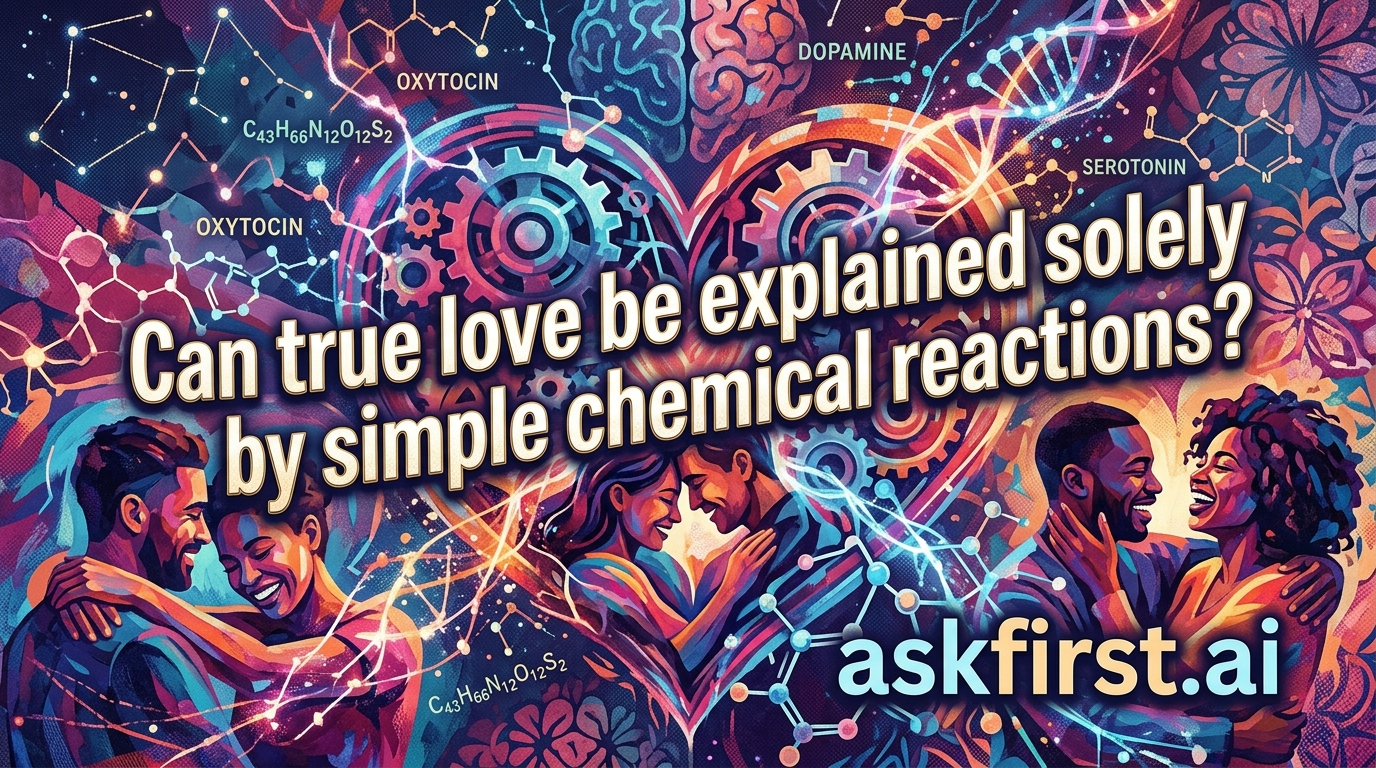
At the most fundamental biological level, love is often reduced to a cocktail of neurochemicals: dopamine, oxytocin, serotonin, and norepinephrine. Researchers in evolutionary biology suggest that these chemicals serve as a reinforcement mechanism designed to encourage mate selection, pair bonding, and child-rearing. Dopamine, the primary neurotransmitter in the brain's reward pathway, creates the intense focus and euphoric 'high' associated with early-stage romantic attraction. Norepinephrine contributes to the racing heart and jitters, while a temporary decline in serotonin levels mirrors the obsessive-compulsive patterns often seen in new relationships. These chemical triggers are indisputably real, but characterizing them as the sum total of human love is akin to claiming that the melody of a symphony is merely the result of vibrating air molecules.
The Limitations of Reductionism
To argue that love is solely chemistry is to ignore the emergent properties of human consciousness. Emergence is a concept in systems theory where a complex system possesses properties that its individual parts do not. While a single molecule of oxytocin does not 'feel' affection, the collective interaction of billions of neurons within the prefrontal cortex—informed by memory, cultural narrative, and personal ethics—creates the subjective experience of love. Science, by design, seeks to isolate variables. However, the human experience of love is inherently non-isolated. It is deeply entangled with individual history, societal expectations, and personal volition.
Psychological and Philosophical Dimensions
Beyond biology, love functions as a psychological construct that provides meaning and structure to existence. Psychologists, such as Robert Sternberg, have developed the Triangular Theory of Love, which categorizes love into three distinct components: Intimacy, Passion, and Commitment. While passion may have a chemical root, commitment is a conscious choice, a cognitive appraisal of one's future. Attachment Theory further elucidates how early life experiences create blueprints for how individuals navigate closeness and vulnerability. These behavioral patterns are not 'chemical' in the simple sense; they are complex cognitive frameworks shaped by developmental history.
- Cognitive Appraisal: The way individuals interpret their feelings often dictates the intensity of the bond.
- Narrative Construction: People frame their relationships within a larger story, creating a sense of shared destiny.
- Volitional Action: True love is frequently characterized by acts of sacrifice that operate independently of immediate hormonal rewards.
The Cultural and Evolutionary Context
Human love is heavily influenced by the cultural context in which it grows. While the biological drive for connection is universal, the expression of love is highly variable across different societies. Different cultures place varying degrees of importance on duty, companionship, and romantic spark. Furthermore, from an evolutionary perspective, love serves as a stabilizing force for the family unit. The 'chemical reaction' hypothesis fails to explain why humans maintain long-term monogamous relationships long after the initial 'infatuation' chemical surge has subsided. This longevity suggests the presence of a higher-order regulatory system—one that utilizes values and emotional intelligence to override raw biological impulses.
Why the Chemistry vs. Choice Debate Matters
Reducing love to chemistry denies the agency of the individual. If love were merely a predictable chemical reaction, human choice would be rendered obsolete. However, humans demonstrate the capacity to cultivate love in the absence of initial sparks, or to choose to remain committed in the absence of biological novelty. This nuance is vital. By understanding that chemical signals provide the 'motivation' but not the 'meaning', individuals gain a more balanced perspective on their relationships. One can appreciate the biological spark while simultaneously investing in the emotional and intellectual labor required for sustainable partnership.
Conclusion: A Synthesis of Nature and Agency
True love is not an either/or proposition between biology and philosophy; it is a synthesis of both. It is a biological phenomenon experienced through the lens of a sophisticated, sentient mind. While chemicals provide the initial impetus, it is the deliberate choice to engage with another person that defines the 'truth' of the love. Love is a complex, multi-layered experience that occupies the intersection of hard science, subjective psychology, and existential freedom. It remains one of the few areas of human life where science, art, and spirit converge to create something greater than the sum of its parts.