The Neurobiological Symphony: Beyond Simple Chemistry
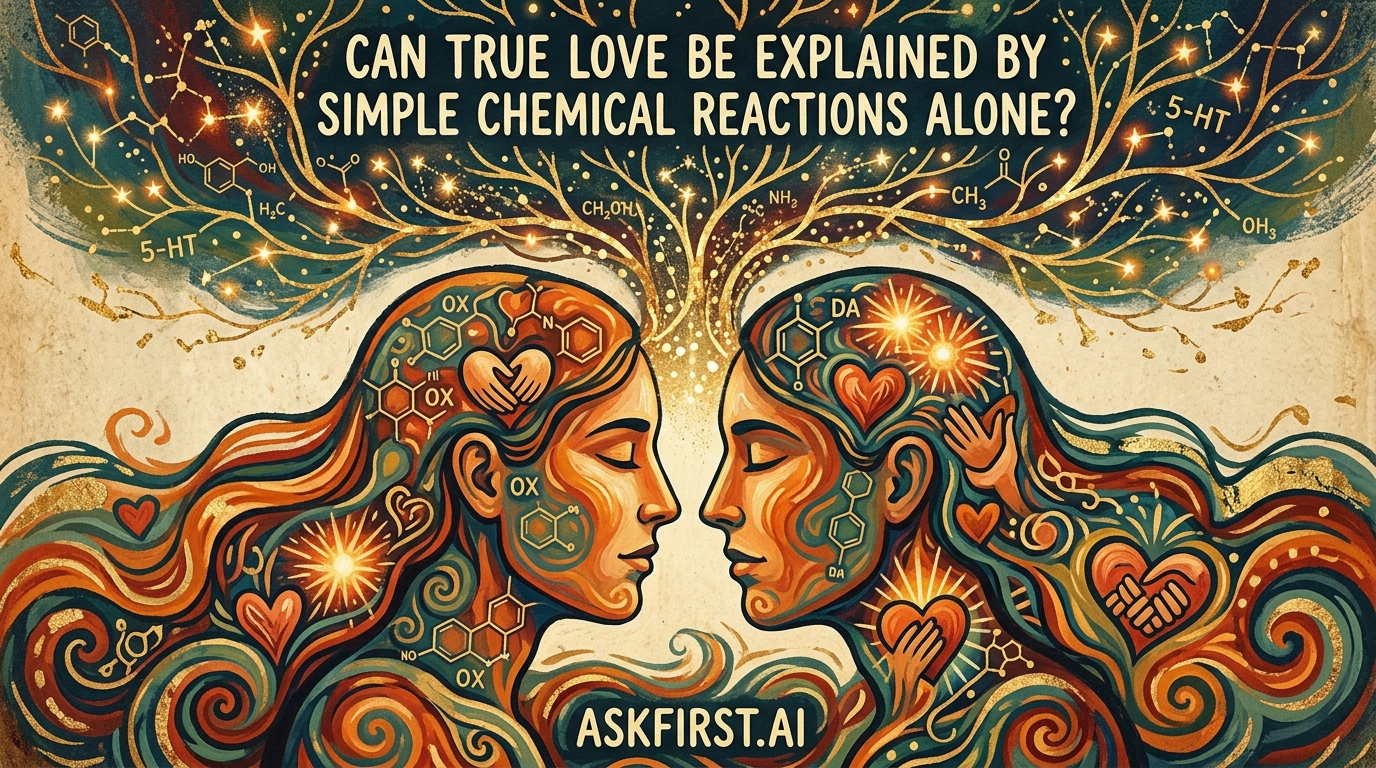
The inquiry into whether true love is merely the result of simple chemical reactions strikes at the core of the human experience. While neuroscience provides a robust framework for understanding the mechanisms of attraction and attachment, reducing the complexity of profound love to simple chemical cascades is akin to describing a symphony solely by the vibration of strings. To truly grasp the nature of love, one must integrate biological pathways with the emergent properties of consciousness, cultural narrative, and sustained choice.
The Neurochemistry of Affection
At the foundational level, romantic love operates through a sophisticated neurochemical cocktail. Scientists often categorize this process into three distinct, albeit overlapping, phases:
- Lust: Driven by testosterone and estrogen, this is the evolutionary urge for reproductive mating. It is primal and high-energy.
- Attraction: Dominated by dopamine, norepinephrine, and serotonin. Dopamine acts as the reward system, creating the feeling of euphoria and focus associated with a new partner. The reduction in serotonin levels is often linked to the obsessive-compulsive nature of early infatuation.
- Attachment: The domain of oxytocin and vasopressin. Often called the 'cuddle hormones,' these chemicals facilitate long-term bonding and social stability, reinforcing the desire for proximity and security.
While these neurotransmitters initiate the feelings, they do not encompass the entirety of the emotional construct. If love were only these chemicals, its duration would be strictly limited by physiological fatigue or receptor desensitization.
The Role of Emergent Properties
Science recognizes the concept of 'emergence,' where a system possesses properties that its individual parts do not have on their own. Water is made of hydrogen and oxygen, but its liquidity is an emergent property that neither gas exhibits individually. Similarly, love is an emergent property of the human brain. It arises from the integration of sensory input, memory consolidation, cognitive appraisal, and executive function. The prefrontal cortex—the seat of complex planning and moral judgment—plays a vital role in deciding to remain committed to a partner even when the initial 'chemical high' of dopamine begins to stabilize.
The Influence of Psychological and Cultural Frameworks
Love is not just a biological event; it is a narrative construct. Throughout history, various cultures have defined love differently—ranging from the ancient Greek categories of agape (selfless love), philia (friendship), and eros (romantic passion) to modern individualistic ideals of the soulmate. These external narratives shape how the brain interprets internal chemical states. Cognitive psychology suggests that the meaning assigned to these sensations dictates the longevity of the relationship. When individuals view love as a shared project or a deep existential commitment, they engage in behavioral patterns that go beyond biological impulses.
The Voluntary Act of Love
Critically, the human capacity for choice elevates love beyond reactionism. Studies in evolutionary psychology suggest that while humans are biologically predisposed to seek pairs for survival and offspring rearing, the maintenance of a long-term bond requires active, intentional behavior. This involves empathy, conflict resolution, shared goal setting, and mutual sacrifice. These are higher-order cognitive functions. One might argue that the chemical reactions facilitate the start of the bond, but the endurance of the bond relies on the architectural complexity of the human mind.
The Philosophical Integration
In the scientific community, reductionism is a useful tool, but it is incomplete. Attempting to explain love strictly through biochemistry ignores the 'qualitative' aspect of existence—the phenomenological experience of being in love. This is the difference between measuring the electrical impulses in a brain during a concert and understanding the emotional resonance of the music.
Conclusion: A Multi-Dimensional Reality
True love is not a simple chemical reaction, nor is it a purely magical mystery that defies physical laws. It is a multi-layered phenomenon. It relies on the biological substrate of the brain to exist, but it reaches its full, 'true' potential through the addition of memory, moral intent, social connection, and the capacity for deliberate, conscious choice. To say love is 'just chemistry' is to misunderstand the very definition of complexity in biological systems. It is the interaction of biology with the vast landscape of the human soul and mind that makes love the defining mystery of our species.