The Evolutionary and Psychological Roots of Narrative Satisfaction
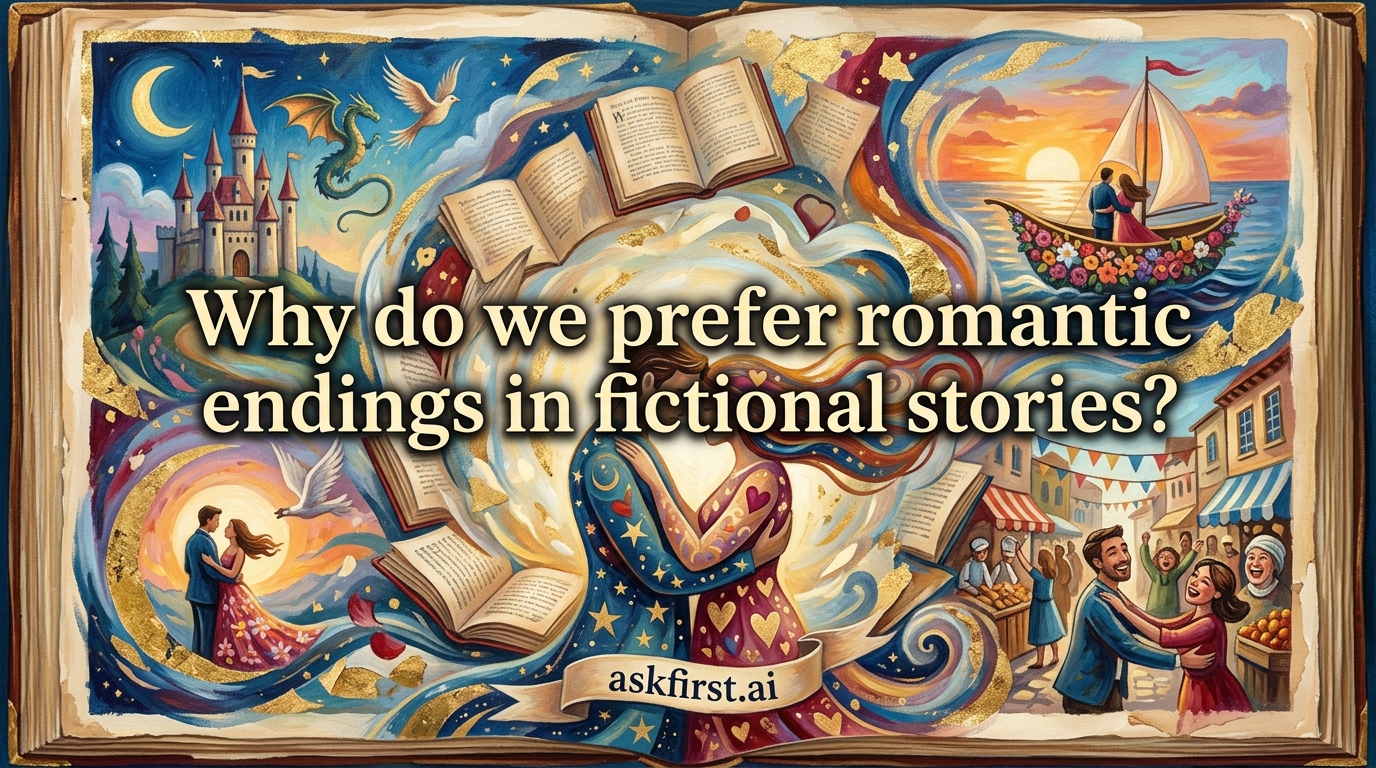
The human fascination with romantic endings in fiction is not merely a product of societal conditioning or modern media influence. It is deeply rooted in evolutionary biology, psychological equilibrium, and the fundamental human desire for patterns in chaos. When a narrative concludes with a romantic union, it triggers a complex neurological reward system that provides a sense of closure, validation, and hope.
1. The Quest for Evolutionary Consistency
From an evolutionary psychology perspective, humans are biologically programmed to value pair-bonding and long-term cooperation. Romantic endings simulate the achievement of reproductive and social success. By observing a story where the protagonists successfully navigate conflict to form a stable partnership, the brain interprets this as a signal of survival success. This narrative structure serves as a psychological blueprint, reinforcing the societal values of cooperation, empathy, and collective strength which have historically been essential for the survival of the species.
2. The Psychology of Cognitive Closure
Human cognition thrives on resolution. The concept of the 'Zeigarnik Effect' suggests that people remember uncompleted or interrupted tasks better than completed ones. A tragic or open-ended story often leaves the mind in a state of cognitive dissonance, where the lack of resolution causes a nagging psychological itch. Conversely, a romantic ending provides 'Cognitive Closure.' When a narrative knot is tied through love, the reader experiences a surge of oxytocin and dopamine—the 'cuddle hormones'—which counteract the stress experienced throughout the plot. This neurochemical release solidifies the story as a positive, memorable, and safe experience.
3. Moral Justice and the 'Just-World' Hypothesis
The 'Just-World' hypothesis is a cognitive bias where individuals want to believe that the world is inherently fair and that good things happen to good people. In reality, life is unpredictable and often messy. Fiction serves as a compensatory mechanism for this randomness. A romantic ending serves as the ultimate reward for the characters’ struggles, trials, and moral rectitude. When the hero and heroine find love, it reaffirms the reader’s internal desire to believe that virtue is eventually rewarded. This creates a powerful emotional resonance that makes the reader feel as though the narrative arc was 'right.'
4. Cultural Conditioning and Mythic Archetypes
Romantic endings are a staple of the 'Hero’s Journey,' an archetype identified by Joseph Campbell. In almost every cultural mythos, the journey begins with an imbalance and concludes with a restoration of order. Marriage or romantic union is the ultimate symbol of order, unity, and completion. Throughout centuries of literature—from Shakespearean comedies to modern blockbusters—this archetype has been refined to trigger a universal sense of 'homecoming.' This is not about the romantic relationship in a literal sense; it is about the reconciliation of opposites and the achievement of a higher state of communal existence.
5. Escapism and Emotional Regulation
Fiction is a tool for emotional regulation. Readers often turn to stories to process emotions they might not be able to express in their daily lives. A romantic ending offers a safe space for intense emotional catharsis. It allows the reader to experience the pinnacle of human connection—the 'happily ever after'—without the real-world risks of heartbreak, compromise, or inevitable decline. It is a form of 'safe emotional stimulation.' By watching fictional characters achieve a perfect union, the reader experiences the physiological benefits of social belonging and optimism, which in turn acts as a buffer against real-world anxiety and cynicism.
6. The Synthesis of Hope
In a world characterized by complexity, technological shift, and geopolitical instability, romantic endings act as anchors of permanence. They provide a predictable narrative structure that is inherently optimistic. Because humans are social animals, the ultimate resolution of a story being a romantic union underscores the truth that, despite all challenges, connection is the most profound outcome of the human condition. This realization inspires hope and reinforces the belief that the struggle inherent in the 'middle' of any story—the rising action and conflict—is always worth the effort to reach the resolution.
Conclusion
The preference for romantic endings is a sophisticated intersection of biological reward, moral aspiration, and the innate human need for narrative coherence. It is the literary equivalent of a warm light in a vast, dark forest—a reminder that despite the complexities of existence, the human capacity for love and harmony remains the ultimate standard for a life—and a story—well lived.