The Eternal Nature of Honey: Nature's Immortal Food
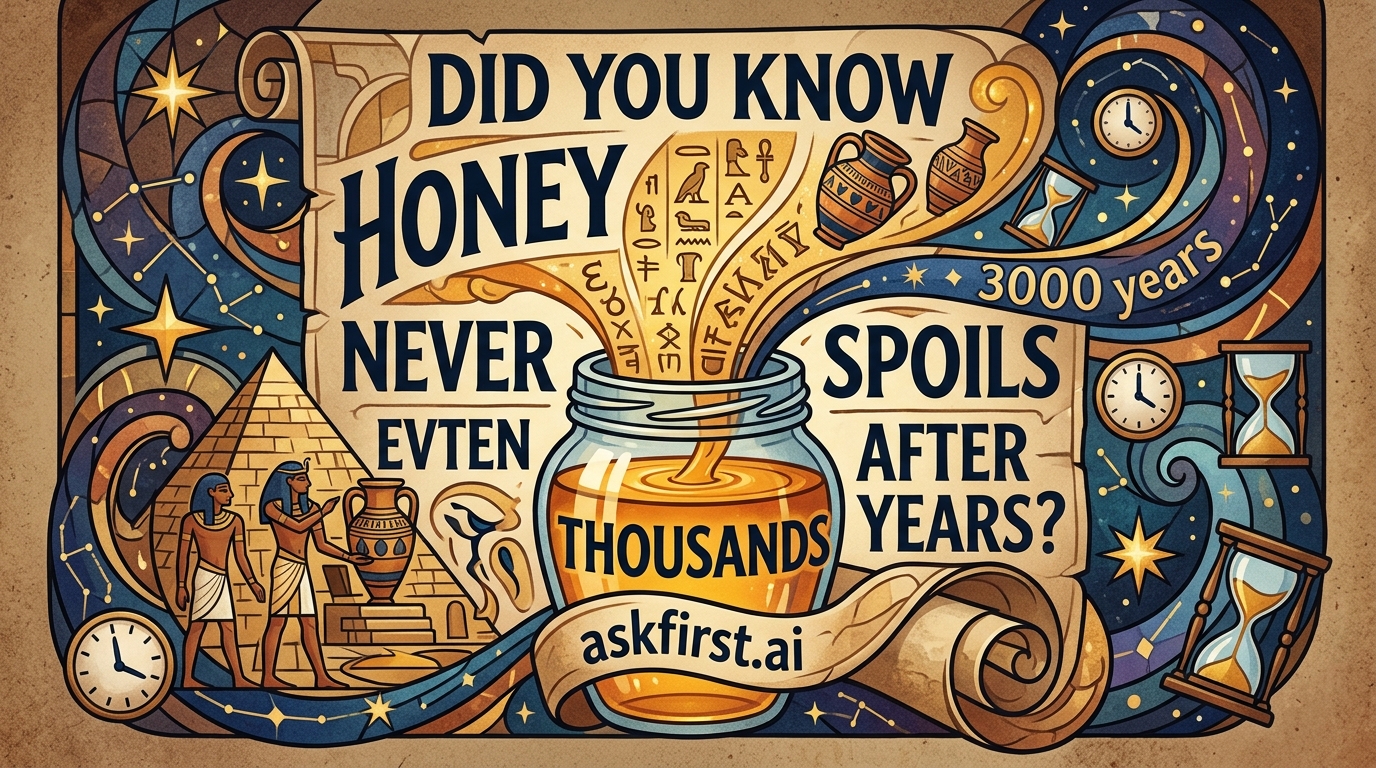
Honey, the golden elixir crafted by bees, possesses a biological and chemical profile that effectively renders it immortal. Archaeologists have famously excavated pots of honey from ancient Egyptian tombs, dating back over 3,000 years, and found the substance not only preserved but arguably still edible. This fascinating phenomenon is not the result of magic, but rather a sophisticated synergy of chemistry, biology, and environmental conditions.
The Chemical Secret: Why Bacteria Cannot Survive
To understand why honey never spoils, one must examine its primary defense mechanisms. The shelf-life of most food is dictated by microbial growth, which requires moisture, nutrients, and a hospitable environment. Honey creates an inhospitable landscape for microorganisms through three specific factors:
- Low Moisture Content: Honey is naturally hygroscopic, meaning it contains very little water. Most bacteria and fungi require water to thrive and reproduce. The high sugar concentration in honey draws the water out of microbial cells via osmosis, effectively dehydrating and killing any potential spoilage organisms before they can colonize.
- High Acidity: Honey typically maintains a pH level between 3.0 and 4.5. This level of acidity is sufficient to inhibit the growth of most bacteria, which generally prefer a more neutral pH to survive. This acidic environment acts as a chemical barrier against decay.
- Hydrogen Peroxide Production: Perhaps the most ingenious aspect of honey is its built-in sterilization system. When bees collect nectar, they introduce an enzyme called glucose oxidase into the substance. As the honey cures, this enzyme reacts with the glucose, producing hydrogen peroxide as a byproduct. This compound acts as a natural antiseptic, preventing the growth of pathogens.
The Role of Bees and the Curing Process
The transformation of floral nectar into honey is an industrial feat of nature. Bees perform a process of mechanical evaporation by fanning their wings over the honeycomb cells. This reduces the water content of the nectar from roughly 70 percent to below 18 percent. This drastic reduction in water concentration is the final stage that locks the honey into its stable, long-term state. Without this meticulous fanning by the colony, the raw nectar would ferment within days due to natural yeasts.
The Myth of 'Expired' Honey: Crystallization vs. Spoilage
Consumers often mistake the thickening or crystallization of honey for spoilage. It is vital to clarify that crystallization is a natural physical process, not a sign of decay. Honey is a supersaturated solution of two main sugars: glucose and fructose. Over time, the glucose molecules naturally drop out of the solution and form crystals. This does not change the nutritional value or the safety of the honey.
If honey becomes solid or cloudy, it can be easily returned to its liquid state by placing the jar in a bowl of warm water. Heating the honey gently (avoiding boiling temperatures to preserve the delicate enzymes) will melt the sugar crystals back into a smooth, clear liquid. This behavior is entirely normal for pure, unprocessed honey.
Proper Storage for Eternal Longevity
While honey is technically eternal, it remains susceptible to the environment if stored incorrectly. To ensure honey lasts indefinitely, observe the following best practices:
- Seal Tightly: Because honey is hygroscopic, it will actively absorb moisture from the air if left unsealed. If the moisture content rises above 20 percent, the honey becomes vulnerable to fermentation by wild yeasts. Always ensure the lid is screwed on firmly.
- Temperature Control: Store honey in a cool, dark place. While extreme heat will not cause the honey to spoil, it may cause the flavor and color to darken and degrade over time. Direct sunlight can also break down some of the complex enzymes.
- Clean Utensils: Avoid introducing foreign substances into the jar. Using a "double-dip" spoon that has touched other food can introduce bacteria or moisture, which compromises the integrity of the honey and invites contamination.
Cultural and Historical Significance
Beyond its shelf life, honey has played a pivotal role in human history. From the ancient Greeks who considered it the 'nectar of the gods' to its historical use as a topical dressing for wounds due to its antibacterial properties, honey has remained a constant in human civilization. Its ability to remain edible through centuries of dormancy highlights the brilliance of biological preservation. Today, it remains the only food source that is essentially 'complete,' requiring no refrigeration or sophisticated packaging to remain viable for generations.
By understanding the intersection of enzymology, chemistry, and insect behavior, one gains a deeper appreciation for this golden pantry staple. It is a testament to the fact that when nature balances moisture, acidity, and biological activity correctly, it can effectively halt the march of time itself.