The Evolutionary Biology of Shared Struggle
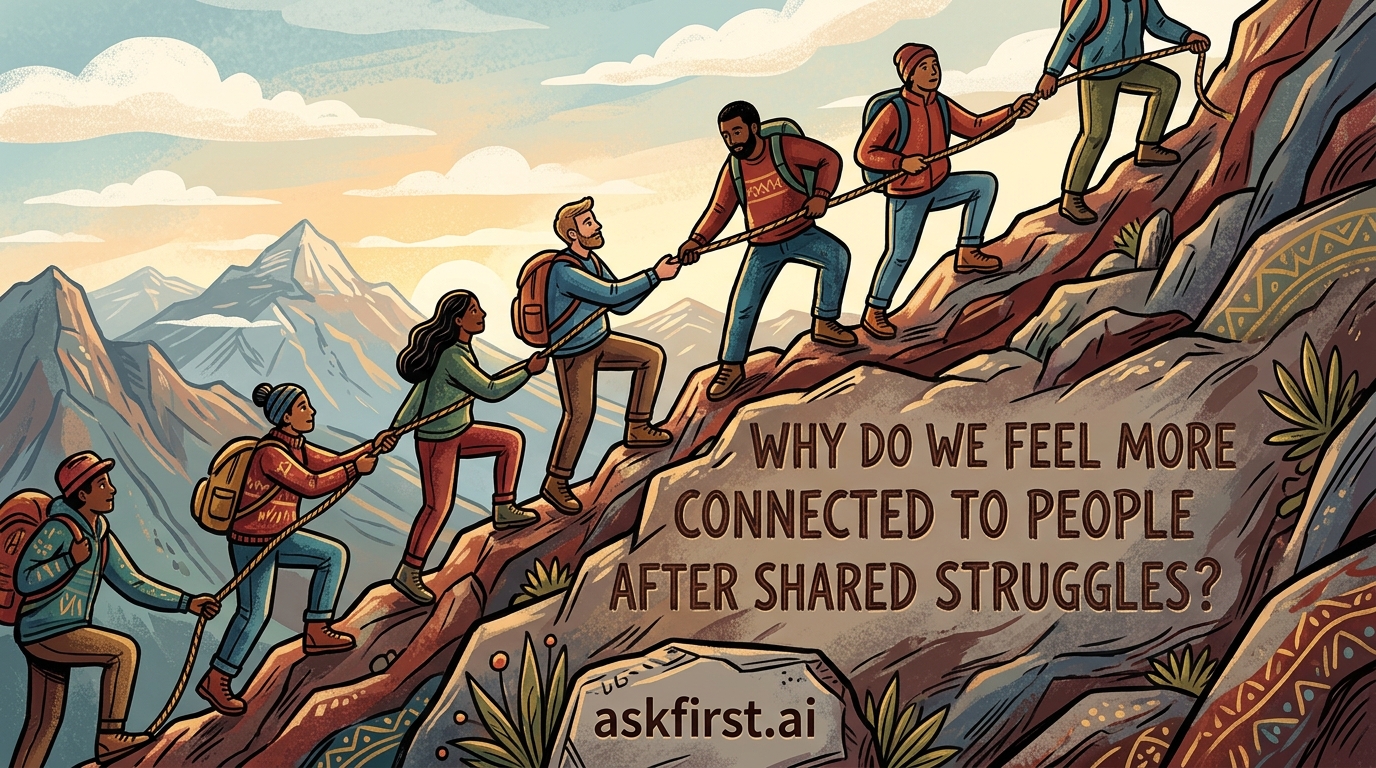
Human beings are fundamentally social animals, and the phenomenon of feeling deeply connected after experiencing shared hardship is a cornerstone of evolutionary survival. From an anthropological perspective, our ancestors who formed tight-knit alliances were significantly more likely to survive unpredictable environmental threats. When individuals navigate a difficult experience together, the brain releases a cocktail of neurochemicals that facilitate social bonding. Specifically, the release of oxytocin, often dubbed the 'bonding hormone,' plays a crucial role. Research suggests that stress triggers the social motivation system, compelling individuals to seek out others, thereby dampening the isolation response and fostering collective resilience.
Psychological Mechanisms: Cognitive Appraisal and Empathy
When people face a challenge together, they engage in a process known as 'co-regulation.' This means that the nervous systems of the participants sync up to manage the emotional weight of the situation. This shared cognitive appraisal allows individuals to view a threat or challenge as a collective mission rather than an individual burden. This shift in perspective diminishes the focus on self-interest and shifts the priority toward group cohesion. Furthermore, witnessing someone else's vulnerability in a moment of distress evokes deep empathy, which serves as a powerful bridge between human psyches. By experiencing the 'same' external stressor, individuals feel validated, knowing that their reactions—no matter how messy—are understood by their companions.
The Role of 'Identity Fusion'
One of the most fascinating concepts in social psychology is 'identity fusion.' This describes a state where an individual’s personal self-concept becomes deeply intertwined with the identity of a group. Shared struggle acts as a catalyst for this process. Unlike group identification, where one feels part of a team, identity fusion involves a visceral, gut-level feeling of being one with others. When people survive a high-stakes event together, the lines between 'self' and 'other' blur. This explains why soldiers who have been in combat, or teammates who have endured a grueling season together, often describe their bond as familial rather than professional.
The 'Effort Justification' Principle
Cognitive dissonance theory offers another layer to this mystery through the principle of 'effort justification.' Human brains are wired to value things more when they have invested significant effort or suffered for them. If a group navigates a difficult, painful, or exhausting challenge, the brain subconsciously increases the value of the relationships involved to justify the 'cost' of the struggle. We simply do not want to believe that we endured pain for something meaningless. Consequently, we perceive the relationships formed within that crucible as exceptionally meaningful and enduring, effectively cementing the social bond through a psychological feedback loop.
The Power of Vulnerability and Authenticity
Social masking is the common tendency to present a curated version of ourselves to the world. During normal daily life, people often engage in 'impression management.' However, struggle is a great equalizer that strips away these social masks. When people are at their limits, they lack the mental energy to maintain a false persona. This forced authenticity is profoundly refreshing and rare in modern society. When we see a colleague, friend, or partner 'unfiltered' during a crisis, we gain a level of trust that is impossible to achieve in superficial settings. This perceived intimacy is a powerful engine for lifelong connection.
Structured Insights for Lasting Connections
To better understand this psychological phenomenon, consider these key takeaways:
- Synchrony: Shared struggle forces a temporal alignment of actions and emotions, leading to greater interpersonal predictability and trust.
- Reduced Hierarchy: Crisis often levels the playing field, making authority and social status secondary to mutual survival.
- Emotional Resonance: Sharing an experience creates a 'mental common ground' that serves as a shorthand for future communication.
- The 'We' Narrative: People who suffer together often start using collective language, signaling a shift in their internal model of the world.
Conclusion
Ultimately, the bond formed through shared hardship is one of the most resilient human experiences. It bypasses the superficialities of typical social interaction and taps into our fundamental need for security, validation, and belonging. By embracing the challenges we face with others, we are not just surviving a temporary hurdle; we are investing in a deeper, more profound network of human connection that serves as an anchor in an unpredictable world. Understanding this science helps us appreciate why our deepest friendships are often forged in the fires of our most difficult days.