The Evolutionary Science of Social Recalibration
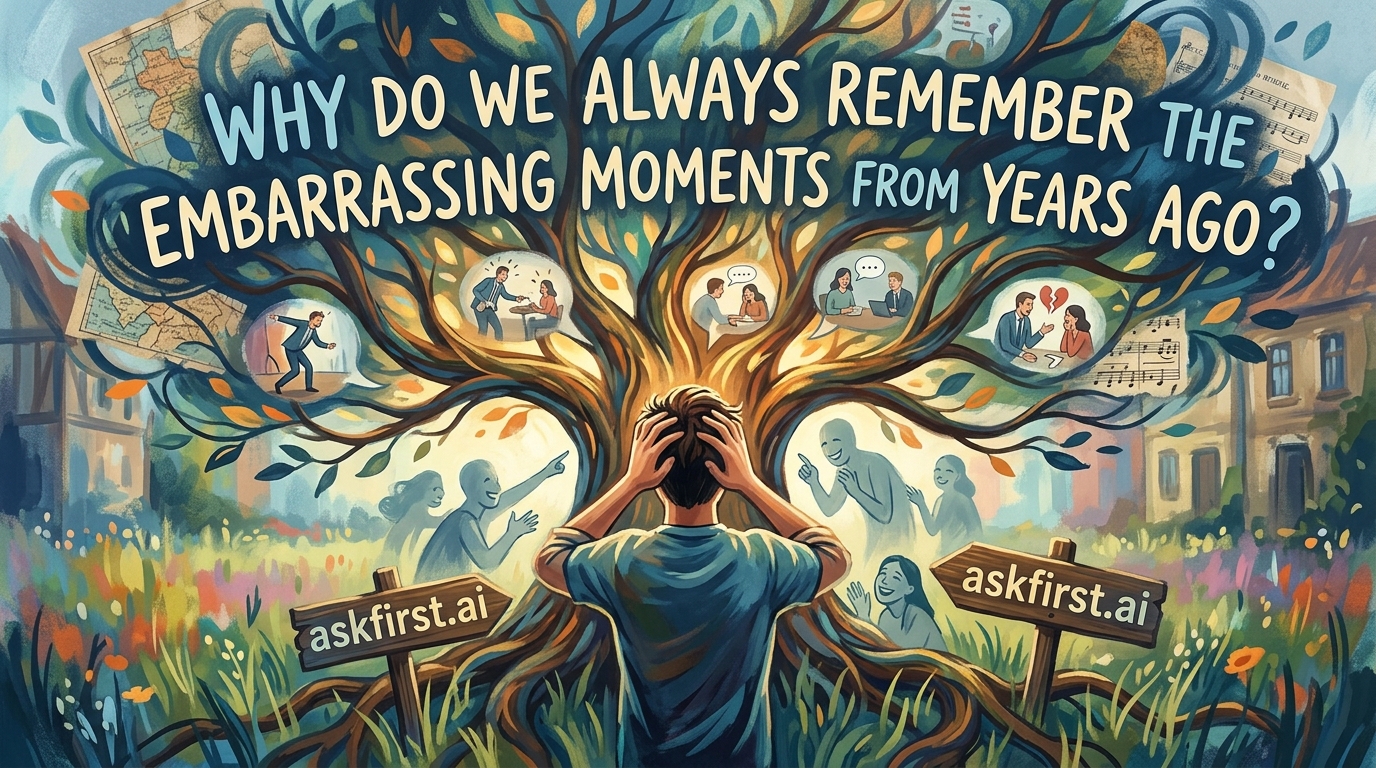
Human memory is not a perfect recorder; it is a survival machine. The phenomenon of fixating on past embarrassment, often referred to in psychology as the 'reminiscence bump' or 'intrusive recall of social faux pas,' is rooted in the architecture of the brain designed to ensure communal safety. When an individual experiences an embarrassing moment, the brain flags that event as a high-priority warning signal. Because humans are fundamentally social creatures who relied on group cohesion for survival, actions that risked social ostracization were historically dangerous. Consequently, the brain encodes these memories with heightened emotional intensity, essentially 'locking' them in place so the individual never repeats the same behavior that led to social rejection.
The Role of the Amygdala and Hippocampus
When a socially awkward situation occurs, the amygdala—the brain’s emotional center—is heavily activated. This activation triggers the release of stress hormones, which communicate with the hippocampus, the area responsible for long-term memory formation. Research indicates that emotional arousal strengthens the neural pathways associated with memories. Therefore, the physiological discomfort felt during embarrassment acts like a highlighter, marking that specific moment for permanent storage. This ensures the information is readily available for future social maneuvering. Effectively, the brain treats the embarrassment of forgetting a name at a party with the same urgency as avoiding a predator, as both historically threatened one's place within the tribe.
Cognitive Biases and the Spotlight Effect
Psychology explains this persistence through several core concepts:
- The Spotlight Effect: This is a psychological phenomenon where people believe they are being noticed more than they actually are. Humans overestimate the degree to which others observe their behaviors, leading to a distorted view of how much a minor slip-up actually mattered to onlookers.
- Negativity Bias: The human brain is evolutionarily wired to pay more attention to negative information than positive information. A single embarrassing event often holds more 'mental weight' than a thousand instances of social success.
- Rumination Cycles: Chronic self-reflection, or rumination, often causes individuals to replay these events. Each time the memory is retrieved, it is reconstructed. If the individual is prone to high self-criticism, the memory may be re-encoded with additional negative interpretation, making the next recollection even more painful.
The Functional Purpose of Embarrassment
Embarrassment is actually a pro-social emotion. It signals to others that one is aware of the social error and understands the norms that were violated. By feeling embarrassed, the individual displays submissiveness and adherence to social hierarchies, which helps maintain harmony within a group. From an evolutionary standpoint, the inability to feel or remember embarrassment would likely lead to a lack of social inhibition, increasing the risk of social expulsion. The discomfort experienced when recalling a decade-old blunder is effectively the 'price' paid for maintaining the social awareness required to exist successfully in a complex society.
Strategies for Mitigating Replay
While the brain is designed to remember these moments, it does not mean one must remain a prisoner to them. Understanding the science allows for cognitive reframing. Experts suggest several techniques to reduce the frequency of intrusive recall:
- Perspective Taking: Practice imagining the event from the perspective of an observer. Most people likely forgot the incident within minutes, or never noticed it at all.
- Self-Compassion: Acknowledging that the event was a learning experience rather than a character flaw helps neutralize the emotional charge.
- Mindfulness Training: Being present in the current moment reduces the time the brain spends searching for past 'errors' to evaluate.
Conclusion
The persistence of embarrassing memories is a testament to the sophistication of the human brain. While it feels like a personal failure, it is actually evidence of a functional, socially-attuned mind working to prevent the repetition of errors. By recognizing these memories as archaic security protocols, individuals can learn to dismiss them with grace, realizing that the 'spotlight' on their past mistakes exists only within their own consciousness, not in the memory of the world around them.