The Power of Perception in Healing
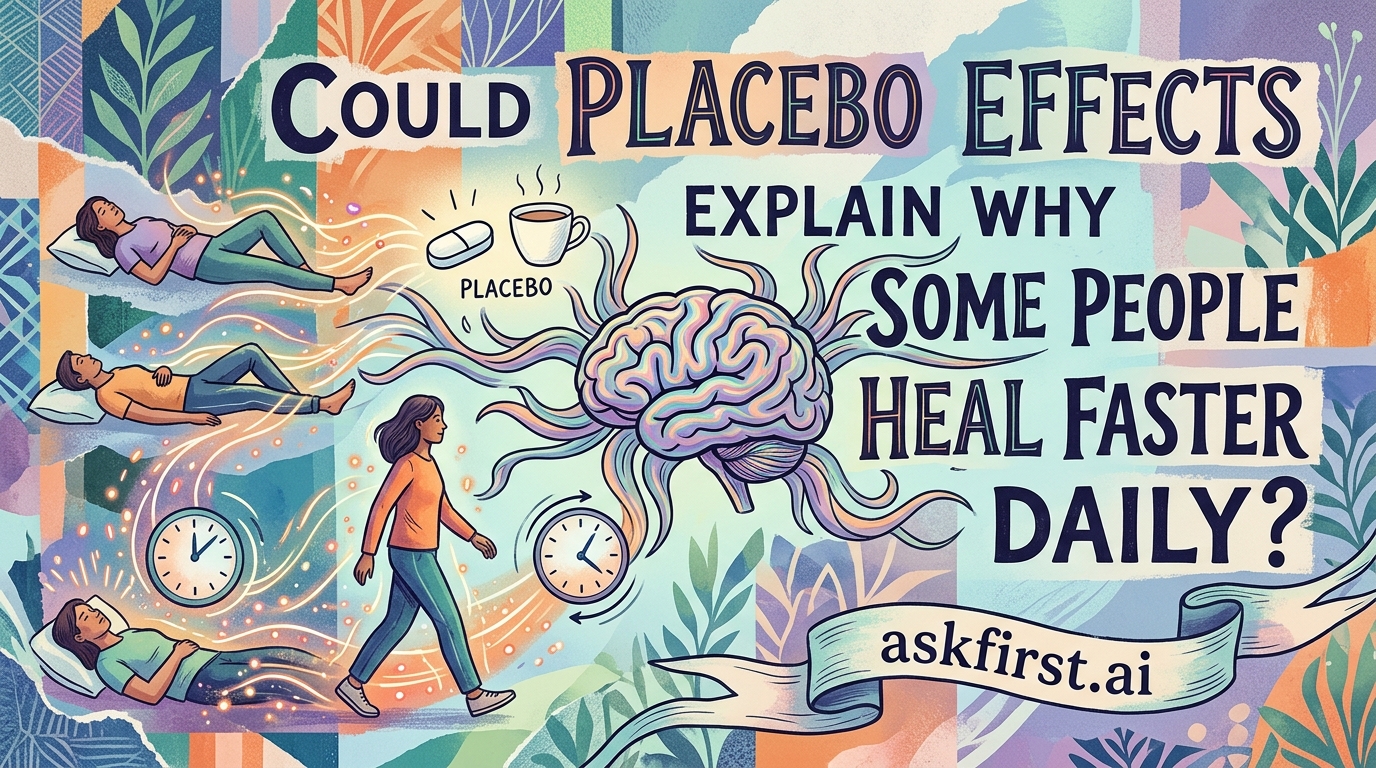
The phenomenon of the placebo effect—where individuals experience real, measurable health improvements despite receiving an inactive treatment—has long intrigued researchers. While traditionally viewed as a confounding variable in clinical trials, modern science increasingly recognizes it as a powerful, legitimate physiological process rooted in the brain's ability to influence the body. This mechanism often explains why some people appear to heal faster than others: it is not necessarily a miracle, but a sophisticated demonstration of mind-body integration.
The Neurobiology of Belief
At the core of the placebo response is the expectation of healing. When a person believes a treatment will work, the brain initiates a cascade of neurochemical changes. Research, particularly in fields such as neuroimaging, has shown that anticipation of relief activates the prefrontal cortex, the anterior cingulate cortex, and the insula. These areas are responsible for processing emotional and sensory input.
Crucially, this cognitive shift triggers the release of endogenous opioids and dopamine. These chemicals are the body's natural painkillers and pleasure-inducing agents. For example, in studies involving post-operative pain, patients who believed they were receiving potent analgesics showed increased activity in the brain's pain-modulatory pathways, effectively numbing the physical sensation of trauma. This endogenous pharmacological release facilitates faster recovery by reducing physiological stress, which in turn lowers inflammation and supports immune function.
Conditioned Responses and Pavlovian Healing
Beyond conscious belief, healing rates are influenced by Pavlovian conditioning. If a person has previously associated a clinic, a white coat, or a specific pill with health improvements, the body begins to prepare for recovery automatically upon encountering these stimuli. This conditioned response is a primal survival mechanism.
For instance, if a person repeatedly takes a supplement that provides mild relief, their nervous system might begin to release anti-inflammatory cytokines even before the active ingredients reach their peak concentration. This "learned" recovery allows some individuals to jumpstart their healing process simply by engaging in the ritual of healthcare, which explains why consistency in habits—such as taking a morning tea or visiting a doctor—can lead to faster personal recovery trajectories.
The Role of Stress Reduction
Placebo responses are heavily mediated by the reduction of stress. The stress hormone cortisol, when chronically elevated, suppresses the immune system and hinders tissue repair. When a person feels cared for—through a medical intervention, a supportive partner, or even the feeling of 'taking charge' of their health—their cortisol levels typically drop.
This shift from a sympathetic 'fight-or-flight' state to a parasympathetic 'rest-and-digest' state is essential for cellular repair. An individual who feels confident and optimistic about their recovery is effectively keeping their internal environment optimized for healing. In contrast, anxiety about illness keeps the body in a state of high alert, which diverts energy away from the restorative tasks of the immune system.
Social Context and Empathy
Healing is rarely a solitary endeavor. The 'meaning' of a treatment—the empathy of a doctor, the quality of communication, and the environment of the hospital—forms the 'contextual response.' Research consistently shows that empathetic doctors achieve better outcomes because their bedside manner acts as a social placebo. The human brain is socially wired; when we perceive that we are safe and supported by others, the nervous system downregulates threat-detection responses. This social buffering effectively reduces the perceived intensity of symptoms and fosters a more resilient physiological state.
Limitations and Reality
It is imperative to note that while the placebo effect is powerful, it has clear limits. It does not replace curative interventions for severe mechanical issues or virulent pathogens. It cannot 'heal' everything, nor is it a substitute for evidence-based medicine. Instead, it is an adjunct tool. It explains the variance in recovery times; if two people sustain the same injury, the one with higher baseline optimism, lower stress, and a stronger perception of support will almost certainly heal faster because their physiology is better aligned with the reparative process.
Cultivating Your Own Healing Potential
- Foster Positive Expectations: Focusing on the efficacy of a treatment can enhance its biological impact.
- Manage Stress: Utilizing mindfulness or breathing techniques encourages the parasympathetic nervous system, which is the body's primary repair mechanism.
- Establish Rituals: Consistent healthcare routines provide the brain with predictive comfort, facilitating faster, automatic physiological responses.
- Seek Support: Connecting with supportive environments helps modulate the body's stress response, creating a fertile ground for recovery.
In conclusion, the placebo effect is not 'all in the head' in the dismissive sense; it is a manifestation of the brain’s profound influence over bodily functions. By understanding and leveraging these mechanisms, individuals can potentially optimize their own healing processes, bridging the gap between clinical intervention and innate biological resilience.