The Psychology of Persistent Memory
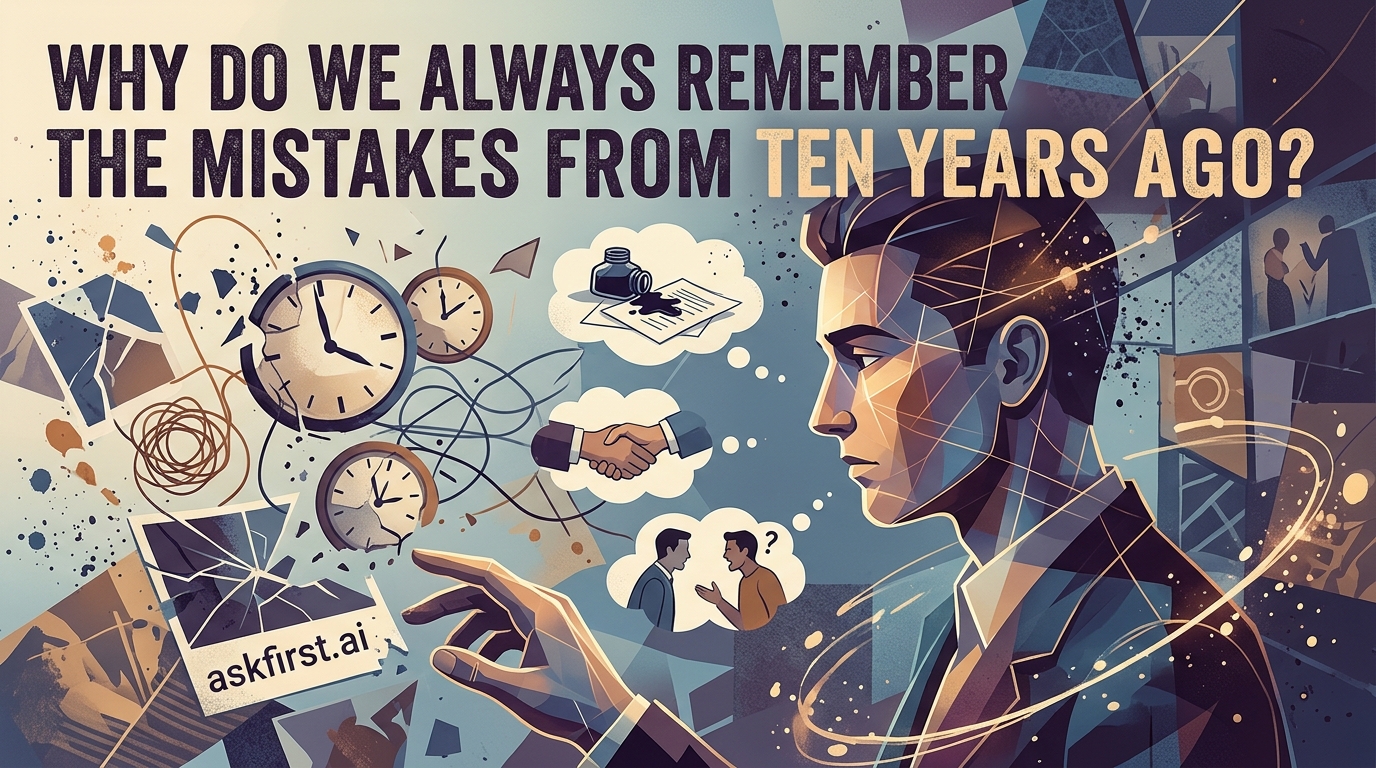
The phenomenon of vivid recall concerning past errors, often referred to as the Zeigarnik Effect or related to the negativity bias, is a hallmark of human cognition. While it may feel like a personal curse, the persistence of these memories serves a fundamental evolutionary purpose. The human brain is not a static recorder; it is a prediction machine designed for survival. When an event involves an error, the brain marks it as a high-priority learning moment to avoid similar negative outcomes in the future.
The Role of Emotional Tagging
Memory is not just about data; it is deeply intertwined with the amygdala, the emotional processing center of the brain. When a mistake occurs, it is frequently accompanied by a spike in cortisol and adrenaline. These neurochemicals act as a highlighter for the hippocampus, the area responsible for long-term memory formation. By tagging the error with a strong emotional response—such as embarrassment, regret, or fear—the brain ensures the event is not easily overwritten by mundane daily activities.
Why Negativity Sticks: The Evolutionary Edge
Evolutionarily speaking, failing to remember a mistake that led to social exclusion or physical danger was far costlier than forgetting a positive experience. This is known as the negativity bias. Humans are evolutionarily wired to prioritize information that suggests potential risk. In a modern context, social mistakes are treated by the brain with a similar intensity to physical threats, as social standing was historically vital for survival. Consequently, the brain keeps these 'failure' files active, repeatedly pulling them from long-term storage whenever environmental cues resemble the original scenario.
The Zeigarnik Effect: Unfinished Business
The Zeigarnik Effect suggests that people remember uncompleted or interrupted tasks better than completed ones. When a mistake happens and the individual feels they have not 'fixed' or resolved the situation, the brain views it as an open loop. This cognitive dissonance keeps the memory active. The brain wants to achieve closure, so it pushes the memory to the surface, hoping the individual will eventually find a way to reconcile that past action with their current identity.
Mechanisms of Persistent Recall:
- Encoding Strength: Higher emotional arousal during an event leads to stronger consolidation.
- Neural Rehearsal: Thinking about a mistake creates a feedback loop, reinforcing the synaptic pathways associated with that memory.
- Self-Identity Integration: When a mistake conflicts with the current view of the self, the brain works harder to process that discrepancy.
Breaking the Cycle: Strategies for Cognitive Reset
Understanding why the brain clings to these memories is the first step toward managing them. Rather than trying to suppress these thoughts—which often leads to the Ironic Process Theory, where the forbidden thought becomes more prominent—experts suggest Cognitive Reframing. By objectively analyzing the mistake as a data point rather than a reflection of personal worth, individuals can 'close the loop'.
1. De-personalization
Treat the memory like a case study. Ask: 'What specific skill was lacking here?' rather than 'Why am I like this?'
2. The Ten-Year Rule
Consider the permanence of the consequence. If the error has no impact on current life functionality, the brain's retention is purely archival, not functional.
3. Mindfulness and Acceptance
Recognize the thought as a transient neurological signal. Acknowledge that the brain is simply doing its job to keep one 'alert,' and then redirect attention to a present-tense task.
Conclusion
Remembering mistakes from a decade ago is a testament to the brain's dedication to optimization. While it can be uncomfortable, viewing these memories as legacy systems of survival can turn them into tools for wisdom. The mind is trying to protect its owner, ensuring that old pitfalls are identified and bypassed in the landscape of the future. By moving from a state of emotional regret to one of analytical insight, those memories cease to be anchors and instead become navigational buoys.