The Evolutionary Blueprint of Memory
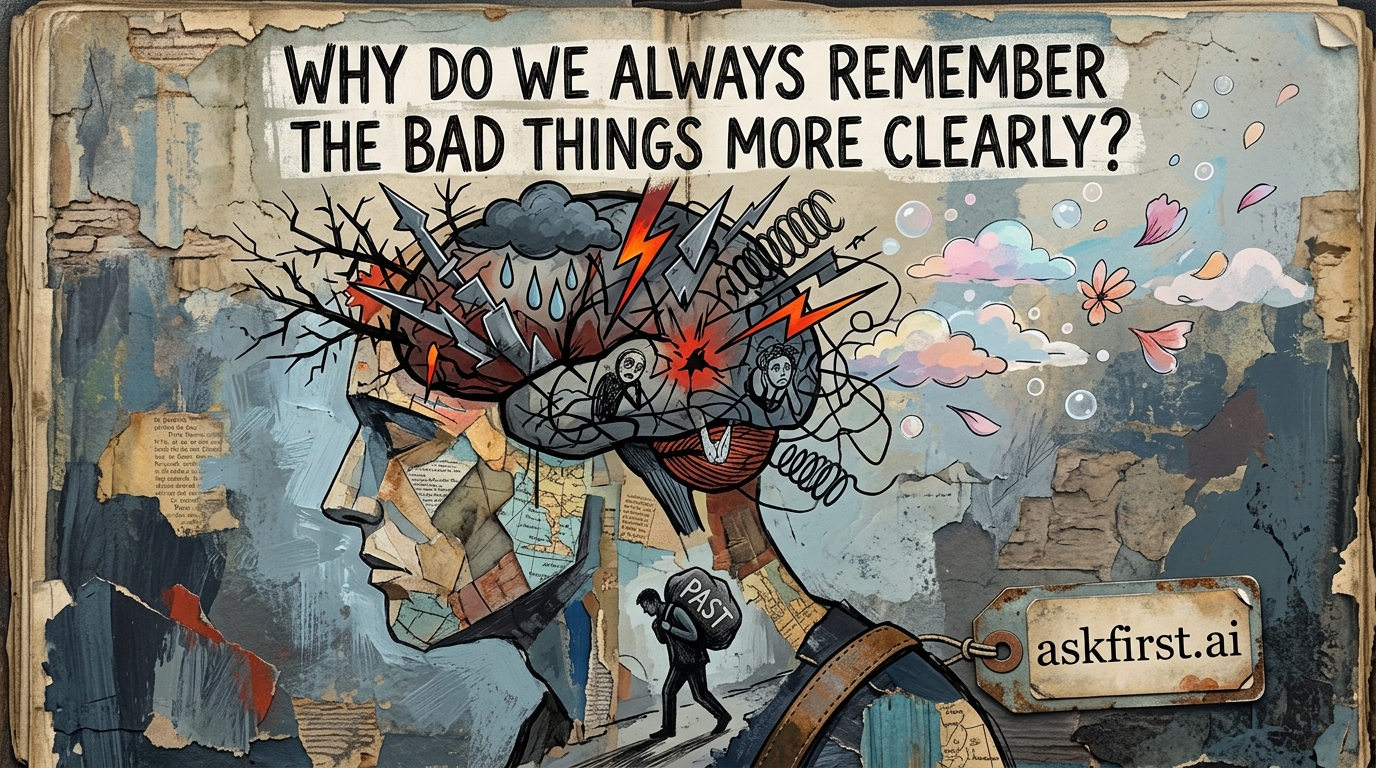
The phenomenon where negative experiences occupy a more prominent space in human consciousness is formally known as the negativity bias. From an evolutionary perspective, this is not a flaw in the human design but rather a sophisticated survival mechanism. In the ancestral environment, the cost of failing to notice a potential threat—such as a predator lurking in the brush or a poisonous plant—was infinitely higher than the benefit of noticing a beautiful sunset or a pleasant meal. Consequently, the brain evolved to prioritize 'survival-critical' information. Negative events signal a deviation from the expected norm and often demand immediate action or future avoidance strategies, leading the brain to etch these memories more deeply into neural pathways.
The Neural Architecture of Negative Memories
At the core of this process is the amygdala, an almond-shaped cluster of nuclei in the temporal lobe responsible for emotional processing. When an experience triggers an emotional response, the amygdala signals the hippocampus—the brain's command center for memory consolidation—to prioritize the storage of that specific event. Because negative experiences often trigger a stronger physiological stress response (the release of cortisol and adrenaline), they activate the amygdala more intensely than neutral or positive events. This biological surge functions as a neurochemical highlighter, signaling to the hippocampus that this specific memory is vital for long-term retention. This explains why a single negative critique at work might overshadow a week of positive feedback.
Psychological Frameworks: The Survival Advantage
Psychologists have identified several mechanisms that keep these memories at the forefront of the mind:
- The Negativity Dominance: Research by Roy Baumeister and colleagues suggests that 'bad is stronger than good.' In studies of social interactions, relationships, and even daily mood, negative occurrences consistently influence our psychological state more significantly than positive ones.
- The Repetition Effect: Humans are prone to rumination. When something goes wrong, the brain often engages in 'mental simulations' to determine how to avoid a recurrence. This cognitive rehearsal inadvertently strengthens the memory trace.
- The Expectation Gap: Humans hold a baseline expectation of stability and comfort. When a negative event occurs, it violates this expectation, creating a 'prediction error' that forces the brain to analyze and learn from the situation more rigorously.
Why This Is Not a Moral Failing
It is essential to understand that this bias is a systemic feature of the cognitive architecture, not a personal character defect. The tendency to dwell on negative inputs is the brain's way of trying to 'prepare' the individual for future challenges. However, in the modern world—where immediate physical threats are fewer but social and professional anxieties are higher—this ancient mechanism can become misaligned with reality, leading to chronic stress or disproportionate worry about minor social slip-ups.
How to Mitigate the Negativity Bias
While the bias is biological, humans possess the capacity for metacognition—the ability to think about thinking. Awareness is the first step toward balance. Strategies to cultivate a more balanced memory landscape include:
- Conscious Intentionality: Actively practicing gratitude is more than a wellness trend; it is a cognitive exercise. By intentionally cataloging positive inputs, one creates a 'neural buffer' that balances the natural weight of negative memories.
- Labeling Emotions: Simply labeling a negative event as a result of the 'negativity bias' can reduce its emotional intensity by moving the processing from the limbic system to the prefrontal cortex, which governs rational thought.
- Reframing: Instead of asking, 'Why did this go wrong?', shift the narrative to 'What was the exact lesson learned, and how does it serve the future?' This redirects the brain's energy from rumination to constructive planning.
The Eternal Balance
Ultimately, remembering the bad things more clearly is a testament to the brain's dedication to our survival. While it can feel burdensome in a world that craves positivity, it remains a pillar of human resilience. By acknowledging this ancient bias, we gain the power to manage our emotional lives more effectively. We can acknowledge the 'survival alert' the brain provides without letting it dictate our entire emotional landscape, ensuring we learn from the past while remaining anchored in the possibilities of the future.