The Eternal Nature of Honey: Nature's Culinary Miracle
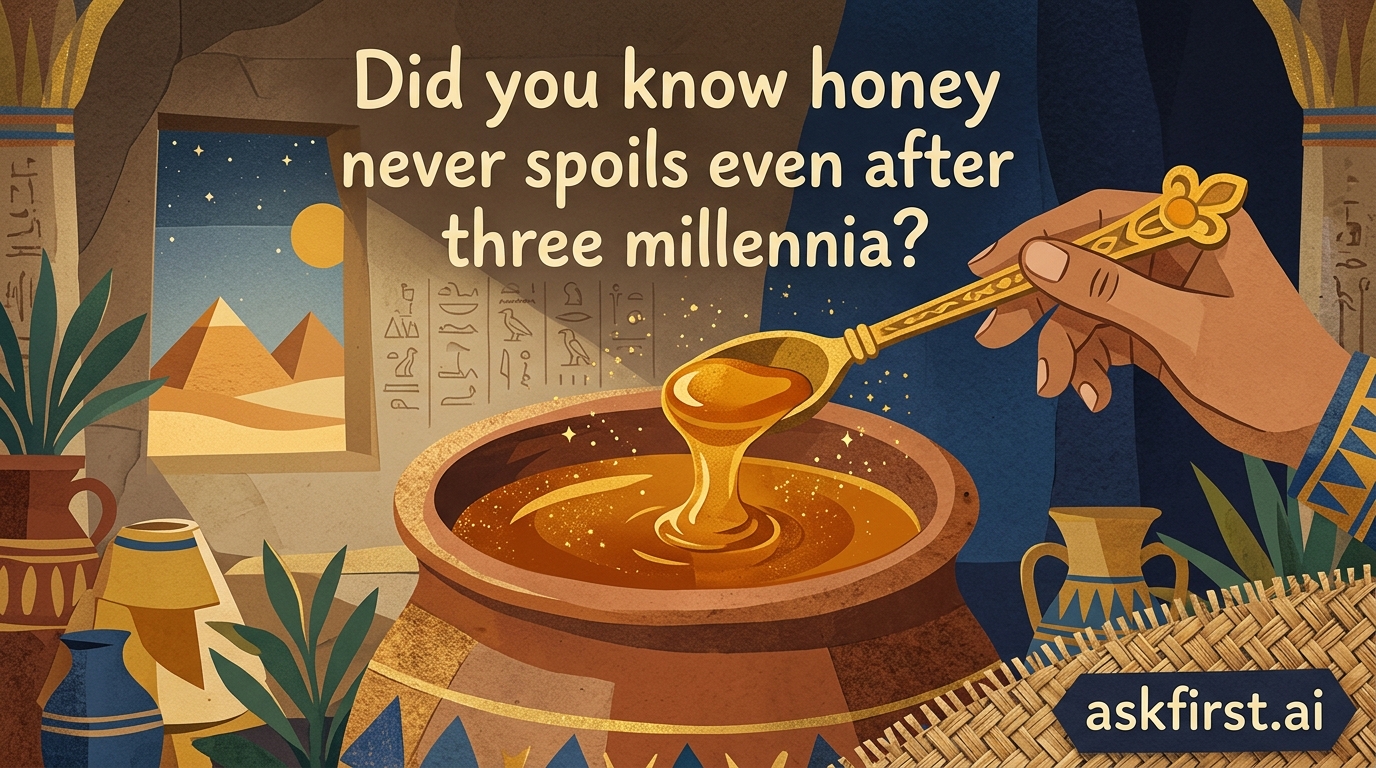
Honey is often described as one of the most remarkable substances found in the natural world. Archeological evidence confirms that edible honey has been discovered in ancient Egyptian tombs, dating back over 3,000 years. Remarkably, once these jars were opened, the honey inside remained perfectly preserved. This phenomenon is not magic, but a sophisticated masterpiece of biochemistry. Understanding why honey remains shelf-stable indefinitely requires a deep dive into its unique chemical composition, environmental defenses, and the industrious labor of honeybees.
The Chemical Composition: A Triple Threat to Bacteria
To understand why honey does not spoil, one must look at its specific structural properties. Honey is inherently hostile to microbial life due to three primary factors:
Low Water Content (Hygroscopicity): Honey is composed primarily of sugars, specifically glucose and fructose, with very little water. Because honey is hygroscopic, it pulls moisture out of its environment. When bacteria land on honey, the substance literally dehydrates them, destroying their cellular structure through osmosis. Without water, microorganisms cannot survive or proliferate.
High Acidity: The pH level of honey typically ranges between 3 and 4.5. This level of acidity is sufficient to inhibit the growth of most food-borne pathogens. The acidic environment functions as a chemical barrier that prevents the colonization of bacteria that would typically lead to decay.
Hydrogen Peroxide Production: Perhaps the most fascinating aspect is the presence of the enzyme glucose oxidase. Bees add this enzyme during the honey-making process. When honey comes into contact with moisture, this enzyme reacts to produce hydrogen peroxide. This acts as a powerful disinfectant, effectively sterilizing the surface and keeping the honey clean throughout its long lifespan.
The Role of the Hive Environment
Beyond the chemistry of the honey itself, the environment within the hive contributes to its preservation. Bees utilize propolis, a resinous mixture produced by mixing saliva with beeswax and substances gathered from tree buds. Propolis creates a sealed, sterile environment. Furthermore, the constant fanning of the bees' wings evaporates excess water from the nectar before it is capped in beeswax cells. By reducing the water content to below 18 percent, the bees ensure that the substance is too thick and dense for spoilage.
The Crystallization Myth: Why Honey "Changes"
One common misconception is that honey has spoiled if it turns cloudy, thick, or forms crystals. It is vital to understand that crystallization is a physical change, not a sign of expiration or fermentation. Honey is a supersaturated solution of sugar. Over time, the glucose molecules naturally begin to separate from the water and form crystals. This is a testament to the purity of the honey. If honey crystallizes, it can easily be returned to a liquid state by placing the jar in a warm water bath. Heating it gently melts the crystals without compromising the integrity of the honey, provided the temperature remains below 110 degrees Fahrenheit to protect the natural enzymes.
Proper Storage: Maintaining the Miracle
While honey is essentially immortal, human handling can introduce variables that compromise it. The primary enemy of honey preservation is moisture. If the lid is left off, the honey will absorb moisture from the air, increasing its water content and making it susceptible to fermentation. To store honey indefinitely, keep it in an airtight glass or food-grade plastic container. Avoid keeping it in humid areas, such as directly above a boiling stove, to prevent condensation from seeping into the jar.
Scientific Implications for Food Preservation
The study of honey's preservation qualities has significant implications for modern food science. Researchers have long studied honey to develop natural food preservatives that can replace synthetic additives. Its ability to create a hostile environment for bacteria without the need for refrigeration or chemical additives is a cornerstone of sustainable food storage solutions. Furthermore, in clinical settings, medical-grade honey is sometimes used in wound care. Because it is naturally sterile and promotes tissue regeneration, it serves as an effective antimicrobial dressing that prevents infection while the wound heals.
Conclusion
From the ancient pharaohs to modern-day kitchens, honey stands as a symbol of nature's efficiency. It is a product of high-intensity biological engineering. By balancing low water content, high acidity, and natural enzymatic defenses, bees produce a substance that defies the standard laws of organic decay. When stored correctly, a jar of honey purchased today could theoretically be enjoyed decades or even centuries from now. It remains one of the few items in the modern pantry that does not require an expiration date, proving that nature's simplest ingredients often hold the most enduring secrets.