The Evolutionary Advantage of Regret
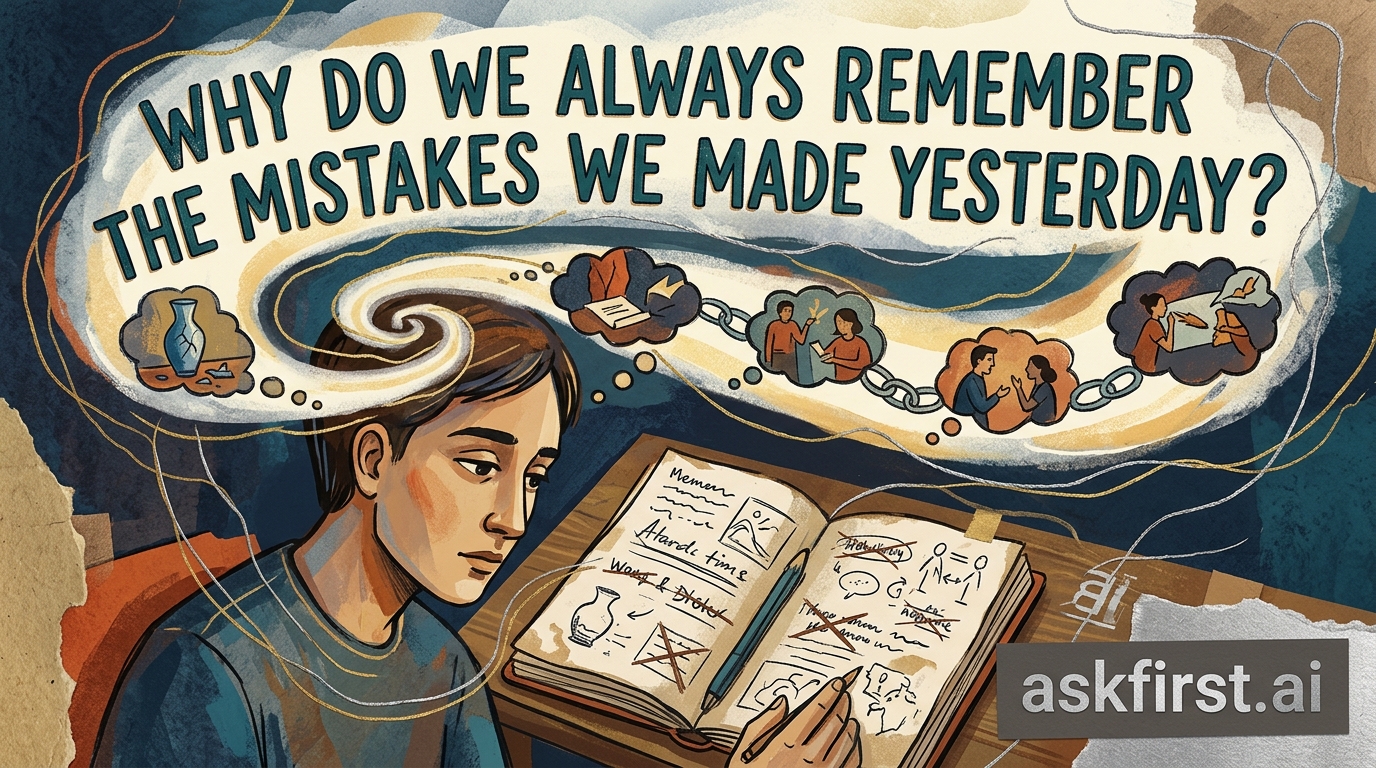
The phenomenon of ruminating on past errors, often referred to as the 'negativity bias,' is deeply rooted in the architecture of the human brain. Evolution prioritized the survival of the species by placing a higher premium on avoiding threats than on seeking rewards. Consequently, neural pathways are effectively hard-wired to prioritize negative stimuli—such as mistakes, social blunders, or perceived dangers—over positive experiences. This mechanism ensures that individuals remain hyper-aware of circumstances that could lead to unfavorable outcomes, serving as a biological safeguard against repeating actions that resulted in harm, embarrassment, or loss of resources.
The Role of the Amygdala and Hippocampus
When a mistake occurs, the brain undergoes a complex neurobiological response. The amygdala, which functions as the emotional processing center, triggers a heightened alertness response. Simultaneously, the hippocampus works to encode the memory of the event with high emotional intensity. Because the memory is 'tagged' with strong negative emotions like shame or anxiety, it becomes exceptionally salient. Research indicates that emotional arousal strengthens memory consolidation, meaning that memories associated with high levels of distress are more readily accessible than neutral memories. This is why a simple mistake in a professional meeting might be replayed in the mind for days, while the mundane successes of the same week fade into insignificance.
The Zeigarnik Effect: Unfinished Mental Business
Beyond simple biology, cognitive psychology offers the Zeigarnik Effect as a primary explanation for why our focus fixates on past failures. This principle states that individuals recall uncompleted or interrupted tasks better than completed ones. When a mistake occurs, the brain perceives this as an unresolved conflict or an 'unfinished' event in the narrative of the day. The mind keeps the event in a state of 'active' processing, seeking a solution or a closure that hasn't yet been achieved. This mental loop functions as an internal auditor, obsessively reviewing the data to prevent a recurrence. However, in the modern world, this often manifests as counterproductive rumination rather than constructive learning.
Social Survival and the Cost of Embarrassment
Human beings are inherently social animals. In ancestral environments, being ostracized from the tribe due to a mistake could be fatal. Consequently, the brain developed an intense sensitivity to 'social signals'—behaviors that might lead to exclusion. Remembering a social blunder, such as misreading a social cue or saying the wrong thing, is a manifestation of the brain's attempt to refine social calibration. Even in non-life-threatening environments, the brain treats social mistakes with the same urgency as physical threats, driving the tendency to 'over-remember' minor social errors to ensure smoother future interactions.
Practical Strategies to Break the Cycle
Understanding the mechanics of memory does not mean one must remain a prisoner to them. Several evidence-based strategies can help transition from unproductive rumination to growth-oriented reflection:
- Cognitive Reframing: Consciously shift the perspective from 'What did I do wrong?' to 'What can I learn for the next opportunity?' This activates the prefrontal cortex, which is involved in logical planning and executive function, thereby calming the amygdala.
- The 10-10-10 Rule: Evaluate the mistake by asking: Will this matter in 10 minutes? 10 months? 10 years? This technique provides essential temporal perspective and helps dampen the emotional intensity associated with the event.
- Externalization: Documenting thoughts in a journal can provide the necessary distance to view an error objectively. By converting internal, nebulous thoughts into written words, the brain often finds the closure it is seeking, effectively hitting the 'save' button and allowing the mental loop to stop.
- Self-Compassion: Acknowledging that mistakes are an essential component of the human learning process can reduce the cortisol-induced stress that fuels rumination. Scientific studies have shown that self-compassion is a stronger predictor of future success than self-criticism, as it allows for quicker emotional recovery after an error.
Conclusion: Moving from Rumination to Resilience
The propensity to recall yesterday’s mistakes is not a sign of cognitive defect; rather, it is a testament to the brain's tireless, if sometimes overzealous, drive toward self-improvement. By viewing these intrusive memories as automated data-processing events rather than defining character flaws, individuals can harness the inherent intelligence of their neural systems. Instead of fighting the memory, one can simply acknowledge the biological impetus to learn, extract the necessary lesson, and deliberately pivot toward the tasks of the future, ultimately turning the habit of rumination into a tool for refined judgment and emotional mastery.