The Phenomenon of Sensory Gating
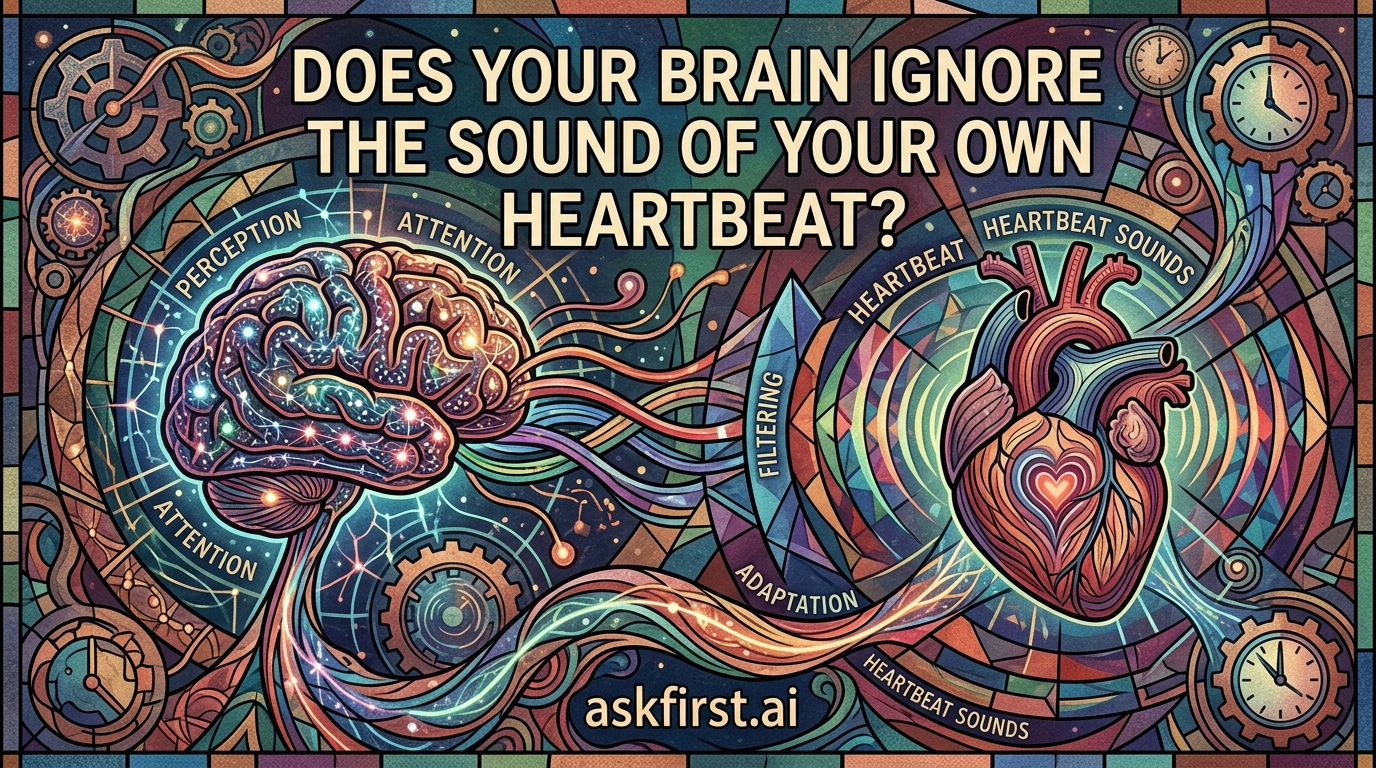
The human brain is a marvel of efficiency, constantly processing millions of bits of information every second. To prevent sensory overload, the brain utilizes a mechanism known as sensory gating or filtering. This process allows the central nervous system to distinguish between relevant, novel stimuli and repetitive, background noise. The sound of one's own heartbeat, which occurs roughly 100,000 times per day, is the ultimate example of a constant, redundant input. If the human brain did not actively filter out this sound, the rhythmic thumping would dominate conscious awareness, rendering it nearly impossible to focus on anything else.
Why the Sound Remains Absent
The silence of the heartbeat in consciousness is not due to the lack of signal. The inner ear and the brain are perfectly capable of detecting internal vibrations. However, through a process called predictive coding, the brain creates a neural model of the body. By predicting the rhythmic interval of the heartbeat, the auditory cortex effectively 'subtracts' that signal from the conscious sensory experience. This is essentially a form of biological noise-canceling. Researchers have found that the brain dampens the auditory response to self-produced sounds, a phenomenon often observed when individuals speak—the brain anticipates the frequency and intensity of the voice, reducing the volume at which the person perceives their own speech compared to how others hear it.
Psychological and Physiological Implications
Adaptation and Habituation: Habituation is the simplest form of non-associative learning. When the brain encounters a steady, harmless stimulus, it reduces the neural firing in response. Since the heartbeat is persistent and harmless, the brain classifies it as 'background' information, much like the sensation of clothes against the skin or the feeling of one's own nose in the peripheral vision.
Focus and Performance: Consider the cognitive burden of a heartbeat that sounds like a drum. If individuals were forced to listen to the rhythmic contraction of their cardiac muscles, performance in complex tasks such as reading, coding, or problem-solving would likely drop significantly. The gating mechanism preserves limited executive attention for higher-order cognitive processing.
The Role of the Thalamus: Often referred to as the brain's 'relay station,' the thalamus plays a critical role in filtering sensory input. It acts as a gatekeeper, deciding which stimuli deserve to be passed along to the cortex for conscious analysis and which should be discarded as background noise.
Exceptions: When the Heartbeat Becomes Audible
There are specific, often temporary, conditions where this barrier breaks down. Understanding these instances highlights just how hard the brain works to keep the heartbeat suppressed:
Physical Exertion: During high-intensity exercise, the heartbeat becomes more forceful due to increased stroke volume. This physical force can create vibrations that bypass the usual filters, occasionally allowing an individual to feel or hear a 'thumping' in the ears or neck.
Stress and Anxiety: States of hyper-arousal can lower the threshold for sensory processing. In cases of panic or high stress, the brain may enter a heightened state of sensitivity, making internal sensations—like the heartbeat—more salient.
Pulsatile Tinnitus: This is a medical condition where an individual hears a rhythmic noise, such as a whooshing or thumping, in time with the heartbeat. This is not the brain failing to ignore the sound, but rather an underlying physical issue, such as blood flow turbulence in the vessels near the ear, being perceived by the auditory system as an external sound.
The Predictive Brain Model
The concept of the 'predictive brain' is a cornerstone of modern neuroscience. The brain is not a passive receiver of information; it is an active model-builder. It constantly generates expectations about the world based on past experiences. Because the heart is an internal, self-generated source of stimulation, it is categorized as 'self' rather than 'external world.' The brain prioritizes information coming from the outside, as that is where potential threats or rewards exist. By relegating the heartbeat to an internal, predictable state, the brain ensures that the conscious mind remains optimized for navigating the environment rather than monitoring the biological machinery that sustains it.
Conclusion: A Design of Efficiency
The silence of the heartbeat is a masterpiece of biological engineering. It demonstrates the brain's capacity for complex, subconscious filtering that supports our ability to function in a chaotic world. By treating the rhythmic pulse of life as a background constant, the brain allows us to engage with our surroundings with clarity and focus. Far from being a flaw, the inability to hear the heart is a testament to the cognitive grace of human evolution, ensuring that the rhythm of life continues beneath the threshold of awareness, allowing us to pursue everything else with an undistracted mind.