The Psychology of Nighttime Rumination
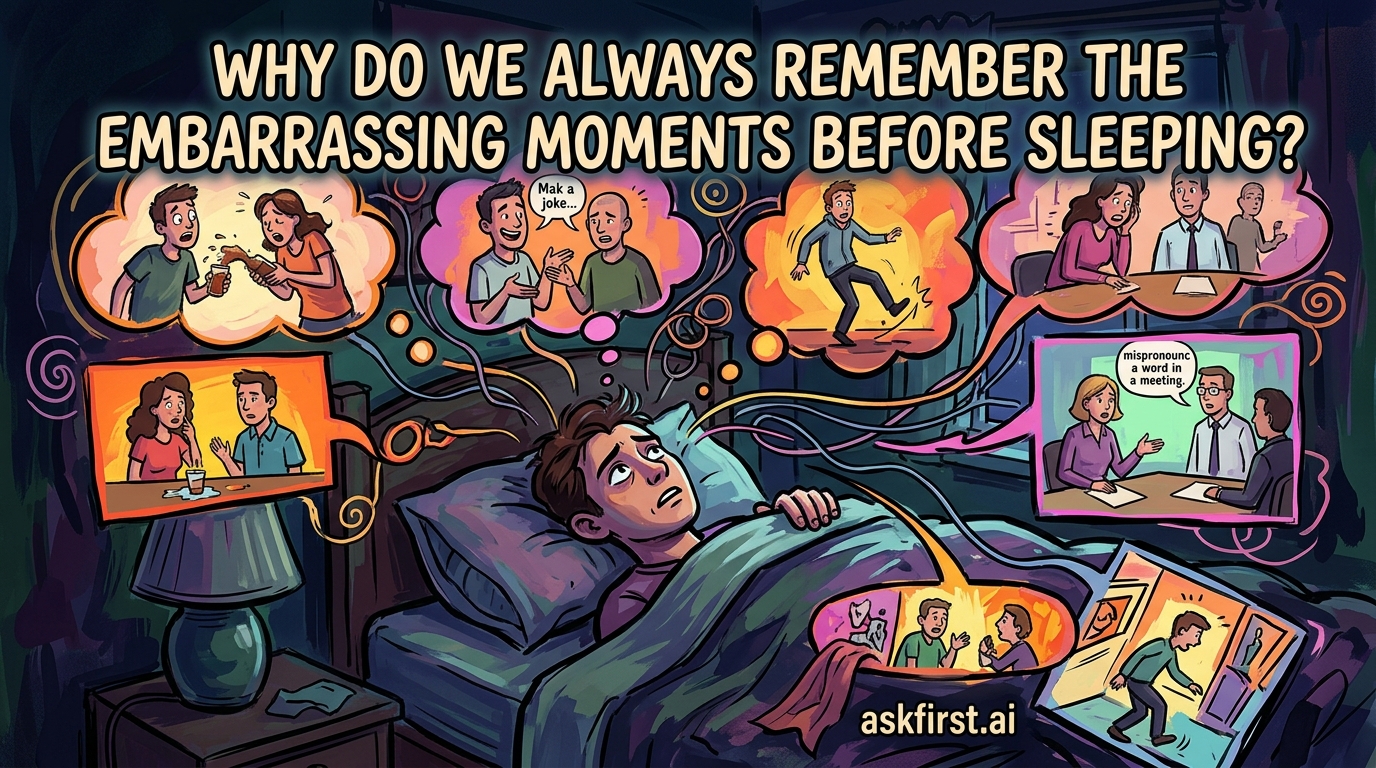
The phenomenon of experiencing intrusive, embarrassing memories specifically while attempting to fall asleep is a universal human experience. This state, often referred to as nighttime rumination, is not merely a quirk of personality but a complex neurological process rooted in how the brain manages memory consolidation and sensory input. When the external stimuli of the busy daylight hours subside, the brain is left with a void that it instinctively attempts to fill, often by scanning stored emotional information.
The Role of Sensory Deprivation
During the day, the human brain is flooded with incoming sensory data: sights, sounds, social interactions, and physical tasks. These inputs act as a distraction, keeping the brain’s default mode network—the system responsible for self-referential thought—occupied. Once a person lies down in a quiet, dark environment, sensory input drops significantly. In this state of relative sensory deprivation, the brain shifts its focus inward. Without new data to process, the brain navigates its internal database, and because embarrassing memories carry high emotional intensity (the 'negativity bias'), they are often retrieved first. The brain is effectively scanning for threats or social errors to learn from, even if the memory is years old.
The Negativity Bias and Emotional Salience
Psychologists emphasize the concept of the negativity bias, which posits that humans are evolutionarily wired to prioritize negative experiences over positive ones. From an ancestral perspective, failing to remember a dangerous predator or a social transgression that could lead to ostracization was more consequential than failing to remember a pleasant sunset. Consequently, memories associated with embarrassment trigger a mild physiological stress response, keeping them vivid and easily accessible. When the executive function of the prefrontal cortex—the logical, regulating part of the brain—begins to fatigue at night, the emotional centers like the amygdala may become more active, making these memories feel more potent and harder to suppress.
The Impact of Fatigue on Executive Function
Cognitive control is a finite resource. Throughout the day, the prefrontal cortex works to regulate impulses and manage logical thought. By the time an individual is ready to sleep, this 'regulatory muscle' is exhausted. This exhaustion is precisely why intrusive thoughts feel more uncontrollable at night. The brain is less capable of 'cognitive reappraisal'—the ability to look at an embarrassing memory and objectively tell oneself, 'It does not matter, and nobody else remembers that.' Without this logical intervention, the brain is allowed to loop through the embarrassing scenario repeatedly.
Strategies to Manage Nighttime Intrusive Thoughts
Understanding that this is a neurological mechanism rather than a character flaw is the first step toward mitigation. Experts recommend several evidence-based techniques to quiet the mind:
- Cognitive Distraction: Engaging in a low-stimulation activity, such as listening to a podcast or an audiobook, provides enough external stimulus to occupy the brain’s language processing center, preventing it from drifting into rumination.
- The 'Brain Dump' Technique: Writing down the intrusive thoughts before getting into bed serves as a way to signal to the brain that these concerns have been documented, theoretically reducing the need for the brain to keep them 'active' in working memory.
- Mindfulness Meditation: Focusing on breath or physical sensations helps anchor the brain in the present moment, effectively breaking the cycle of time-traveling back to past social errors.
- Reappraisal Practice: Practicing self-compassion during the day can change how these memories are categorized. By acknowledging that errors are part of the learning process, the emotional weight of the memory is diminished over time.
Why This Is Actually Beneficial
While uncomfortable, this nighttime process serves an essential biological function. Sleep is the primary window for memory consolidation, where the brain organizes and stores information gathered during the day. By revisiting past errors—even those that feel embarrassing—the brain is attempting to categorize social learning. The goal of this process is to ensure that future behavior is better calibrated to prevent similar mistakes. While the process feels like torture, it is, in effect, the brain performing a post-mortem analysis of social data. Recognizing this allows for a shift in perspective: instead of viewing these moments as personal failures, one can view them as the brain's persistent, if misguided, attempt at optimization. Through this understanding, the cycle of anxiety can be replaced with a more balanced acceptance of the complex human cognitive apparatus.