The Psychology of Vulnerability and Connection
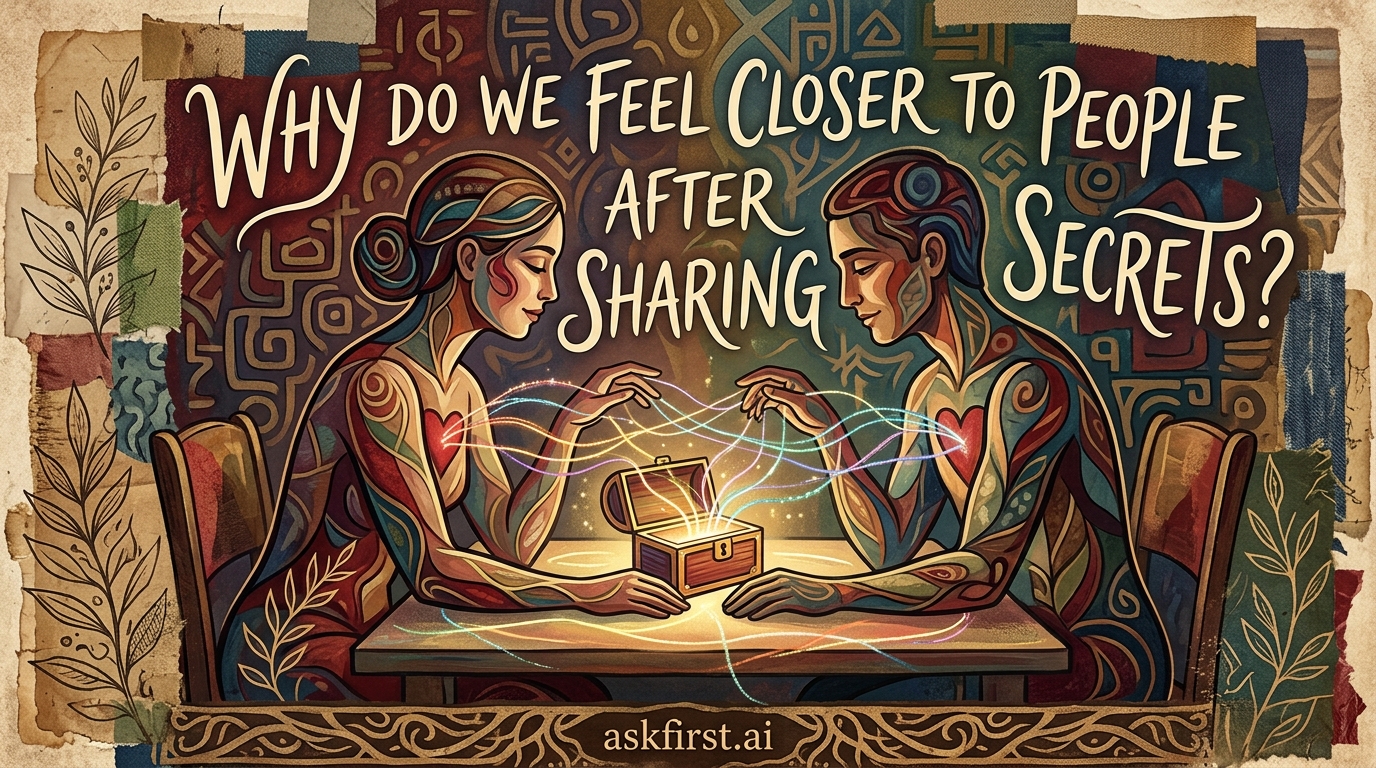
Human connection is the bedrock of our species' survival. The act of sharing a secret, a practice known in psychological circles as self-disclosure, serves as the most potent accelerator for interpersonal intimacy. When an individual chooses to reveal private information, they are performing a complex psychological maneuver that bypasses surface-level social barriers. This process is not merely social; it is deeply rooted in evolutionary biology and neurochemistry.
The Mechanism of Reciprocal Vulnerability
At the heart of this phenomenon lies the principle of Reciprocal Self-Disclosure. Research suggests that when one person lowers their guard and shares a vulnerability, it creates an implicit social contract. The listener feels a psychological 'debt' to match that level of intimacy. This process, often referred to by psychologists like Arthur Aron as the 'fast-track to intimacy,' is a dance of trust. By disclosing, the sharer demonstrates a profound level of trust, and by listening, the recipient validates that trust. This cycle creates a positive reinforcement loop where both parties perceive the other as safer, more authentic, and more reliable.
Neurochemical Drivers: The Role of Oxytocin
Sharing secrets triggers the release of oxytocin, frequently dubbed the 'bonding hormone.' This neuropeptide is the same chemical released during physical intimacy and breastfeeding. When a secret is shared, the brain interprets the act as a move toward a cooperative, tribal state. Oxytocin reduces the activity of the amygdala, the brain's fear center. Consequently, the individual experiences less social anxiety and a greater sense of calm and openness toward the listener. The secret becomes a shared asset, creating a 'we' versus 'them' dynamic that solidifies the bond.
The 'Authenticity Bias' and Cognitive Ease
Humans possess an inherent desire to categorize others quickly. Most daily interactions remain in the realm of 'small talk,' which is mentally inexpensive but socially thin. When someone reveals a secret, they move out of the 'persona' of everyday life. This provides the listener with the impression of witnessing the 'real' version of the person. According to studies on the Authenticity Bias, we are cognitively predisposed to trust individuals who appear 'unmasked.' By sharing a secret, an individual sheds their social facade, which in turn reduces the listener's cognitive load; the listener no longer has to guess about the sharer's true motivations or underlying personality.
Psychological Safety and Social Cohesion
Beyond chemistry, there is the sociological element of Psychological Safety. To share a secret is to provide the other person with 'leverage.' The sharer is effectively saying, 'I trust you with this part of my history, and I trust that you will not use it to harm my reputation.' When the listener keeps this secret, the social bond is tested and reinforced. This constitutes a hallmark of long-term partnership development.
Strategies to Build Connection Through Disclosure
To foster healthy, deep connections in your life, consider the following evidence-based practices:
- The Incremental Approach: Do not overshare immediately. Trust is built like a staircase, not a leap. Start with small, personal opinions before moving into profound secrets.
- Active Validation: When someone shares a secret with you, listen without judgment. The goal is to make the sharer feel understood, not fixed.
- The Mirroring Technique: Match the emotional tone of the disclosure. If someone shares a vulnerability with humor, keep the energy light; if they share with gravity, treat it with respect.
The Risk of Excessive Disclosure
While disclosure is the bridge to intimacy, it is essential to distinguish between authentic vulnerability and emotional dumping. True connection is built on shared vulnerability. If a person shares secrets in a way that overwhelms the listener, it can backfire, creating distance rather than closeness. Healthy disclosure requires a balance where both parties feel heard and respected.
Summary of Key Principles
- The Trust Paradox: By handing over power (a secret), you gain security in the relationship.
- Hormonal Regulation: Oxytocin facilitates a biological shift that prioritizes long-term cooperation over individual ego protection.
- Social Signaling: Sharing a secret acts as an evolutionary signal that you have chosen this person to be part of your 'inner circle' or kin group.
By understanding that secrets are not just data points but bridges, individuals can navigate social landscapes with more empathy and deeper intentionality. Every secret shared is a layer of the social shell stripped away, allowing for the raw, authentic connection that all human beings fundamentally crave.