The Evolutionary and Psychological Power of Vulnerability
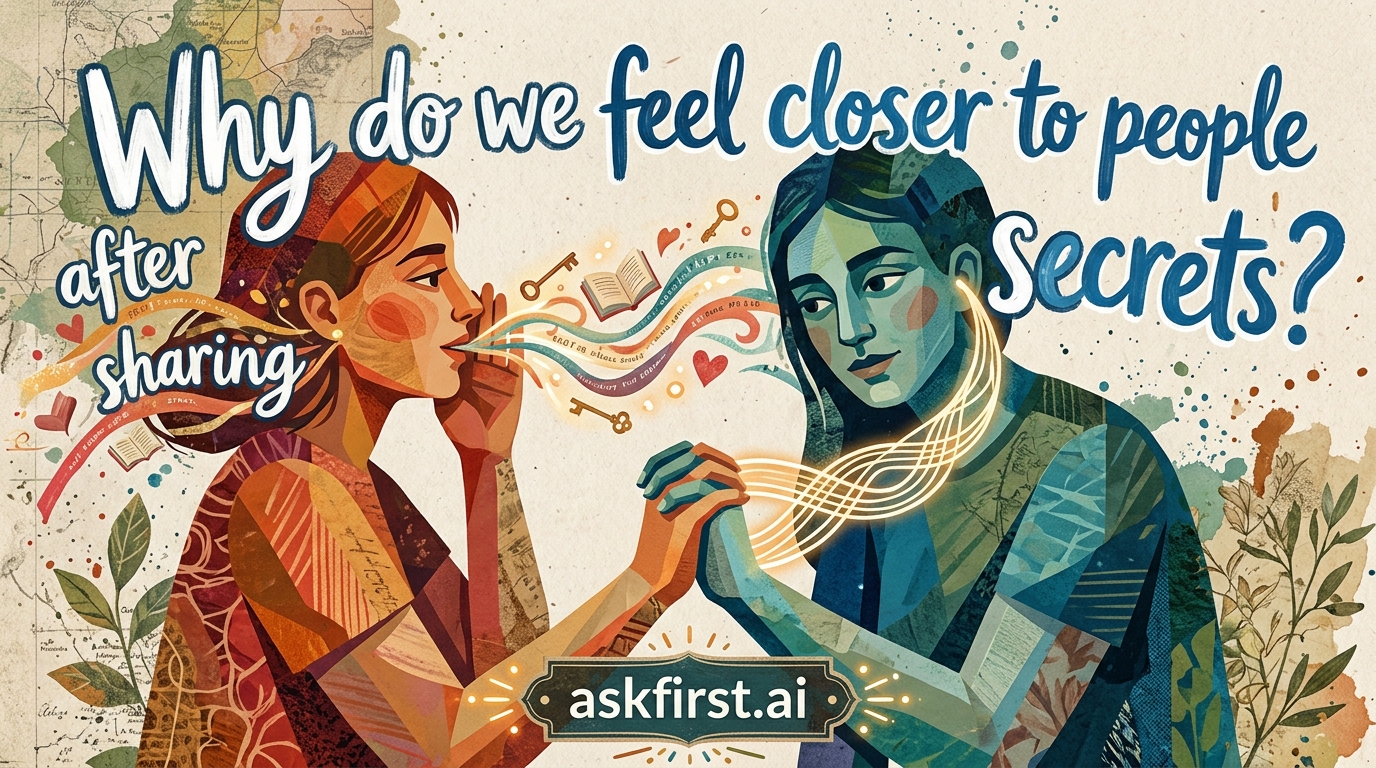
Human connection is fundamentally rooted in the exchange of information. While mundane social interactions serve to maintain superficial bonds, the act of disclosing personal secrets serves as a powerful catalyst for accelerated intimacy. This phenomenon, often referred to as 'reciprocal self-disclosure,' is the bedrock upon which trust, empathy, and long-term attachment are built. When an individual chooses to unveil a hidden part of their inner world, they are essentially signaling that the other person is a trusted confidant, which triggers a reciprocal desire to bridge the emotional distance.
The Neurobiology of Shared Secrets
From a neurological standpoint, the act of sharing a secret is a high-stakes psychological investment. When a person reveals something private, they are effectively lowering their defense mechanisms and exposing their authentic self to potential judgment. This vulnerability stimulates the release of oxytocin, frequently dubbed the 'bonding hormone.' Oxytocin is essential in social cognition; it reduces the brain's reactivity to social stress and promotes feelings of calmness, safety, and cooperation. As the listener receives this 'gift' of information, their own brain experiences an uptick in mirror neuron activity, which facilitates a deeper capacity for empathy. The neurological alignment between two individuals during such a conversation creates a shared state of consciousness that mimics the neural patterns of established intimacy.
The Social Psychology of Trust Construction
Trust is rarely built through objective competence alone; it is constructed through the perceived reliability of a social partner. Sharing a secret serves as a functional 'risk test.' When Party A shares a secret, they are providing Party B with sensitive information that could theoretically be used against them. If Party B maintains the secret, they prove their integrity. This silent contract validates the relationship's strength. Researchers such as Arthur Aron have pioneered studies on 'the experimental generation of interpersonal closeness,' demonstrating that systematic, reciprocal disclosure—starting with small truths and moving toward deeper personal secrets—can bridge the gap between strangers in less than an hour.
Why It Works: The Curiosity Gap and Emotional Validation
Humans possess an innate drive to understand the inner workings of others. Secrets represent an 'information void,' or a curiosity gap. When this void is filled through intimate disclosure, the brain experiences a dopamine hit associated with the resolution of uncertainty. Furthermore, there is the powerful mechanism of 'validation.' By sharing a secret, an individual asks, 'Can you accept me even with this hidden truth?' When the listener responds with non-judgmental acceptance, the sharer experiences an immediate sense of relief and unconditional positive regard. This experience reinforces the belief that the other person is a safe harbor for the psyche.
The Role of Reciprocity and Social Exchange Theory
Social Exchange Theory posits that human relationships are evaluated through a cost-benefit analysis. While sharing secrets carries the cost of vulnerability, the benefit of deepening the relationship far outweighs the risk. Reciprocity is the engine of this exchange. If one person reveals a deep truth, the other feels a social imperative to provide a similar level of vulnerability. This escalating cycle of disclosure transforms a casual acquaintance into an intimate ally. This process is not just about the information conveyed; it is about the act of sharing itself as a behavioral signal that says, 'I value our relationship enough to entrust you with my truth.'
Practical Implications for Healthy Relationships
Understanding the mechanics of shared secrets offers profound insights into how to foster stronger connections:
- Intentionality: Choose to share secrets with people who have demonstrated the emotional maturity to handle them.
- Pacing: Gradual disclosure is more effective than 'trauma dumping.' The most sustainable bonds are built when disclosure is mutual and paced appropriately.
- Active Listening: The listener’s response is just as vital as the secret itself. Validation and empathy are the keys that turn a shared secret into a bond.
In summary, the intimacy fostered by secrets is an evolutionary safeguard that allows humans to identify reliable allies within a complex social landscape. By choosing to let down our walls, we invite others into our mental architecture, allowing us to weave our lives together in a way that transcends mere shared activity or conversation. It is the raw, authentic honesty inherent in secret-sharing that transforms the mechanical nature of interaction into the profound art of human connection.