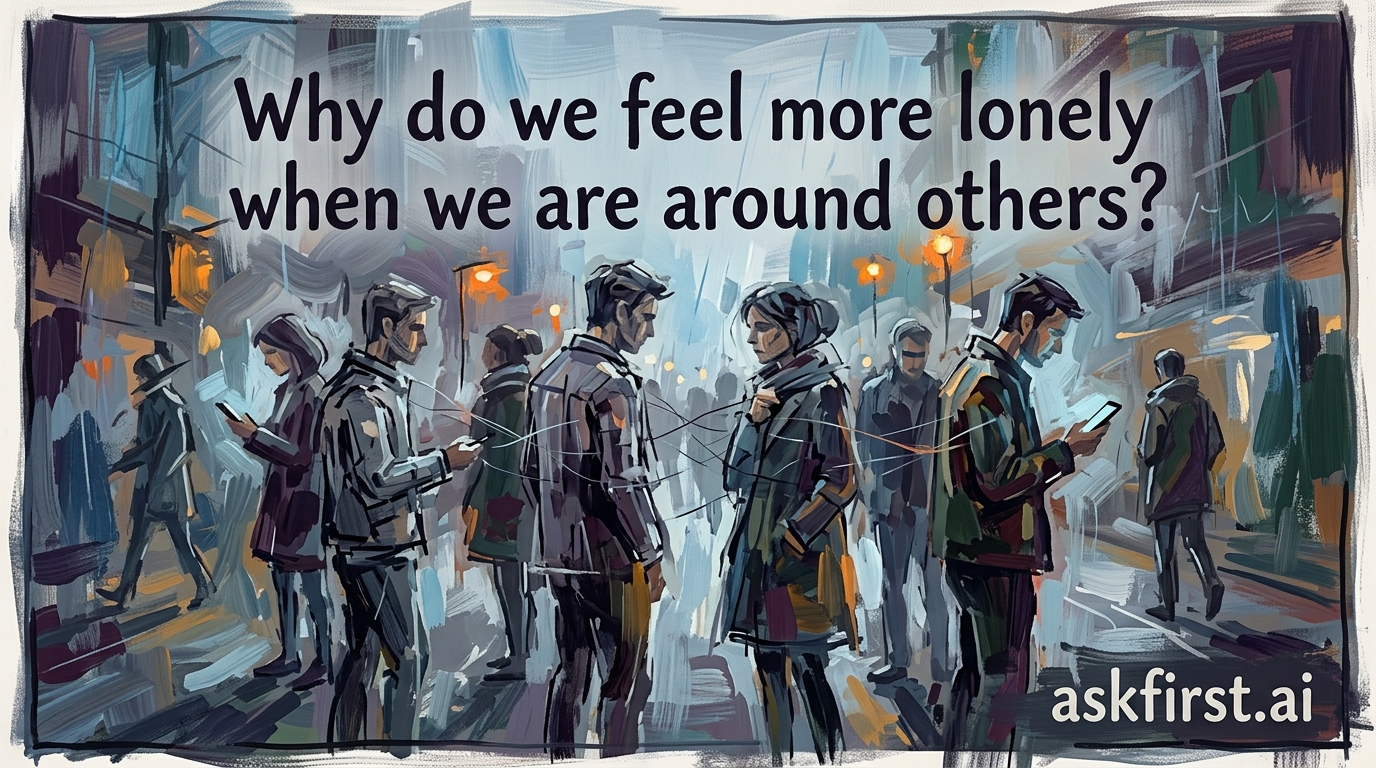
The Paradox of Social Presence: Why Loneliness Strikes in Crowds
Loneliness is often mischaracterized as a state of physical isolation. The common assumption is that to be lonely, one must be alone. However, human experience reveals a profound, counter-intuitive reality: the most intense pangs of isolation often occur in the middle of a bustling social gathering, a crowded office, or even at the dinner table with family. This phenomenon, known as perceived social isolation, challenges our understanding of human connection and highlights the discrepancy between physical presence and emotional intimacy.
The Psychology of the Mismatch
At its core, loneliness is not a lack of people; it is a lack of perceived social support. When an individual is surrounded by people but feels unseen, misunderstood, or emotionally disconnected, the brain interprets this as a threat to survival. Evolutionarily, humans are hardwired to thrive in tribal networks. When those networks exist physically but fail to provide the psychological warmth of belonging, the discrepancy triggers a distress signal. This gap between the need for intimacy and the reality of superficial interaction creates a vacuum that is often more painful than true solitude.
Why It Happens: The Core Mechanisms
- The Inauthenticity Barrier: When social interactions lack depth, the brain detects an absence of authenticity. Performing a 'social mask' to fit in requires significant cognitive load. The effort to maintain appearances while being surrounded by others is exhausting, leading to feelings of alienation.
- The Comparison Trap: Being around others often invites social comparison. Witnessing the perceived joy, success, or intimacy of others can amplify personal feelings of inadequacy. The contrast between one's internal state and the external environment becomes sharper.
- The Lack of Emotional Reciprocity: Loneliness in a crowd often stems from a failure of 'attunement.' When individuals share their thoughts or feelings but do not receive validating feedback, they feel invisible. The presence of others then serves as a constant reminder of what is lacking—a mirror reflecting the emotional void.
- The Impact of Digital Distraction: Even when physically together, digital fragmentation prevents true presence. When companions focus on screens, the physical environment remains crowded, but the social environment is effectively empty.
The Neuroscience of Social Exclusion
Research in social neuroscience, specifically studies conducted on the brain’s response to social pain, indicates that the same neural pathways that process physical pain—the anterior cingulate cortex—are activated during feelings of loneliness. When an individual feels excluded or misunderstood within a group, the brain experiences this as a literal 'wound.' It is a biological drive pushing the person to seek out more secure, meaningful connections, even if those connections are currently absent.
How to Navigate the Paradox
Understanding the nature of this loneliness is the first step toward resolution. To combat this feeling in social settings, consider the following evidence-based strategies:
- Practice Active Vulnerability: Loneliness often lingers because individuals guard their true selves. Engaging in genuine, authentic conversation, rather than superficial 'small talk,' facilitates deeper bonding and reduces the internal feeling of alienation.
- Shift from Consumption to Contribution: Instead of observing others, focus on how to contribute value or empathy to the environment. Active participation shifts the perspective from being an isolated observer to a vital component of the social unit.
- Assess the Quality of Connections: If loneliness persists, it may be an signal that the current social environment is not aligned with personal values or needs. Seeking out communities based on shared interests or deeper commonalities can replace the sense of 'being around' others with the reality of 'being with' them.
Conclusion: The Shift from Quantity to Quality
Ultimately, loneliness in the presence of others is an invitation to re-evaluate the quality of our social engagements. It is not an indictment of our social worth, but a sophisticated signal from our psychology that we require more than just presence—we require resonance. By moving toward authenticity and prioritizing depth over proximity, individuals can transform the isolation of the crowd into a meaningful experience of community. True social satisfaction is found not in the number of faces in a room, but in the level of human connection woven between them.