The Evolutionary Purpose of Social Pain
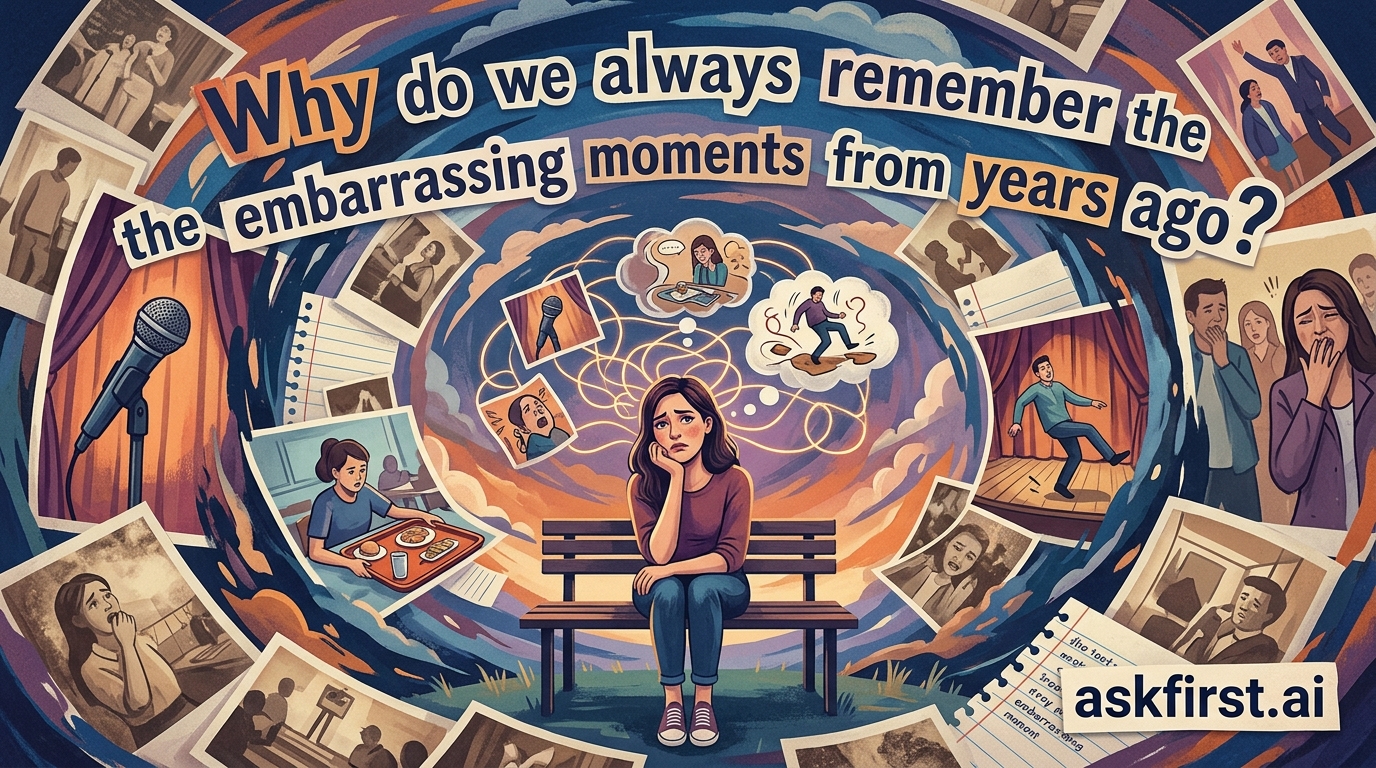
The human tendency to fixate on past blunders is not a design flaw but rather an ancient evolutionary safeguard. In ancestral environments, group acceptance was synonymous with survival. To be cast out of a social circle meant limited access to resources, protection, and mating opportunities. Therefore, the brain developed a heightened sensitivity to social feedback. This phenomenon is known as the negativity bias, where the human brain prioritizes the processing of negative experiences over positive ones to prevent a repeat of actions that might lead to ostracization.
The Spotlight Effect and Cognitive Distortion
One primary psychological mechanism at play is the Spotlight Effect. This occurs when individuals overestimate the degree to which others notice or dwell on their personal actions or appearance. In reality, most people are far too preoccupied with their own lives to maintain long-term records of another person's awkward stumble. However, the brain struggles to accurately predict this reality. Because the event triggered an intense emotional spike—shame, surprise, or discomfort—the memory was encoded with high vividness. This leads to ruminative cycles, where the brain rehearses these scenarios repeatedly, mistakenly believing that if it thinks about the event enough, it can somehow undo the embarrassment or find a way to make it 'less bad' in the social ledger.
Why Emotional Intensity Matters
Neuroscience suggests that the amygdala, the area of the brain responsible for processing emotions, plays a critical role in memory consolidation. When an experience is accompanied by intense negative emotion, the amygdala signals the hippocampus—the area associated with memory storage—that this specific moment is 'high priority' information. This creates a neural blueprint that makes the memory more accessible than neutral experiences. This is why a simple breakfast from three years ago is forgotten, but a moment of public speaking failure remains crystal clear. It is the brain's attempt to categorize the 'data' as essential survival training.
Strategies for Managing the 'Cringe' Factor
Understanding the mechanics behind these thoughts can help mitigate their impact. Here are several evidence-based approaches to handle recurring intrusive memories:
- Cognitive Reframing: Instead of seeing the event as an indictment of character, frame it as a 'data point' in social learning. Ask what the event taught about social boundaries or self-presentation.
- Practicing Self-Compassion: Research indicates that people who treat themselves with kindness during failures recover faster. Accepting that 'to err is human' reduces the intensity of the emotional reaction, which in turn weakens the neural pathway associated with that memory.
- The 'Five-Year Rule': Ask whether the event will matter in five years. Most embarrassing moments fail this test, which helps put the event into a realistic perspective.
- Acceptance and Commitment Therapy (ACT): Rather than trying to suppress the thought, which often leads to the 'white bear effect'—where suppressing a thought makes it more frequent—simply notice the thought without judgment and shift focus back to present-moment tasks.
The Social Value of Mistakes
It is essential to recognize that social stumbles often demonstrate authenticity. Psychological studies have shown that individuals who are willing to show vulnerability are often perceived as more relatable and likable. Perfection can feel robotic or distant, whereas the occasional lapse in grace reminds others of our shared humanity. By shifting the perspective from 'I was foolish' to 'I showed vulnerability,' the sting of the memory can be repurposed into a source of social strength.
Ultimately, the brain is simply doing its job by trying to learn from the past. By acknowledging the neurological roots of these memories—and recognizing that nobody is truly keeping score—individuals can turn those ancient, cringeworthy archives into a testament to their own growth and enduring human adaptability.