The Phenomenon of Subjective Time Dilation
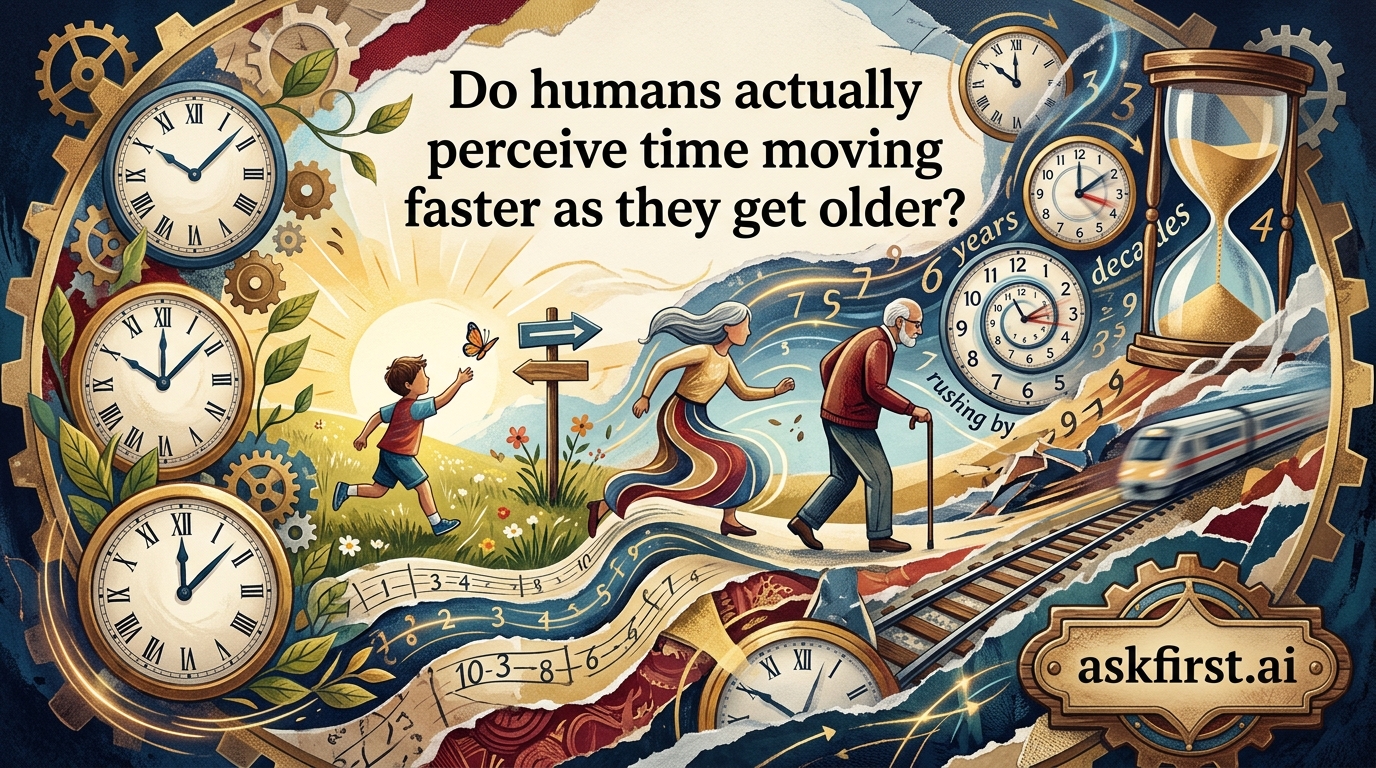
It is a nearly universal observation among adults: as the years pass, the perception of time seems to accelerate. Summers that once felt like endless, sun-drenched epochs during childhood condense into fleeting weeks, and decades appear to pass in what feels like a blink of an eye. This sensation is not merely a nostalgic sentiment but a well-documented psychological and neurobiological phenomenon often referred to as the 'Holiday Paradox' or the 'Proportional Theory' of time perception.
The Proportional Theory
One of the most prominent explanations for why time seems to speed up involves mathematics, specifically the concept of proportional time. To a five-year-old child, a single year represents twenty percent of their entire existence. The subjective impact of that year is massive because it constitutes a significant portion of their lived reality. In contrast, to a fifty-year-old, a year is merely two percent of their life. Because each unit of time constitutes a smaller slice of the total memory bank, the brain perceives it as having less weight, leading to the impression that it passed by more rapidly.
The Role of Novelty and Memory Encoding
Psychologists emphasize the importance of novelty in shaping how the brain processes time. When individuals are young, almost every experience is new—learning to ride a bike, the first day of school, or discovering a new hobby. The brain is forced to record these novel stimuli with high levels of detail because it lacks pre-existing templates for them.
- High-Detail Encoding: During periods of high novelty, the brain consumes more cognitive energy to process and store memories.
- Retrospective Evaluation: When looking back on a period filled with new experiences, the brain perceives a high density of memories, which makes the duration feel longer.
As adults develop routines, life becomes predictable. The brain stops recording repetitive, mundane tasks with high-resolution detail, effectively switching to 'autopilot.' Because there are fewer unique 'landmarks' in a familiar adult routine, the mind perceives a lower density of memories when looking back at a month or a year, leading to the sensation that the time evaporated.
Neurobiological Perspectives
Beyond psychology, neurobiological factors play a role in how we perceive time. Some researchers suggest that the speed of neural processing slows down as we age. When the brain processes visual images at a slower rate, fewer frames of information are captured over the same chronological interval. If the brain receives less visual 'data' per second as it ages, the external world may seem to occur faster relative to the internal pace of thought.
Furthermore, the neurotransmitter dopamine, which is linked to the brain’s internal clock and reward systems, tends to decrease in efficiency as the brain ages. Since dopamine helps encode intervals of time, a reduction in its peak efficiency may contribute to the altered perception of temporal flow.
How to Mitigate the Feeling of Acceleration
While the aging process is inevitable, researchers suggest that the subjective acceleration of time is not purely biological; it is heavily influenced by lifestyle. To 'slow down' the feeling of time passing, individuals can employ several strategies to keep the brain engaged in high-detail encoding:
- Seek Novelty: Engaging in new activities—learning a language, traveling to an unfamiliar location, or picking up a complex musical instrument—forces the brain to pay attention and create new, detailed memory pathways.
- Practice Mindfulness: Being fully present in the current moment reduces the tendency to live on 'autopilot.' By consciously observing one's surroundings, the brain is forced to record more detail, effectively 'thickening' the perception of that duration.
- Break Routines: Minor changes, such as taking a different route to work or rearranging furniture, can disrupt the brain’s tendency to habituate, thereby creating more distinct 'snapshots' in long-term memory.
Conclusion
The perception of time accelerating is a complex interplay between how we process new information and how we categorize our life experiences. While we cannot change the ticking of the clock, understanding the mechanisms behind this phenomenon empowers us to curate a life filled with experiences that keep our minds sharp, engaged, and present. By prioritizing variety and mindfulness, it is possible to reclaim the 'slow' quality of time that seemed so prevalent in our youth, proving that the speed of our lives is, in many ways, a function of our own attention.