The Sleeping Architect: How Memories Solidify at Night
It is a common misconception that the brain shuts down when an individual enters the realm of sleep. In reality, the sleeping brain is arguably more active and industrious than it is during many periods of waking life. Far from being a passive state of rest, sleep is a sophisticated, highly organized biological process. One of its primary functions is the curation, consolidation, and integration of the information gathered throughout the day into the long-term architecture of the human mind.
The Memory Consolidation Hypothesis
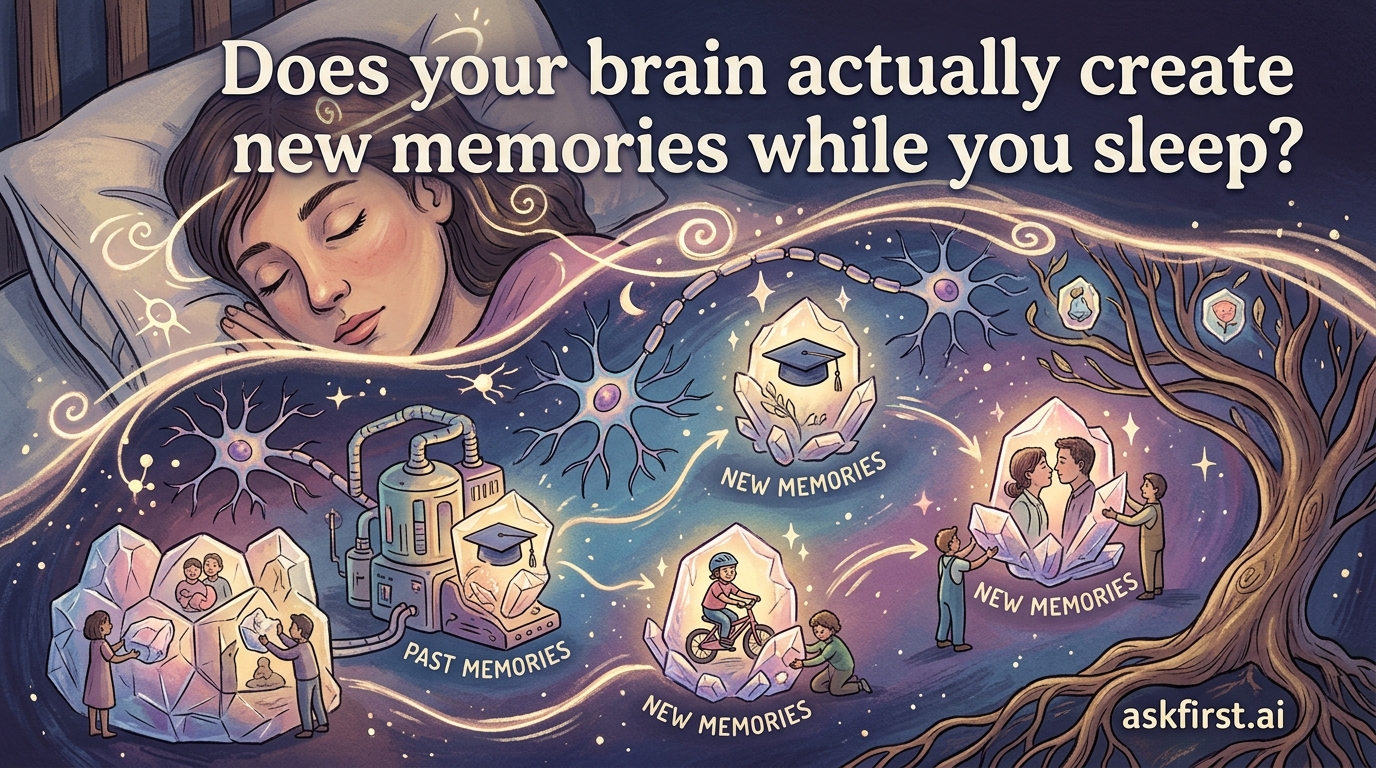
Memory consolidation is the process by which newly acquired information is stabilized and transformed from a fragile, short-term state into a durable, long-term format. Scientific research indicates that this process is heavily dependent on the sleep cycle. During wakefulness, the brain functions like a high-speed buffer, absorbing vast amounts of stimuli. However, the hippocampus—the area of the brain responsible for initially encoding experiences—has a limited capacity. If the brain did not flush and transfer this data during sleep, the mental architecture would become overwhelmed.
- Phase 1: Stabilization: Immediately after learning, the brain begins a process of molecular stabilization. This occurs largely during non-REM (NREM) sleep.
- Phase 2: Integration: During REM (Rapid Eye Movement) sleep, the brain actively works to integrate new information with pre-existing knowledge networks. This is why sleep is often described as the 'creative engine' of memory.
The Mechanisms of Synaptic Replay
One of the most mind-blowing discoveries in modern neuroscience is the phenomenon of synaptic replay. Researchers using electrodes implanted in animal models have observed that the exact same patterns of neuronal firing that occurred during a specific learning task—such as navigating a maze—are repeated at high speeds while the subject sleeps. Essentially, the brain 'replays' the day’s events in rapid-fire bursts, reinforcing the synaptic connections that facilitate recall.
- Sharp-Wave Ripples: These are high-frequency oscillations in the hippocampus that appear to act as a transmission mechanism. They ferry information from the temporary storage of the hippocampus to the neocortex, where the long-term, 'hard-coded' memories are stored.
- Systems Consolidation: This transition from hippocampal dependence to neocortical independence ensures that memories remain intact even if the hippocampus is later impacted by strain or fatigue.
Can New Memories Be Formed During Sleep?
While the primary role of sleep is the consolidation of existing experiences, the question of whether new memories can be encoded while asleep remains a fascinating area of inquiry. Traditional consensus suggested that sleep is a period of total sensory disconnection. However, modern studies, such as those involving Targeted Memory Reactivation (TMR), have shifted the paradigm.
Researchers have successfully demonstrated that by playing specific sounds or scents that were associated with a learning task during the day, they can trigger specific memory retrieval and strengthening during sleep. While one cannot sit in a classroom and 'learn' a new language through osmosis while asleep, the brain is capable of associating new sensory information with existing neural schemas during NREM sleep.
Why Sleep Deprivation Stunts Learning
If the brain uses sleep to archive memories, it follows that sleep deprivation acts as a massive bottleneck to learning. When a student or professional pulls an all-nighter to prepare for a major event, they are effectively deleting their own progress. Without the downtime required for the hippocampus to export its data to the neocortex, those 'new' memories are lost, overwritten by the deluge of information received the following day.
- Cognitive Fragility: Memories not consolidated during sleep remain 'brittle' and are prone to interference.
- Neuroplasticity: The ability of the brain to rewire itself depends heavily on sleep-dependent protein synthesis. Without sufficient rest, the biochemical foundation required for new long-term memories literally cannot be built.
The Role of Dreams in Memory Management
Dreams are not merely accidental firing of neurons; they are often the subjective byproduct of the brain’s attempt to process, classify, and archive the day’s inputs. Many theories suggest that dreams represent the brain attempting to find connections between seemingly unrelated pieces of data. This explains why some of the most complex human breakthroughs—mathematical formulas, musical melodies, and artistic concepts—have famously occurred during or immediately after sleep. By relaxing the rigid logic of the waking state, the brain allows for the cross-pollination of ideas, effectively turning the sleeping state into a hub of cognitive innovation.
Conclusion
In summary, the brain does not just 'save' files while it sleeps; it rewrites, optimizes, and cross-references them. Sleep is the active period of cognitive development where the chaotic inputs of a chaotic day are distilled into the wisdom of the individual. To honor the biological miracle of memory, prioritizing high-quality, consistent sleep is the most effective cognitive-enhancement strategy available to any human being. The brain does not rest while the body sleeps; it works tirelessly to build the version of the mind that will wake up the next morning.