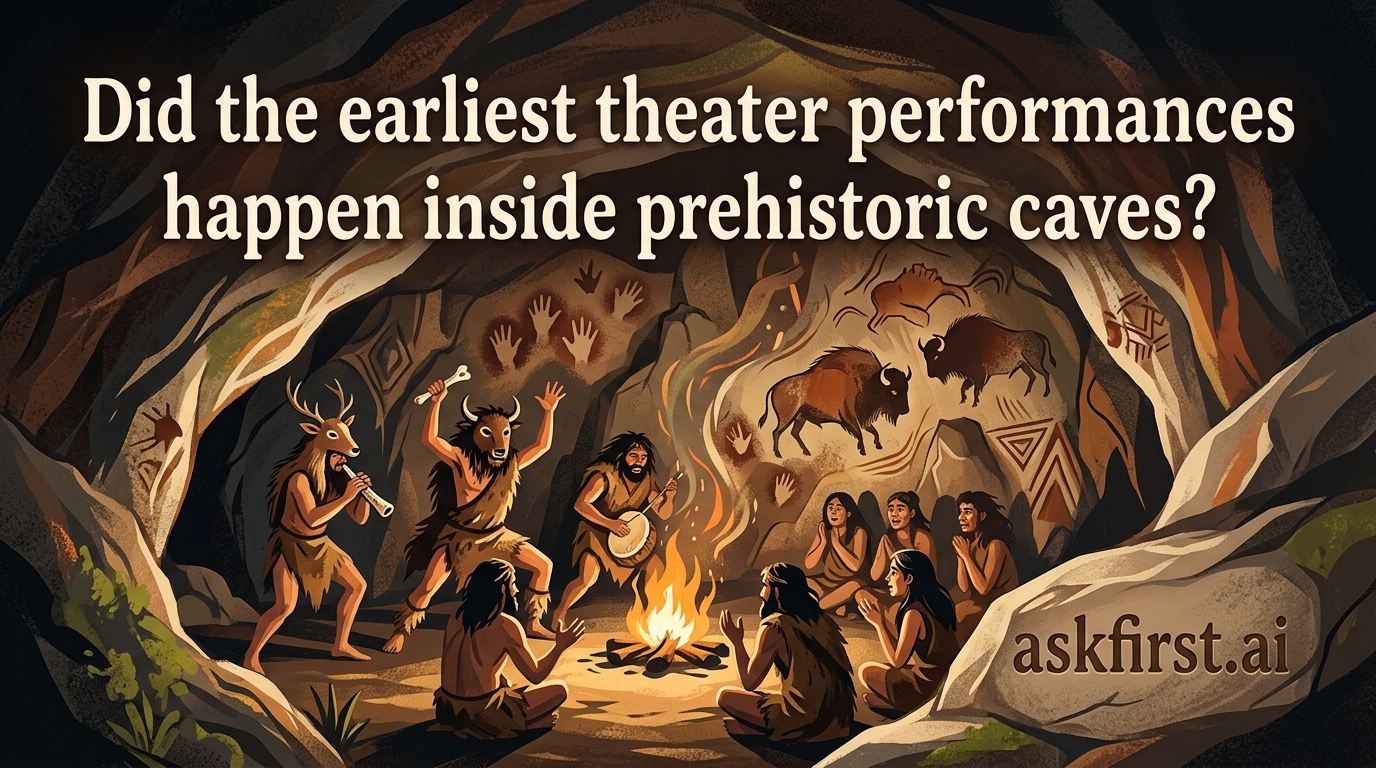
The Origins of Performance: Myth vs. Archaeological Reality
The question of whether theater began in the flickering shadows of Paleolithic caves is one of the most tantalizing debates in the history of human expression. While popular imagination often paints a picture of early humans gathering around firelight to act out hunts or spiritual journeys within limestone caverns, current archaeological evidence paints a more nuanced, albeit fascinating, picture of human evolution. The short answer is: No, there is no direct evidence that theater occurred within prehistoric caves in the way we define it today.
Defining Theater in a Paleolithic Context
To understand the distinction, one must distinguish between ritual and theatrical performance. Theater, by its standard academic definition, requires a set of distinct elements: a script or structured narrative, a division between performer and audience, and the intention of dramatic representation.
- Ritualistic Expression: Archaeologists frequently find evidence of symbolic behavior, such as cave paintings in Lascaux or Chauvet. These sites likely served as spaces for ritualized activity, which may have included chanting, rhythmic dancing, or the mimicry of animal behavior.
- The Intent of Performance: While these rituals are arguably the seeds of later performative arts, they functioned as spiritual or shamanistic experiences rather than theatrical entertainment. The environment of a cave was likely selected for its acoustic resonance and symbolic connection to the 'underworld,' rather than as a proscenium arch or seating venue.
The Acoustic Potential of Deep Caves
A compelling piece of modern research, specifically regarding Archaeoacoustics, suggests that caves offered a sensory environment that may have been intentionally curated for sound. Studies conducted at sites like the Grotte de Marsoulas in France show that cave walls were sometimes shaped or utilized to amplify specific frequencies, likely for chanting or music.
- Resonance: These spaces acted as natural cathedrals.
- Visual Magic: When early humans utilized torches, the uneven surfaces of the cave walls combined with flickering flames created an 'animation' effect for the painted animals. This is often cited as the world's first 'film' or 'moving theater'—a proto-cinematic experience that captivated the senses.
Debunking the Myth: Why Caves Aren't Theaters
While the romantic notion of prehistoric actors treading the boards of a cave floor is captivating, it contradicts the lifestyle of nomadic Paleolithic groups. The survival demands of the time necessitated mobility. Theater, as an institution, relies on a settled society that can support artists and construct venues.
- Sedentary Requirement: Theater requires a population density that permits time for the preparation and consumption of art.
- Structural Evolution: The transition from communal ritual to theater truly began during the Neolithic revolution, as humans settled into permanent agricultural communities.
The Evolution of Performance
As humans moved out of the nomadic phase and into permanent settlements, the 'stage' shifted from the cavernous depths of the earth to the open village square. This movement was essential for the development of:
- Narrative Structure: Characters developed distinct roles rather than collective spiritual archetypes.
- Audience Separation: The space became physically marked, allowing observers to watch rather than participate in a ritualistic circle.
- The Birth of Drama: Civilizations such as Ancient Greece or the Indus Valley developed formal structures that separated theater from religious ceremony, creating the foundation for the art form we recognize today.
Why the Cave Myth Persists
Human beings are inherently driven by narrative. We possess a psychological hunger to see our ancestors as beings who mirrored our own modern complexities. When we look at the breathtaking art inside the cave of Altamira, we want to imagine the drama that unfolded beneath those painted bulls. It is a testament to our enduring fascination with storytelling. Even if the cave was not a 'theater' in the modern, formal sense, it was undoubtedly a cradle of the creative spirit.
Summary of Findings
In conclusion, while we cannot point to a specific prehistoric 'theater troupe' or a 'script' carved into limestone, the roots of performance are deeply embedded in our prehistoric past. The cave was not a venue for a play, but it was a laboratory for human consciousness. It was where sound, light, and movement first collided to create the sensory experiences that would eventually lead to the development of the stage. The cave did not host theater, but it surely incubated the human imagination that would eventually create it.
By viewing prehistoric activity through the lens of ritual and sensory exploration, rather than modern theatrical standards, we gain a more accurate and profound understanding of how our ancestors laid the groundwork for every dramatic performance that followed.