The Architectural Marvel of Human Bone
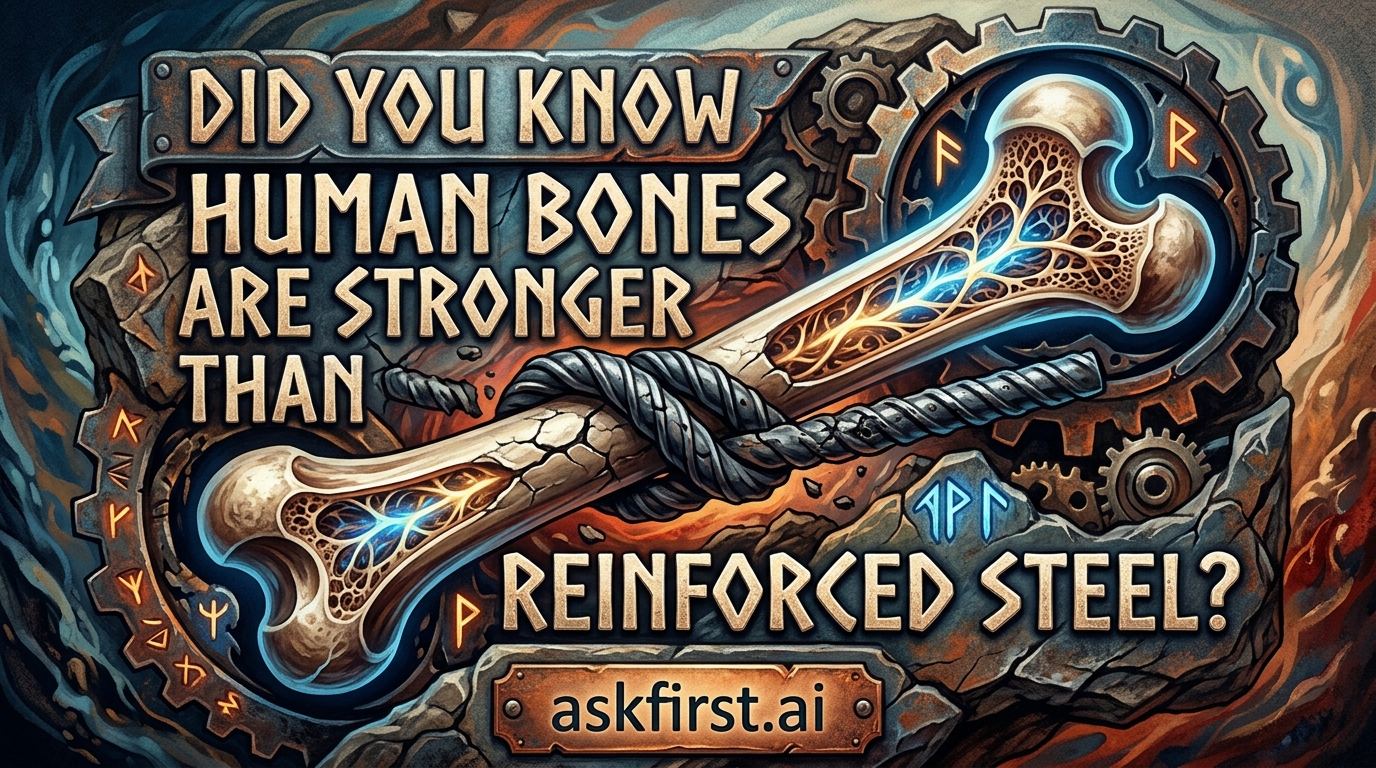
It is a pervasive scientific fact that human bone, when measured gram-for-gram, displays a tensile strength that rivals, and in some metrics exceeds, that of structural steel. While this might sound like science fiction, the biomechanical composition of the human skeletal system is a masterclass in evolutionary engineering. To understand how our inner framework functions, one must delve into the sophisticated composite nature of bone tissue.
The Composite Advantage: Nature’s Design
Bone is not a singular, uniform material; it is a complex biological composite. It consists primarily of two distinct elements working in synergy: collagen, a flexible protein, and hydroxyapatite, a hard mineral form of calcium phosphate. This unique structure mirrors how modern engineers construct materials to resist both fracturing and bending.
- Collagen: Provides the bone with flexibility and 'fracture toughness'. Without it, our skeletons would be as brittle as chalk, shattering under minimal impact.
- Hydroxyapatite: Offers compressive strength, allowing the body to bear the immense loads required for standing, running, and lifting. It is the mineral density that gives bones their rigidity.
By layering these materials, the body creates a structure capable of absorbing massive kinetic energy without catastrophic failure. Unlike solid steel, which can suffer from metal fatigue or brittle fracture under extreme cold or repeated stress, living bone is 'dynamic'.
Why Comparison to Steel Holds Weight
When scientists evaluate 'strength', they often look at the strength-to-weight ratio. Steel is incredibly dense and heavy. If a human skeleton were constructed entirely out of steel, the weight would be so immense that muscles could not move the frame, and joints would collapse under their own mass. Human bone provides superior strength while remaining lightweight, allowing for agile movement.
In terms of compressive strength—the ability to withstand a crushing force—a piece of compact bone can withstand a load of roughly 170 megapascals (MPa). Some grades of structural steel range between 250 and 500 MPa. While steel may be harder in absolute terms, bone outperforms it in the context of biological adaptation.
The Secret: Bone Remodeling
Perhaps the most fascinating aspect of bone that gives it an edge over inanimate materials is remodeling. This is the process known as Wolff’s Law, which states that bone grows and remodels in response to the forces that are placed upon it.
- Dynamic Maintenance: Bones are constantly breaking down old tissue and building new layers via osteoclasts and osteoblasts.
- Stress Adaptation: When a person engages in weight-bearing exercise, the body deposits more mineral content into the bone matrix. This makes the skeletal structure denser and stronger over time.
- Self-Repair: Unlike a steel girder that requires external welding or replacement if it develops a crack, bone naturally heals. Micro-fractures sustained during daily physical activity are identified and repaired by the body's internal biological systems automatically.
A Structure Built for Longevity
Engineering efficiency is measured by how much weight a structure can support relative to its mass. Because bone is porous—specifically at the marrow-filled ends—it distributes weight with surgical precision. The trabecular bone (the spongy interior) is arranged in microscopic lattice patterns that align perfectly with the lines of mechanical stress. This arrangement prevents bones from snapping under complex pressures, such as twisting or angular impact, whereas steel beams must be meticulously shaped into I-beams to achieve similar structural efficiency.
Evolution vs. Metallurgy
While humans have spent centuries perfecting the smelting of iron and the reinforcement of carbon steel, nature has been perfecting the skeletal frame for millions of years. This evolutionary process has led to a structure that is not only strong but also optimized for the specific, recurring stresses of a terrestrial environment. The ability of the human body to maintain, repair, and strengthen its internal framework is a biological feat that current manufacturing cannot replicate.
Summary of Biological Superiority
- Lightweight Efficiency: Bone provides a superior strength-to-weight ratio for biological locomotion.
- Adaptive Integrity: Through Wolff’s Law, bones become stronger based on the demands of the user's lifestyle.
- Self-Healing: Biological tissue has the innate capacity to regenerate and repair structural micro-damages.
- Flexibility: The collagen matrix prevents the 'catastrophic failure' common in rigid metals.
In conclusion, the claim that human bone is stronger than reinforced steel is a metaphor for the profound brilliance of biological design. While steel is undoubtedly essential for high-rise buildings and machinery, the human skeleton remains the most versatile, adaptable, and efficient load-bearing system on the planet.