The Paradox of Emotional Release
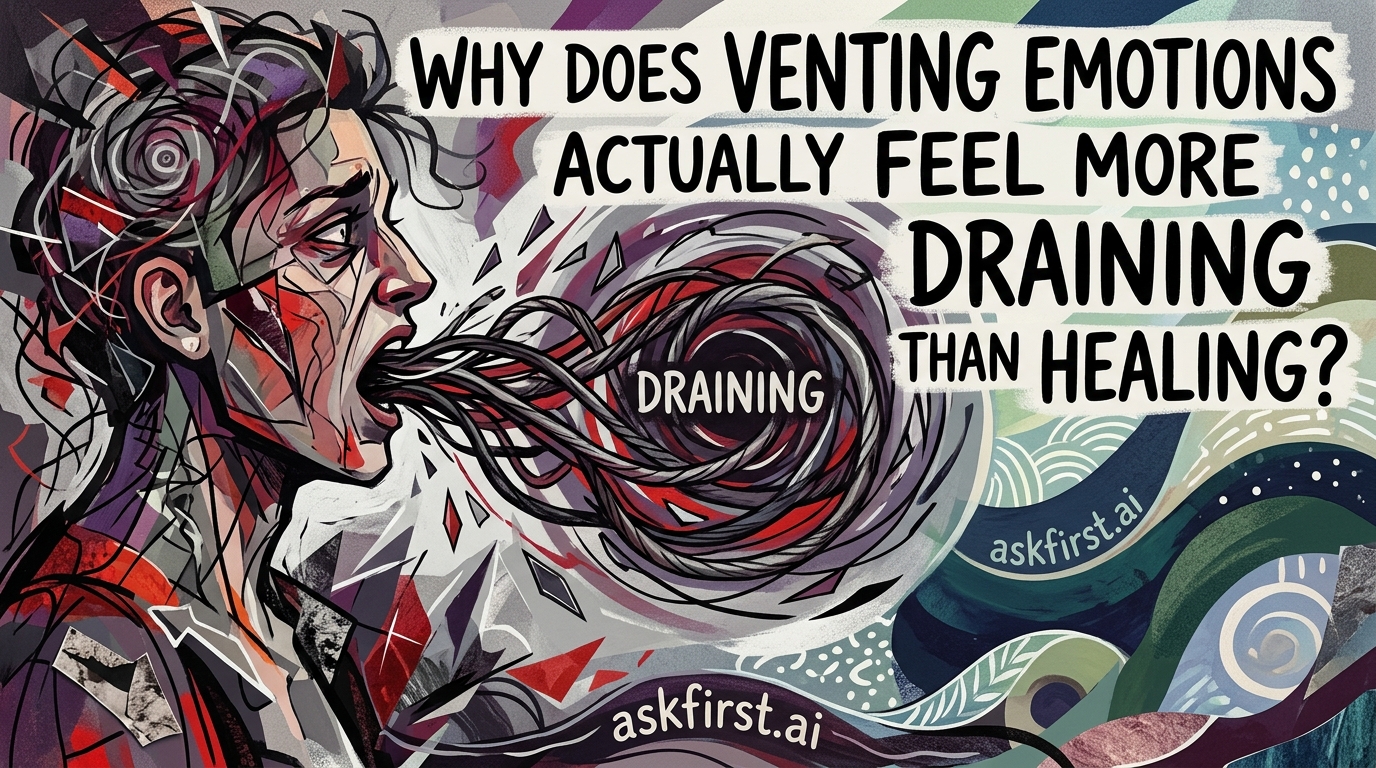
Many individuals operate under the common assumption that 'venting'—the act of expressing pent-up emotions—serves as a necessary pressure-release valve for the human psyche. However, psychological research often reveals a counter-intuitive reality: frequent venting frequently exacerbates emotional distress rather than alleviating it. This phenomenon, often referred to in clinical psychology as ruminative co-rumination, occurs when the venting process shifts from a functional release to a repetitive loop that strengthens neural pathways associated with negative affect.
The Physiology of Emotional Re-enactment
When a person vents, the brain does not merely observe the emotion; it actively re-enacts it. From a neurobiological perspective, the amygdala—the region responsible for processing emotional responses—activates during the retelling of a stressful event. By verbally re-living the narrative, the individual inadvertently triggers a physiological stress response. The body releases cortisol and adrenaline as if the original inciting event were occurring in real time. Consequently, the act of venting often maintains the body in a state of high physiological arousal, leaving the individual physically and mentally exhausted.
Why Co-Rumination Fails as a Coping Mechanism
- Reinforcement of Neural Pathways: Every time a negative narrative is repeated, the brain reinforces the synaptic connections associated with that memory. This makes it easier for the brain to trigger the same negative emotional state in the future.
- The Lack of Cognitive Reframing: Effective emotional regulation requires shifting one's perspective, or 'cognitive reframing.' Venting, by contrast, usually focuses entirely on the external cause of the distress. It centers on the 'who' and the 'what' rather than the 'how to move forward.'
- Social Feedback Loops: When venting to a peer, the listener may validate the negativity to provide empathy. While well-intentioned, this social validation can solidify the venting individual's belief that their distress is insurmountable, creating an echo chamber that discourages proactive problem-solving.
The Distinction Between Venting and Processing
Understanding the difference between raw venting and healthy processing is vital. Healthy emotional regulation involves acknowledging an emotion without becoming trapped in its narrative. Techniques such as labeling—a concept rooted in Affect Labeling theory—suggest that simply identifying an emotion (e.g., 'I feel frustrated') without attaching an exhaustive backstory allows the prefrontal cortex to exert regulatory control over the amygdala. This process cools the emotional intensity without the exhaustive cycle of recounting the details of the stressor.
Strategies for Sustainable Emotional Health
To move away from the draining cycle of venting, consider these evidence-based alternatives:
Objective Journaling: Writing about an experience from a third-person perspective can provide distance. This shifts the focus from the 'victim' of the story to an observer, which promotes clearer cognitive analysis.
Cognitive Distancing: Before speaking, identify if the goal is to solve a problem or to complain. If it is the latter, seek a healthy distraction, such as physical activity or creative work, to interrupt the cortisol cycle.
Targeted Processing: If communication is necessary, focus the conversation on solutions or future-oriented actions. This shifts the brain’s focus from past threats to future possibilities, engaging the goal-oriented regions of the prefrontal cortex.
The Role of Habituation
Habituation is the psychological process where the brain eventually stops responding to a stimulus that is repeated enough. By consistently venting, individuals may actually be training their brains to stay in a state of 'alert' or 'reactive' living. True healing requires breaking this habit of emotional recycling. By pausing before speaking, evaluating the internal state, and choosing constructive reflection over reflexive venting, the individual protects their limited cognitive resources. The objective is to achieve emotional homeostasis, where the mind moves through challenges without becoming tethered to the intensity of the event itself. By transitioning from a cycle of rumination to a practice of detached observation, emotional regulation becomes an empowering skill rather than an exhausting, repetitive burden.