The Science of Contagious Yawning: A Social Phenomenon
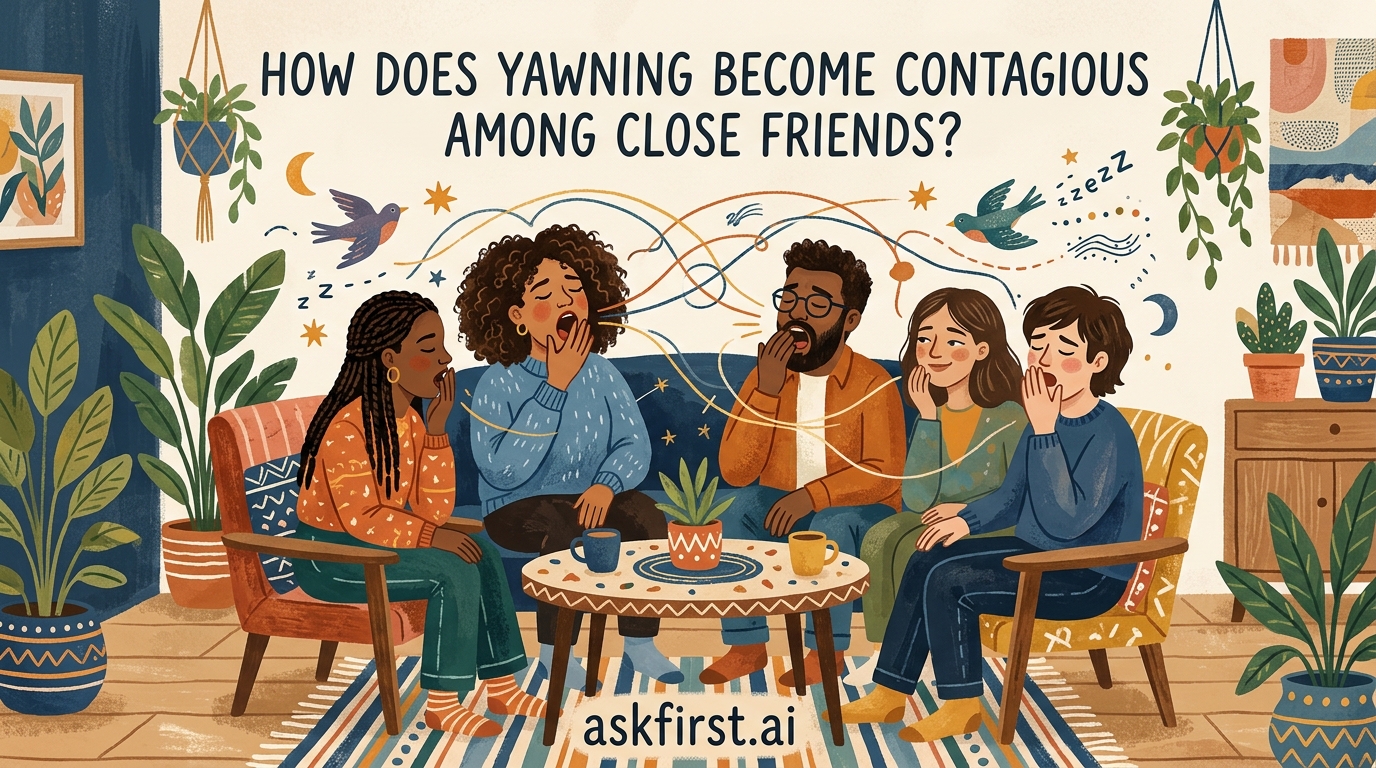
Contagious yawning is one of the most fascinating behavioral quirks of the human species. It is a phenomenon that transcends language and culture, serving as a silent, invisible bridge between individuals. While yawning is often mistakenly attributed solely to fatigue or low oxygen levels, the contagious nature of the act is deeply rooted in the complex machinery of human social connection and neurological empathy. When close friends witness one another yawning, they are often caught in a reciprocal loop, which reveals volumes about the intricacies of human bonding.
The Neurological Foundations: Empathy and Mirror Neurons
The primary driver behind contagious yawning is the human mirror neuron system. Mirror neurons are a specialized set of brain cells that fire both when an individual performs an action and when they observe that same action being performed by another person. In the context of yawning, these neurons effectively 'simulate' the action within the observer's own brain. Research indicates that the superior temporal sulcus (STS) and the inferior frontal gyrus are significantly activated during these moments. Essentially, the brain is attempting to replicate the internal state of the person being observed, bridging the gap between "self" and "other."
This process is intrinsically linked to emotional empathy. Scientific studies, such as those published in the journal PLOS ONE, have demonstrated that individuals with higher scores on empathy scales are more susceptible to contagious yawning. Because close friends share high levels of emotional attunement and intimacy, their neurological pathways are primed to recognize and mirror one another's cues more readily than those of strangers.
Why Closeness Matters: The Social Buffer Theory
The frequency of contagious yawning is significantly influenced by the strength of the social bond between the two individuals involved. This is known as the Social Buffer Effect. According to evolutionary psychology, humans—and many other social animals like chimpanzees and wolves—exhibit higher rates of contagious yawning within established social groups. This serves several potential evolutionary functions:
- Vigilance Coordination: Synchronizing physical behaviors helps groups maintain a shared state of alertness. By yawning in unison, a social group might communicate a collective transition in activity levels or a shift in the environment.
- Social Cohesion: Mirroring behaviors reinforce the emotional bond. It is a subconscious signal that says, "I am in tune with your state of being."
- Kin Selection: The susceptibility to emotional contagion is highest among those we are biologically or socially closest to, ensuring that protective instincts and group awareness are prioritized within the immediate circle.
Dispelling the Oxygen Myth
It is vital to address one of the most persistent medical myths: that yawning is caused by a lack of oxygen. Despite decades of study, there is no empirical evidence to suggest that yawning increases oxygen intake or clears carbon dioxide from the blood. Instead, the current scientific consensus, as popularized by researchers like Andrew Gallup, points to brain cooling. Yawning acts as a physiological "radiator" for the brain, allowing a surge of cooler air into the nasal passages and the blood vessels surrounding the skull. The contagion element exists because if a group is in a shared environment (such as a warm living room), they may all be experiencing a slight thermal rise in brain temperature. One yawn triggers the rest to follow, cooling the group collectively.
Contextual Sensitivity and Environmental Factors
While the bond between friends is a critical factor, environmental context plays a supportive role. The "yawn threshold" is lower when individuals are in a relaxed state. In a social setting where friends feel comfortable and safe, the psychological barriers are lower, allowing the mirror neuron system to operate without the interference of stress or vigilance. Conversely, in highly stressful or novel environments, contagious yawning is significantly less likely to occur because the brain is focused on environmental monitoring rather than social mirroring.
The Evolutionary Value of Yawning
From an evolutionary perspective, contagious yawning is likely a remnant of our ancestral need for group unity. For early humans, the ability to read the physiological states of others was a matter of survival. Knowing when your "friend" or group member was becoming lethargic or needed a period of rest allowed the collective to manage energy resources more efficiently. While we no longer hunt in the savannah, this archaic signaling mechanism remains hardwired into our limbic system, manifesting today as a quirk of friendship and social interaction.
Summary of the Mechanism
- Stimulus: An individual observes a yawn from a friend.
- Perception: The visual stimulus activates the mirror neuron system in the observer’s brain.
- Neural Simulation: The brain regions associated with motor movement and empathy engage to simulate the yawn.
- Biological Response: The autonomic nervous system triggers a yawn, often to facilitate brain cooling or social synchrony.
- Social Feedback: The contagion effect strengthens the perceived intimacy, confirming the social bond between the two parties.
Understanding this phenomenon transforms the simple act of a yawn into a complex window into the human mind. It is a testament to the fact that we are inherently social creatures, constantly reflecting the emotional and physiological states of those we hold dear.