The Biology of Secret Infatuation
Secret crushes are far more than mere daydreams; they represent a complex interplay of neurochemistry that can manifest as tangible physical symptoms, often collectively referred to as love sickness. When an individual harbors a secret attraction, the brain initiates a cascade of hormonal responses that mimic the physiological state of fight-or-flight. Even without outward interaction, the internal anticipation of a potential romantic encounter activates the amygdala and the ventral tegmental area (VTA), the latter of which is the brain's primary reward center. This process is inherently addictive, as the uncertainty of a secret crush triggers a heightened release of dopamine, keeping the individual in a state of perpetual physiological alertness.
The Neurochemical Cascade: Why the Heart Races
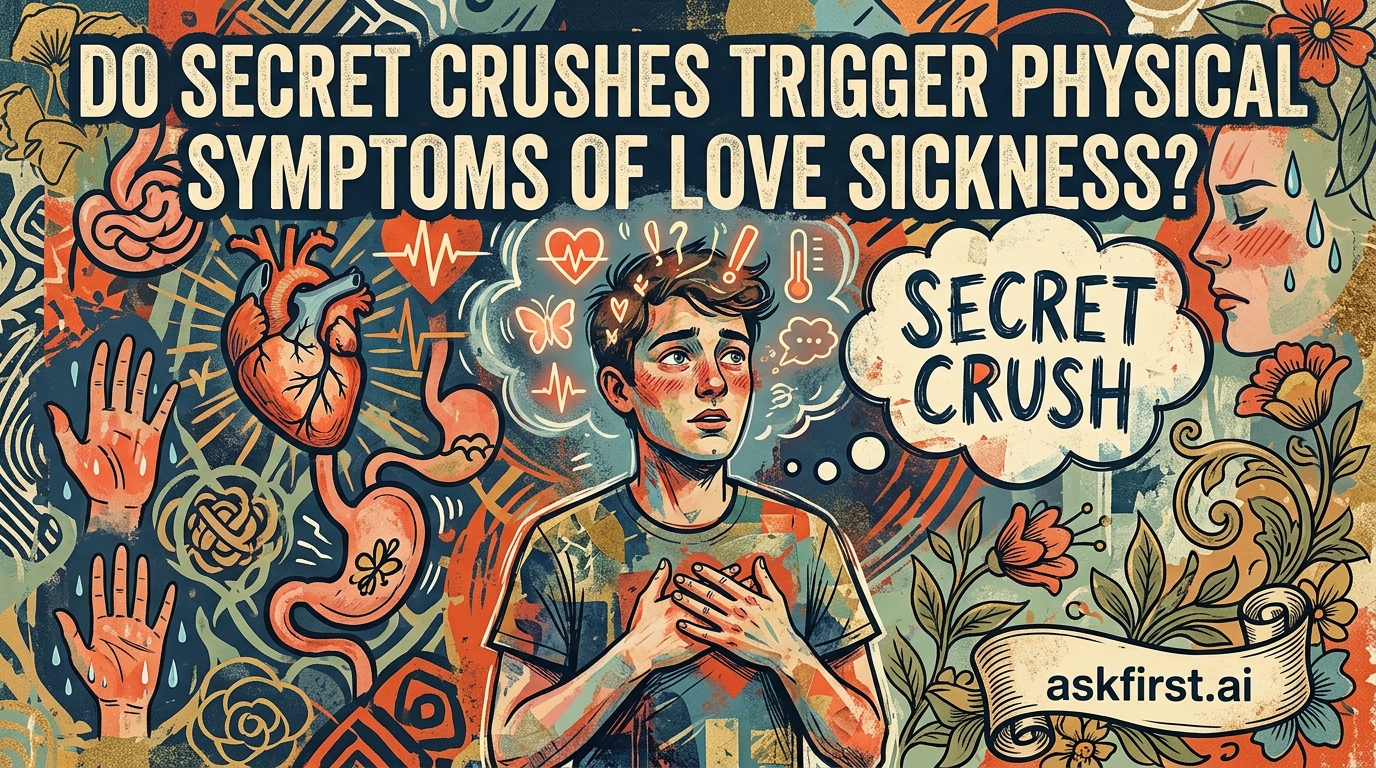
One of the primary reasons secret crushes trigger physical symptoms is the surge of norepinephrine. This neurotransmitter is responsible for focus and alertness but also triggers the sympathetic nervous system. When thinking about a secret crush, the body may experience:
- Tachycardia: A racing heart rate, often misinterpreted as simple nervousness but actually a sign of heightened cardiac output.
- Palmar Hyperhidrosis: The activation of sweat glands in the palms, a standard physical response to psychological stress and emotional anticipation.
- Gastrointestinal Distress: Often referred to as 'butterflies,' this is caused by a reduction in blood flow to the digestive system as the body prioritizes 'vital' areas for potential social interaction.
Furthermore, the reduction of serotonin—a phenomenon observed in those in the early stages of romantic obsession—can lead to decreased appetite and disrupted sleep patterns. This hormonal imbalance is functionally identical to the state of clinical anxiety, proving that a 'crush' is, in biological terms, a significant physiological event.
Psychological Mechanisms: The Curiosity Gap
Psychologically, secret crushes thrive on what researchers define as 'incomplete information processing.' Because the crush remains a secret, the brain lacks the definitive closure of either rejection or acceptance. This ambiguity forces the prefrontal cortex to constantly reassess the object of affection. According to the Zeigarnik effect, people remember uncompleted or interrupted tasks better than completed ones. A secret crush acts as an 'uncompleted task' of the psyche, consuming mental bandwidth and keeping the endocrine system in a state of constant, low-level mobilization.
Evolutionary Perspectives on Love Sickness
From an evolutionary standpoint, the symptoms associated with love sickness serve a distinct purpose. The heightened state of alertness and the inability to focus on daily tasks ensure that the individual remains hyper-fixated on a potential mate. While this might seem counter-productive in a modern professional setting, in ancestral environments, this fixation was crucial for reproductive success. The discomfort caused by the 'sickness' effectively lowers the threshold for action; eventually, the physiological toll becomes so taxing that the individual is compelled to move from a state of secret attraction to one of overt action to resolve the internal tension.
Symptom Manifestation: A Holistic Overview
The physical toll of maintaining a secret crush can be categorized into several domains:
- Sensory Heightening: Many individuals report hypersensitivity to the presence of the crush, including hearing their voice from a distance or being acutely aware of their scent in a room. This is a result of the brain's selective attention filter becoming hyper-tuned to specific cues.
- Motor Tics and Restlessness: The accumulation of energy from adrenaline production often leads to fidgeting, pacing, or an inability to sit still when the crush is nearby.
- Vocal Fluctuations: The brain's attempt to regulate the body during high-stakes social interactions often results in pitch changes or temporary stuttering, as the autonomic nervous system briefly overrides linguistic fluency.
Is It Truly a 'Sickness'?
While the term 'love sickness' is often used colloquially, science supports the idea that the brain is undergoing a legitimate state of temporary chemical imbalance. When the object of affection is absent, the withdrawal of dopamine can lead to symptoms of lethargy and sadness, mirroring the physiological experience of withdrawal from other addictive stimuli. However, this state is rarely permanent. Once the ambiguity of the secret is resolved—whether through the crush becoming a reality or the attraction fading—the endocrine system typically recalibrates to homeostasis.
Summary of Findings
Research confirms that secret crushes absolutely trigger physical symptoms because the brain does not distinguish between 'real' romantic engagement and the vivid, sustained mental imaging of one. The body reacts to the anticipation, the stress, and the hope as if they were physical realities. Understanding that these 'symptoms' are merely natural, evolutionary, and neurochemical processes can help individuals better manage the intense energy that comes with unrequited or hidden feelings. By recognizing the role of norepinephrine, dopamine, and the sympathetic nervous system, one can perceive these 'symptoms' not as an illness, but as a testament to the powerful capacity of the human brain to be profoundly influenced by the emotional landscape of human connection.