The Linguistic Mirror: Unveiling Personality Shifts
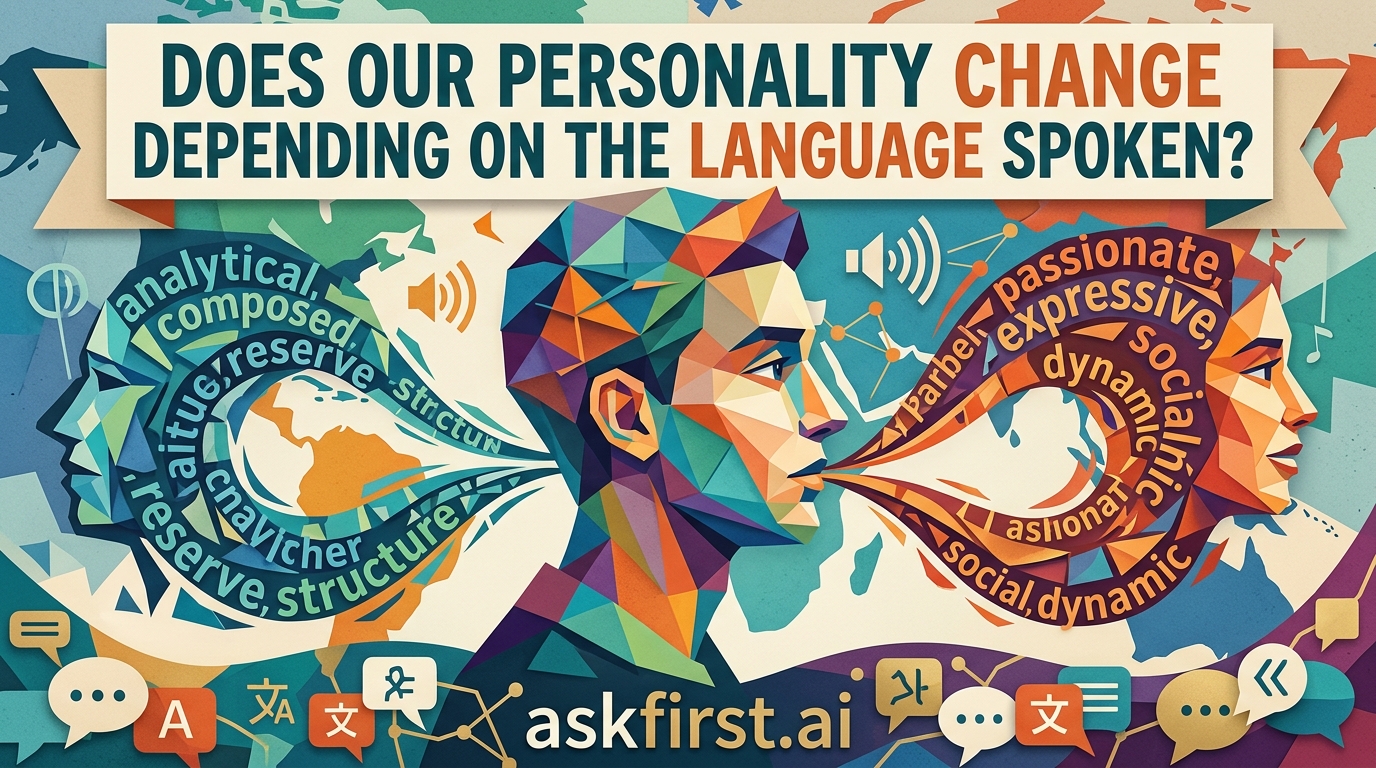
Recent advancements in psycholinguistics and cultural psychology have provided compelling evidence that language is not merely a tool for communication but a framework that shapes human perception and behavior. When individuals speak different languages, they often report feeling like different people, a phenomenon frequently referred to as the 'multilingual personality shift.' This shift is not a mere trick of the mind but a complex interplay between cultural immersion, cognitive frames, and the emotional resonance embedded within vocabulary.
The Cultural Framing Hypothesis
At the heart of this phenomenon is the concept of cultural framing. Language is the primary vehicle for culture; when a person acquires a second language, they are simultaneously internalizing the cultural norms, social hierarchies, and expectations of that language group.
- Social Expectations: Different languages carry implicit social rules. For example, some languages emphasize hierarchical structures through honorifics, while others prioritize egalitarianism. Consequently, a speaker may adopt a more formal or submissive demeanor in one language and a more assertive or casual tone in another.
- Values and Associations: Studies have shown that bilinguals often adjust their personality traits to match the normative behavior of the culture associated with the language they are currently using. If one language is associated with collective values, the speaker may exhibit more prosocial behavior; if another is associated with individualistic values, the speaker may prioritize personal achievement.
Cognitive Flexibility and Emotional Distance
One of the most fascinating aspects of multilingualism is the concept of 'emotional distance.' Research suggests that processing information in a foreign language requires more cognitive effort, which can lead to a 'distancing' effect. This leads to several unique psychological outcomes:
- Increased Rationality: When making difficult decisions, individuals often become more utilitarian when speaking in a non-native tongue. The cognitive load required to process the foreign language reduces emotional interference, allowing for a more calculated approach to problem-solving.
- Reduced Emotionality: Because many individuals learn their native tongue in childhood, it remains deeply linked to emotional centers in the brain. Foreign languages are often acquired later in life through formal education, which can feel more analytical and less 'visceral.' Consequently, expressing love, anger, or sadness in a native language often feels significantly more intense than in a second or third language.
The 'Bicultural' Experience
Psychologists have identified that bicultural individuals often perform 'frame switching' when transitioning between languages. This is a survival mechanism that allows for seamless integration into diverse social settings.
- The Neurobiology of Shift: Neuroscientific studies using fMRI scans indicate that different linguistic structures can activate distinct neural pathways. This suggests that the brain is essentially switching between 'personality modes' that are neurologically encoded alongside the vocabulary of that language.
- Self-Perception: Many multilinguals describe a feeling of authenticity in one language and a feeling of 'performance' or 'adaptation' in another. This does not imply that one personality is fake; rather, it highlights that human personality is multifaceted and situational, activated by the context provided by language.
Implications for Modern Society
This insight into the fluidity of identity has profound implications for global communication, diplomacy, and personal growth. Understanding that language acts as a catalyst for behavioral changes allows individuals to become more intentional about their social interactions. By choosing which language to use in specific contexts, individuals can strategically access different facets of their own personalities—such as being more empathetic, analytical, or assertive—depending on the requirements of the situation.
Ultimately, the multilingual personality shift confirms that identity is not a static monolith. Instead, it is a dynamic mosaic, constantly evolving in dialogue with the words we choose. As the global landscape becomes increasingly interconnected, the ability to 'code-switch' not just between languages, but between the psychological profiles associated with those languages, serves as a powerful testament to the complexity and versatility of the human experience.