The Evolutionary Architecture of Memory
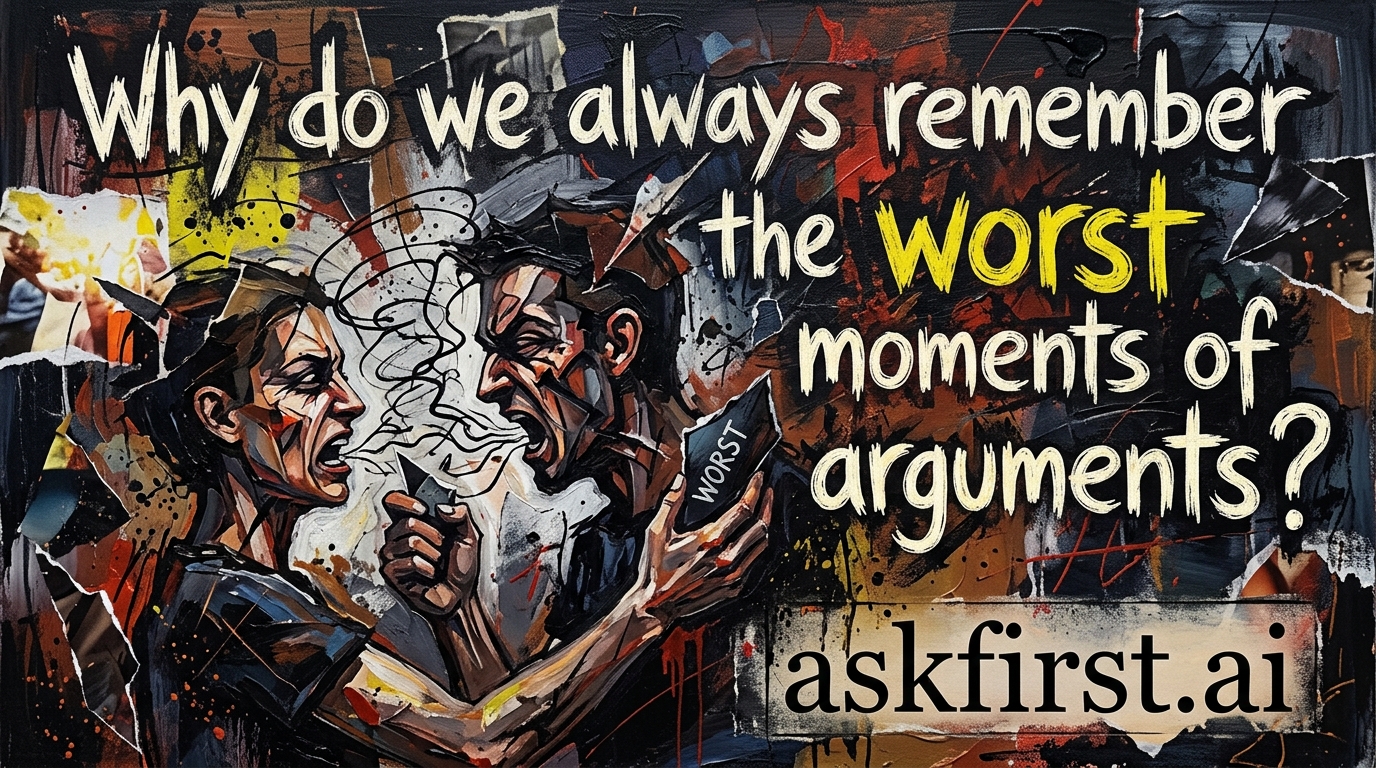
The phenomenon of recalling the most intense or painful moments of a disagreement is not a flaw in human character, but rather a sophisticated, albeit sometimes maladaptive, feature of the human brain. Known as the negativity bias, this cognitive tendency ensures that the brain prioritizes negative experiences over neutral or positive ones. From an evolutionary perspective, this served a crucial purpose: survival. In our ancestral environment, failing to notice a predator was a fatal mistake, while missing an opportunity to gather berries was merely an inconvenience. Consequently, the brain developed a heightened sensitivity to threats, social rejection, and conflict. When an argument occurs, the brain interprets high-stress, emotionally charged moments as 'threats' to one's social standing or emotional security, encoding these moments with greater neural density and emotional salience than calmer periods of the interaction.
The Role of the Amygdala and Hippocampus
When we engage in a heated discussion, the amygdala—the almond-shaped cluster in the brain responsible for processing emotions—triggers an immediate stress response. It signals the hippocampus, the command center for memory consolidation, to pay close attention to the situation. During moments of extreme frustration or anger, the chemical release of adrenaline and cortisol serves as a biological marker, effectively 'highlighting' those specific memory traces. Essentially, the brain is biologically wired to archive 'painful' information with higher priority because it perceives such data as necessary to avoid future psychological injury or social exile. This is why the precise words used during an insult or a moment of betrayal can remain etched in the mind years later, even when the resolution of the argument has faded.
Cognitive Anchoring and Rumination
The tendency to focus on the 'worst' parts is also reinforced by a psychological process called cognitive anchoring. Once an argument reaches a peak of hostility, that peak becomes the mental anchor for the entire event. Our minds rely on the peak-end rule, a psychological heuristic in which people judge an experience largely based on how they felt at its peak (the most intense point) and at its end, rather than the average of every moment. If an argument ends in a lingering negative note or reaches a terrifying peak of shouting, that is the version of the story the brain stores in the long-term memory warehouse. Furthermore, ruminating on these moments—mentally replaying the conflict—serves as a form of 'rehearsal' for the brain to learn how to avoid such outcomes in the future. However, this rumination often creates a distorted narrative that emphasizes the negative, casting the self or others in roles that prevent healthy reconciliation.
Addressing the Bias: Strategies for Balance
To move past this neurological trap, one must intentionally practice cognitive reframing. Understanding that this memory pattern is a biological default allows individuals to take a step back from the emotional narrative. Several strategies can help mitigate the impact of this bias:
- Active Decoupling: When remembering a conflict, consciously force the mind to recall the cooling-off period or the subsequent repair effort. By deliberately directing attention to these 'peaceful' moments, the neural pathways associated with the conflict are challenged.
- External Documentation: Writing down the events of a disagreement while keeping a balanced perspective can act as an objective anchor, preventing the brain from rewriting the memory to be more negative than it actually was.
- The Power of Narrative Re-evaluation: View the argument as a data point rather than a reflection of identity. Ask: 'What does this reveal about communication styles rather than character flaws?'
The Importance of Emotional Intelligence
Ultimately, remembering the worst parts of an argument is a signal from the brain to improve one's emotional boundaries. The persistence of these memories suggests that those specific moments represent a violation of personal values or needs. By analyzing why those particular comments or behaviors were the most painful, individuals can gain deeper insights into their core insecurities and requirements for healthy relationships. By shifting the focus from 'why did they hurt me?' to 'what does this tell me about my boundaries?', the brain transforms a painful memory into a tool for self-growth. In conclusion, while we cannot override our evolutionary need to prioritize danger, we can cultivate the discipline to place these memories into a healthier, more accurate context, ensuring that past conflicts inform our future maturity rather than define our current happiness.