The Elastic Nature of Human Time Perception
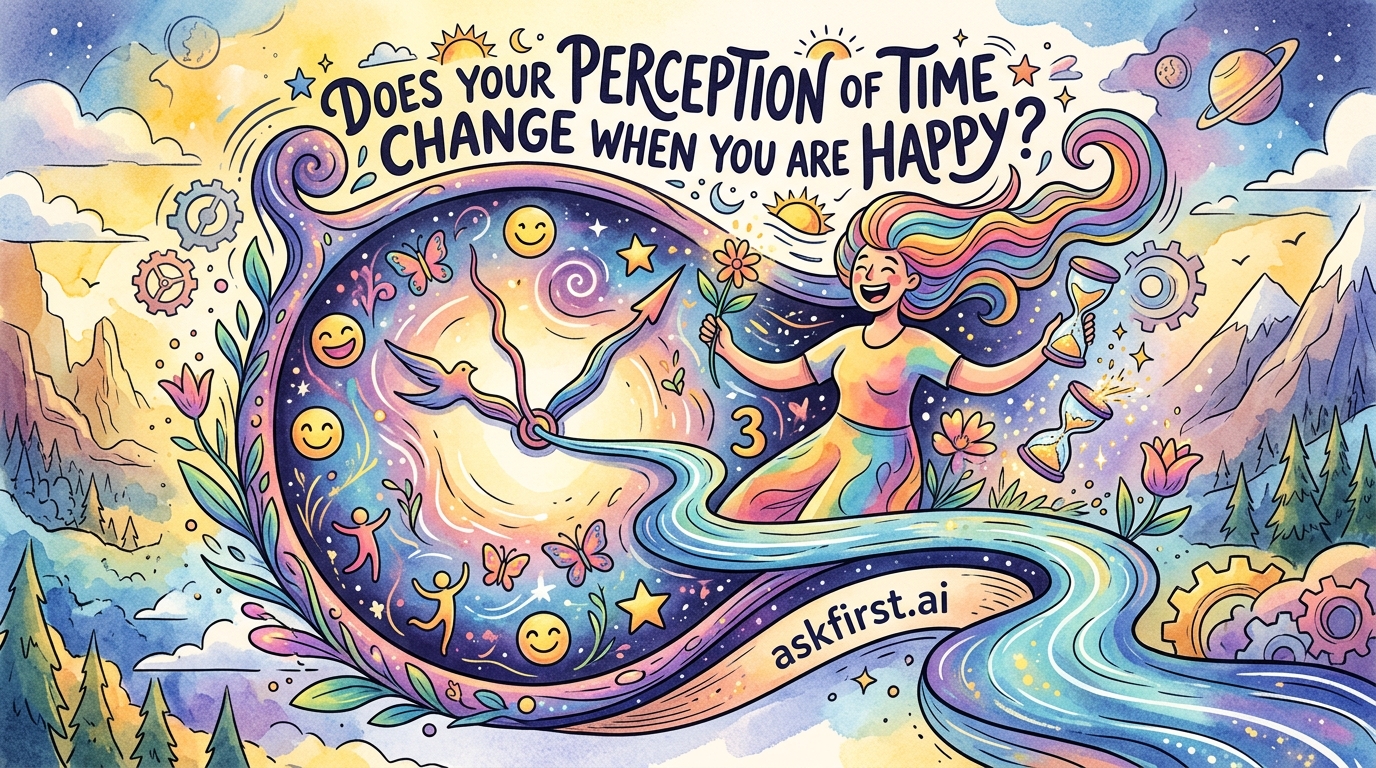
The subjective experience of time is rarely a constant ticking of a clock. Instead, it is a malleable mental construction heavily influenced by emotional states, cognitive load, and attention. The phenomenon where time seems to fly when one is happy or deeply engaged is a cornerstone of psychological research into temporal cognition. When an individual experiences joy, the brain shifts its focus from internal monitoring to external stimuli, which fundamentally alters the passage of perceived time.
The Role of Dopamine and Emotional Arousal
At the neurological level, the perception of time is governed by an internal 'pacemaker-accumulator' model. According to this framework, the brain processes pulses emitted by an internal clock. When a person is experiencing heightened positive emotions, neurotransmitters like dopamine play a critical role. Dopamine is strongly associated with reward-seeking behavior and the anticipation of pleasure. Studies have shown that when dopamine levels are elevated—a standard occurrence during states of happiness and excitement—the internal pacemaker may speed up. If the internal clock ticks faster than the actual physical time, the external world appears to be moving slower. Conversely, when looking back on a happy event, the brain processes the memory differently.
The Retrospective Paradox: Why Time 'Flies' and 'Drags'
There exists a fascinating paradox between 'prospective' and 'retrospective' time estimation.
- Prospective Timing: While actively experiencing happiness, focus is directed toward the enjoyment of the moment. Because the attention is removed from the passage of time itself, the 'clock' seems to skip, making the duration feel shorter.
- Retrospective Timing: This is governed by the 'memory storage' hypothesis. The brain evaluates duration based on how many memories were stored during an interval. When one is happy, they are often in a 'flow state.' During flow, there is a lack of self-reflective, narrative thought. Because fewer distinct 'memory anchors' are encoded during these moments, the brain perceives the time elapsed as having passed very quickly once the event concludes.
The 'Flow' State: The Ultimate Catalyst
Psychologist Mihaly Csikszentmihalyi coined the term 'flow' to describe the mental state of being completely immersed in an activity. During flow, the sense of self vanishes and the perception of time becomes distorted.
- Reduced Cognitive Load: In a state of intense happiness or deep creative engagement, the brain ceases to monitor time intervals constantly.
- Increased Productivity: By ignoring the tick-tock of the environment, the mind can dedicate 100% of its resources to the task at hand, further accelerating the feeling that time has vanished.
Why Time Perception Matters for Well-being
Understanding that time is a construct of the mind allows individuals to better manage their life satisfaction. By cultivating moments of genuine joy and engagement, one can essentially 'slow down' the experience of a single day while making the passage of a lifetime feel richer and more meaningful.
Summary of Key Findings
- Dopaminergic Influence: Positive affect increases internal pacemaker activity, which can shift temporal estimation.
- Attention-Allocation: Happiness directs focus outward, away from the monitoring of duration, resulting in a 'time flies' sensation.
- Memory Density: Because happy moments are often experienced in a flow state with minimal internal monitoring, they appear shorter in retrospect due to fewer stored 'temporal snapshots.'
Ultimately, the brain is not a precision instrument designed to measure minutes and seconds with objective accuracy; it is a creative storyteller. It rewrites the narrative of time based on the intensity of the emotions felt within. Embracing these fluctuations is not only natural but essential for a dynamic and engaging human experience. By choosing to prioritize joy, individuals essentially gain control over the most precious commodity of all: their own perception of the time they spend on this earth.