The Neurochemical Framework of Affection
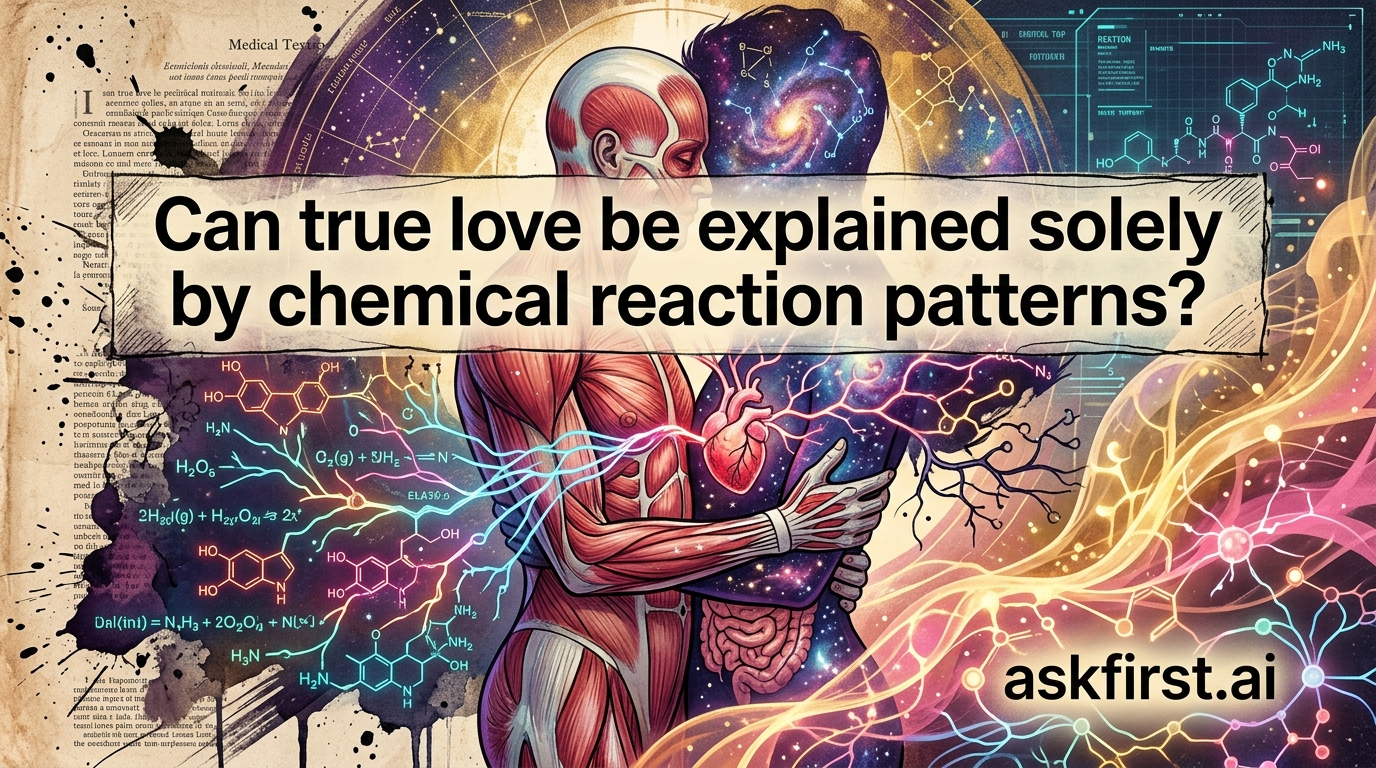
At the most fundamental biological level, the human experience of love is orchestrated by a sophisticated symphony of neurochemicals. When individuals experience romantic attraction, the brain undergoes a radical shift. The primary players in this chemical cascade include dopamine, which acts as the brain's reward transmitter, creating feelings of euphoria and obsessive focus; norepinephrine, which accelerates the heart rate and triggers the 'fight or flight' alertness associated with new attraction; and phenylethylamine (PEA), often dubbed the 'molecule of love.' These compounds create a powerful physiological state that encourages pair-bonding, ensuring the survival of the species through reproduction and long-term cooperation.
The Limitations of Reductionism
While neurochemistry explains the physical sensation of falling in love, reducing the entirety of the human experience to molecules is a form of scientific reductionism that fails to capture the emergent properties of consciousness. Love is not merely a transient chemical spike; it is a complex construct built upon memories, shared values, cultural expectations, and existential choice. Biological impulses provide the 'spark' or the initial motivational drive, but the maintenance of a deep, long-term bond requires executive function—the part of the brain associated with planning, moral judgment, and emotional regulation. Therefore, chemistry serves as the mechanism, but it does not constitute the meaning or the intent behind the emotion.
Psychological and Philosophical Dimensions
Beyond synapses, psychology offers a deeper look through attachment theory. Developed by John Bowlby, this framework suggests that the style of love an individual exhibits is significantly influenced by early life experiences and relational patterns. This introduces a narrative layer to the experience that chemistry alone cannot explain. If love were solely chemical, individuals would respond to the same stimulants with identical behaviors; however, history shows that human responses to love are deeply idiosyncratic. The concept of 'will' or 'commitment' serves as a bridge between instinct and intention. Love, in its highest form, is often defined by actions taken in the absence of the initial chemical intoxication—a phenomenon described by scholars as 'companionate love.'
The Emergent Property Theory
In the field of systems science, researchers often discuss 'emergent properties'—features that appear in a system that are not present in its individual components. Love can be viewed as an emergent property of the human brain. Just as wetness is not a property of a single water molecule but emerges when many molecules interact, love emerges from the interplay between biology, environment, social conditioning, and cognitive reflection. This perspective allows science to respect the chemical roots of attraction while acknowledging that the holistic experience exceeds the sum of its parts.
Why the Distinction Matters
Understanding the boundary between chemistry and choice empowers individuals. It demystifies the anxiety of 'falling out of love'—often just the settling of chemical levels after the honeymoon phase—and places agency back into the hands of the partner. It explains why couples can sustain lifelong fulfillment even when the initial 'chemical high' has naturally receded.
- Biological Input: The drive to reproduce and bond.
- Cognitive Processing: The evaluation of compatibility and shared vision.
- Social Context: The cultural reinforcement of partnership values.
- Intentional Choice: The conscious decision to prioritize another person.
Conclusion: A Synthesis of Nature and Agency
Can true love be explained solely by chemical reaction patterns? The answer is a definitive no. While neurochemistry explains the architecture of attraction, it does not explain the architecture of a life shared between two people. Love is a multidisciplinary phenomenon. It is simultaneously a biological imperative, a psychological attachment, a social contract, and a philosophical commitment. Science provides the map of the terrain, but the human spirit provides the journey itself. By recognizing that love involves both the involuntary stirrings of the endocrine system and the voluntary exercise of character, individuals can approach their relationships with both wonder and responsibility. Love is not just something that happens to the brain; it is something that is actively built, nurtured, and sustained through the synthesis of biological grace and human agency.