The Evolutionary Bias: Why Negativity Sticks
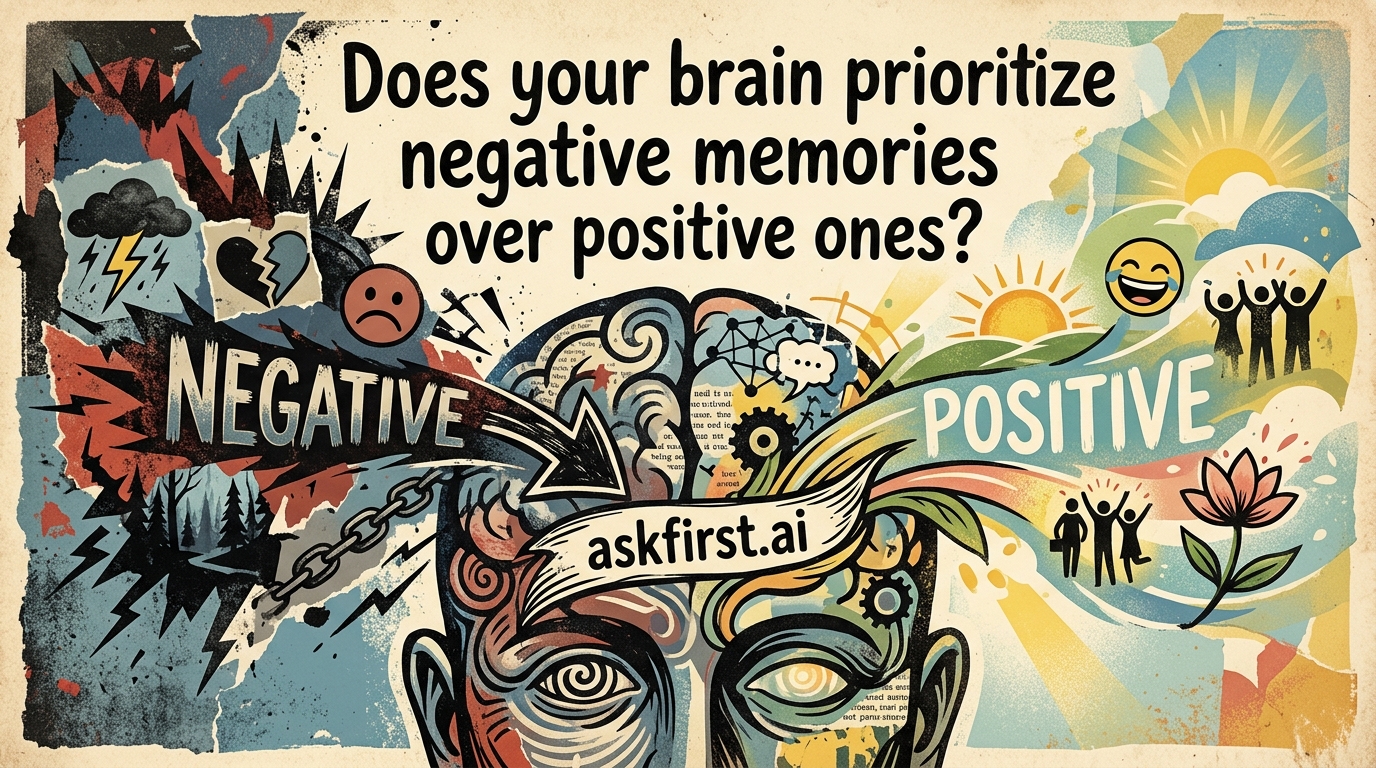
The human brain functions as an incredibly sophisticated survival machine, meticulously calibrated over millions of years of evolution. One of its most distinctive features is a phenomenon known in psychological circles as the 'negativity bias.' This cognitive mechanism describes the tendency for human beings to register negative stimuli more readily and process them more thoroughly than positive or neutral information. In essence, the brain is hardwired to give greater weight to potential threats, challenges, and adverse experiences compared to experiences of joy, success, or safety. Understanding why the brain prioritizes these memories requires a dive into neurobiology, evolutionary psychology, and the fundamental architecture of human perception.
The Evolutionary Logic of Vigilance
To grasp the persistence of negative memory, one must look at the environmental pressures faced by early humans. For a hunter-gatherer, missing a food source was inconvenient, but missing the presence of a predator was fatal. Consequently, individuals who were hyper-attuned to 'negative' signs—a rustle in the bushes, the smell of smoke, or the hiss of a snake—were significantly more likely to survive and pass on their genetic material. This created a strong selective pressure for the brain to categorize negative events as high-priority data. The brain developed the capacity to store these experiences in vivid detail, effectively creating a 'threat map' to ensure the individual would avoid or navigate similar situations with increased efficiency in the future.
The Neurobiology of Memory Consolidation
At the neurological level, the process of encoding memories is heavily mediated by the amygdala and the hippocampus. The amygdala, often referred to as the brain's 'alarm bell,' is highly sensitive to emotional arousal. When an event occurs that is perceived as stressful or negative, the amygdala signals the hippocampus to prioritize the consolidation of that memory.
- Arousal and Encoding: High emotional arousal triggers the release of stress hormones like cortisol and adrenaline, which act as a 'chemical stamp' on memory, effectively telling the brain: 'This is important; store this for later.'
- The Vividness Effect: Negative memories often possess a high level of perceptual detail. This is due to the brain dedicating extra neural resources to capturing the environmental context of a potential threat.
Because positive emotions are frequently associated with periods of low threat—times when the individual feels safe and secure—the intense chemical tagging process that accompanies negative events is often absent. As a result, positive memories may feel more transient or less defined by comparison.
The Counter-Intuitive 'Negativity Bias' in Daily Life
This bias affects how we evaluate our lives, form habits, and make decisions. Research consistently shows that:
- Social Interaction: People are more influenced by a single negative interaction with a friend or colleague than by several positive ones. The impact of criticism often outweighs the impact of praise, requiring a high ratio of positive to negative interactions to maintain a balanced perspective.
- Decision Making: When faced with a choice, the brain tends to focus more on the potential 'loss' or downside rather than the potential 'gain' or upside. This is known as loss aversion, a cornerstone of behavioral economics.
- Information Processing: News outlets, social media algorithms, and interpersonal gossip often lean toward negative content because that is what captures the human brain's focus most effectively. It is a biological exploit that modern systems utilize to maintain human attention.
Managing the Brain's Default Setting
While the negativity bias was essential for survival on the savanna, it can be maladaptive in a modern, complex society. Constantly focusing on threats can lead to unnecessary anxiety or a skewed perception of reality. However, human beings possess a unique capacity for 'neuroplasticity'—the ability to rewire the brain through conscious effort. By intentionally practicing mindfulness, gratitude, and cognitive reframing, individuals can effectively 'counter-balance' the internal scale.
- Gratitude Practice: Writing down three positive things daily helps to force the brain to scan for and 'tag' positive stimuli, effectively training the hippocampus to pay more attention to positive inputs.
- Cognitive Reframing: When a negative memory arises, intentionally analyzing it from a distance allows the prefrontal cortex to exert control over the emotional impulses of the amygdala, turning a 'threat' memory into a 'learning' memory.
Conclusion: A Tool, Not a Trap
It is incorrect to view the brain's focus on negative memories as a failure or a flaw. Instead, it is a testament to the success of our biological heritage. The brain is an expert at identifying risk. By recognizing that this mechanism is simply a survival tool designed for a different era, individuals can reclaim control over their psychological narratives. The brain may be biased toward the negative, but the mind has the power to consciously choose the positive.