The Eternal Sweetness: Why Honey Never Spoils
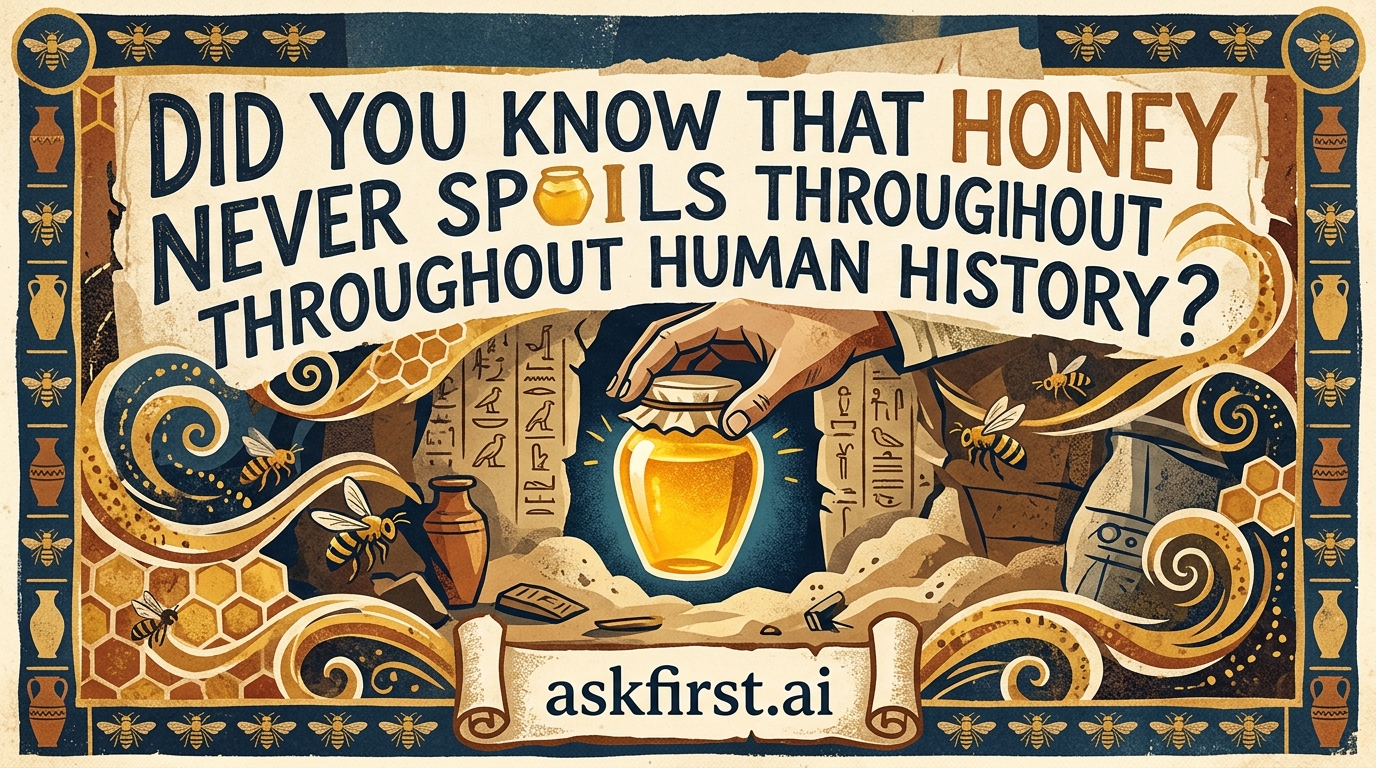
Honey is one of the most remarkable substances produced in nature, acting as a bridge between ancient history and modern scientific discovery. Archaeologists excavating ancient Egyptian tombs have famously discovered pots of honey that are thousands of years old, yet still chemically edible. This phenomenon is not magic; it is a complex interaction of chemistry, biology, and physics.
The Triple Defense Mechanism
The preservation of honey relies on three primary factors that work in harmony to inhibit bacterial and fungal growth:
- Extremely Low Moisture Content: Honey is naturally hygroscopic, meaning it absorbs moisture from the air. However, in its raw state, it contains very little water. Most microorganisms require a relatively high water activity level to survive and multiply. Because honey holds water molecules so tightly, bacteria are essentially starved of the hydration they need to thrive.
- High Acidity: Honey has a pH level generally between 3 and 4.5. This acidic environment is hostile to most harmful bacteria. While some specialized microbes can survive in varying pH levels, the specific combination of low water activity and acidity creates a challenging atmosphere for any pathogen.
- Natural Hydrogen Peroxide: During the process of turning nectar into honey, bees add an enzyme called glucose oxidase. When the honey is exposed to moisture, this enzyme breaks down into gluconic acid and hydrogen peroxide. This mild concentration of hydrogen peroxide acts as a natural antiseptic, neutralizing potential invaders before they can spoil the product.
The Role of the Honeybee
The production of honey is a mechanical feat of labor. Bees visit thousands of flowers, collecting nectar which is primarily composed of sucrose and water. Back at the hive, bees regurgitate the nectar and pass it among other bees to break down the complex sugars into simpler sugars like glucose and fructose. They then deposit this liquid into honeycomb cells and beat their wings rapidly to evaporate excess water. This dehydration process is what pushes the moisture content down to the necessary threshold, typically below 18%, to ensure indefinite shelf stability.
Practical Myth-Busting: Is Crystallization Spoiling?
A common misconception is that when honey turns thick, grainy, or opaque, it has spoiled. This process is known as crystallization. It is not a sign of expiration; it is a sign of purity. Glucose in honey is less soluble than fructose, and over time, it precipitates out of the liquid phase to form crystals. Temperature fluctuations and the presence of natural pollen grains act as "seeds" for this crystal formation. Even if the honey becomes rock-hard, simply placing the jar in a warm water bath will return it to its original, smooth, golden state without compromising its nutritional profile.
Culinary and Medicinal Resilience
Because honey is so resistant to spoilage, it has been used for centuries not just as a sweetener, but as a preservative and a medical dressing. Ancient cultures recognized that covering a wound with honey could prevent infection. Today, science validates this through the study of "Medical Grade Honey." The physical characteristics that prevent food spoilage are the same ones that prevent bacteria from colonizing a wound site.
Proper Storage Guidelines
While honey is technically immortal, its quality can degrade if exposed to improper conditions. To maintain its flavor profile and delicate enzymes:
- Avoid Excessive Heat: High temperatures can accelerate the browning process (the Maillard reaction) and destroy beneficial enzymes. Keep storage areas away from stoves or direct sunlight.
- Ensure an Airtight Seal: Because honey is hygroscopic, leaving a jar open in a humid climate will cause it to pull moisture from the air, increasing its water content and eventually allowing it to ferment. Always screw the lid on tight.
- Use Clean Utensils: Introducing contaminants like breadcrumbs, butter, or saliva into a jar of honey can introduce bacteria or mold spores that might eventually lead to localized spoilage. Always use a clean spoon.
In conclusion, honey represents a perfect union of biological engineering and environmental stability. By understanding these mechanisms, one can appreciate the humble bee's work not just as a culinary delight, but as a testament to the endurance of natural processes.