The Immortal Enigma: Unraveling the Secrets of Biological Longevity
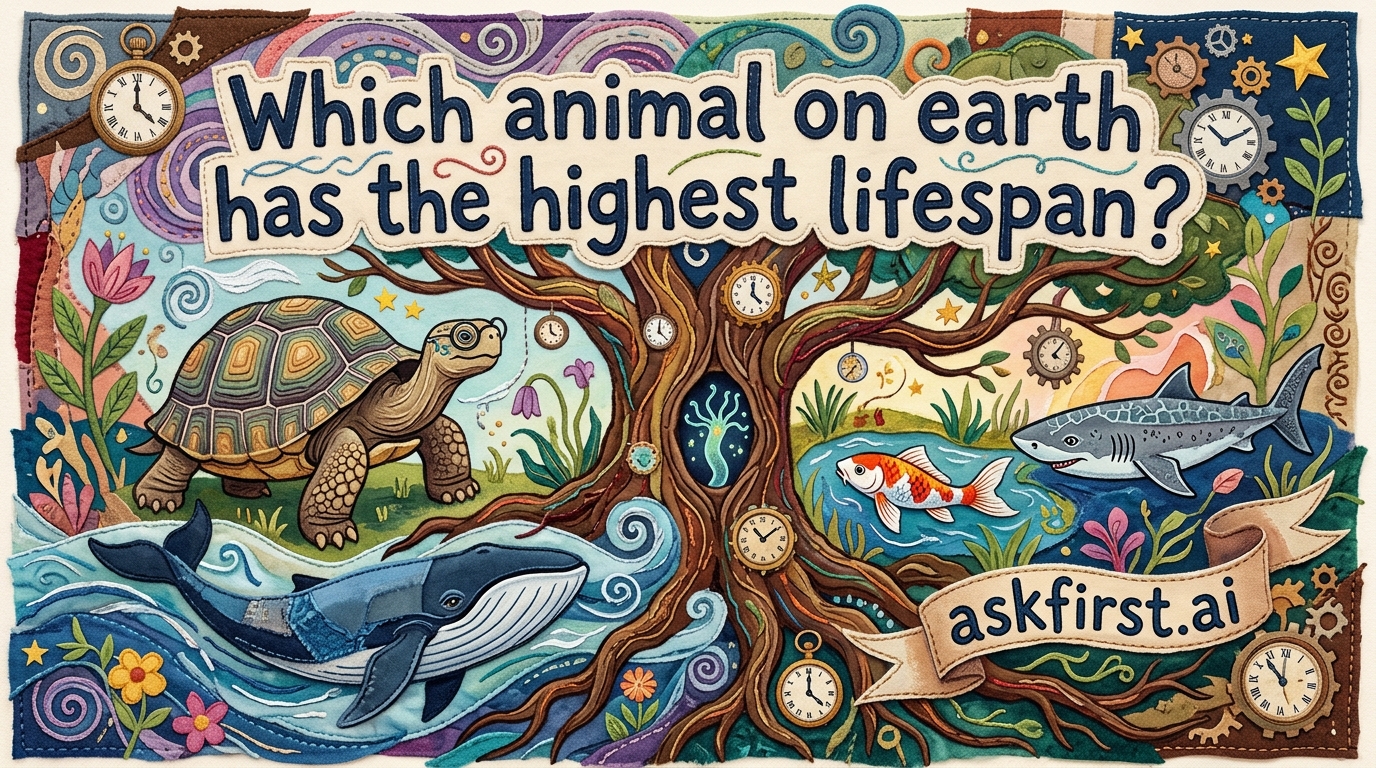
In the vast, complex tapestry of the animal kingdom, the quest for immortality has long captivated both poets and biologists. While human beings struggle to extend their lifespans into the triple digits, several species have evolved biological mechanisms that allow them to transcend typical aging processes entirely. When discussing the animal with the highest documented lifespan, we must distinguish between species that simply live a long time and those that possess true biological immortality. The crown for the longest-lived animal currently belongs to the immortal jellyfish, Turritopsis dohrnii, while the record for the longest-lived non-colonial vertebrate is held by the Greenland shark.
The Biological Phenomenon of Turritopsis dohrnii
The Turritopsis dohrnii, often referred to as the "immortal jellyfish," fundamentally challenges our understanding of life cycles. Found primarily in the Mediterranean Sea and parts of Japanese waters, this tiny hydrozoan utilizes a process known as transdifferentiation. When this jellyfish faces physical damage, starvation, or environmental stress, it does not simply die. Instead, it retracts its tentacles, reabsorbs its bell, and reverts its cells back to their earliest, undifferentiated state—a polyp.
Essentially, the jellyfish hits a "reset" button on its biological clock. As noted by Dr. Shin Kubota, a leading expert at Kyoto University’s Seto Marine Biological Laboratory, these creatures can repeat this cycle indefinitely, effectively bypassing the senescence (aging) process that claims all other complex life forms. While they can still be killed by predators or disease, they are not beholden to the inevitable decay of biological aging, making them the only known species with the potential for eternal life.
The Greenland Shark: The Vertebrate Elder
If we shift our focus from biological immortality to the longest-lived vertebrate, we encounter the Greenland shark (Somniosus microcephalus). These cold-water giants, which roam the depths of the North Atlantic and Arctic Oceans, grow at an agonizingly slow rate—less than one centimeter per year.
The breakthrough in understanding their longevity came in 2016, through a groundbreaking study published in the journal Science by lead author Julius Nielsen of the University of Copenhagen. By utilizing radiocarbon dating on the proteins stored in the lenses of the sharks' eyes, Nielsen and his team determined that a female Greenland shark they studied was likely between 272 and 512 years old. This discovery shattered previous records for vertebrate longevity. These sharks reach sexual maturity only after they are roughly 150 years old, meaning they spend over a century in a state of arrested development, thriving in waters where temperatures rarely rise above 2°C, which slows their metabolic rate and cellular degradation to a glacial pace.
The Ocean Quahog: A Master of Metabolic Stasis
Beyond vertebrates, the mollusk kingdom offers the Ocean Quahog (Arctica islandica), a bivalve clam that serves as a testament to the power of metabolic suppression. These clams live on the ocean floor and exhibit extreme longevity, with many individuals living well past 400 years.
The most famous specimen, nicknamed "Ming the Mollusk," was dredged off the coast of Iceland in 2006. Researchers from Bangor University in Wales counted the annual growth rings on its shell, revealing an astonishing age of 507 years. This means Ming was born in 1499, during the height of the Ming Dynasty, and lived through the Renaissance, the Industrial Revolution, and the entirety of the modern era. The secret to the Quahog’s success lies in its ability to maintain extremely stable protein structures and protect its DNA from oxidative damage, a mechanism detailed extensively in the work of Dr. Doris Abele at the Alfred Wegener Institute.
Evolutionary Strategies for Longevity
Why do these creatures live so long while others perish within a few years? The answer lies in the Disposable Soma Theory, a concept popularized by biologist Thomas Kirkwood. This theory posits that organisms have a limited amount of energy to allocate between reproduction, body maintenance, and growth.
- Cold Environment Adaptation: Species like the Greenland shark benefit from low temperatures, which minimize the wear and tear on cellular machinery.
- Low Metabolic Rates: By slowing down the rate at which they burn energy, these long-lived animals prevent the accumulation of toxic metabolic byproducts that cause cellular aging.
- DNA Repair Mechanisms: Long-lived species often possess superior genetic repair pathways that fix mutations before they can lead to cancer or senescence.
Conclusion
The spectrum of longevity in the animal kingdom is vast, ranging from the rapid life cycles of insects to the multi-century endurance of the Greenland shark and the Ocean Quahog. While Turritopsis dohrnii represents the pinnacle of biological defiance by resetting its own life cycle, the longevity of vertebrates like the Greenland shark provides a fascinating look at how extreme environmental adaptation can extend life far beyond human comprehension. These creatures are not merely outliers; they are biological masterclasses in sustainability, offering researchers vital clues into the mechanisms of aging and the potential for life to persist in some of the most challenging environments on Earth.