The Looming Crisis: Understanding the Digital Dark Age
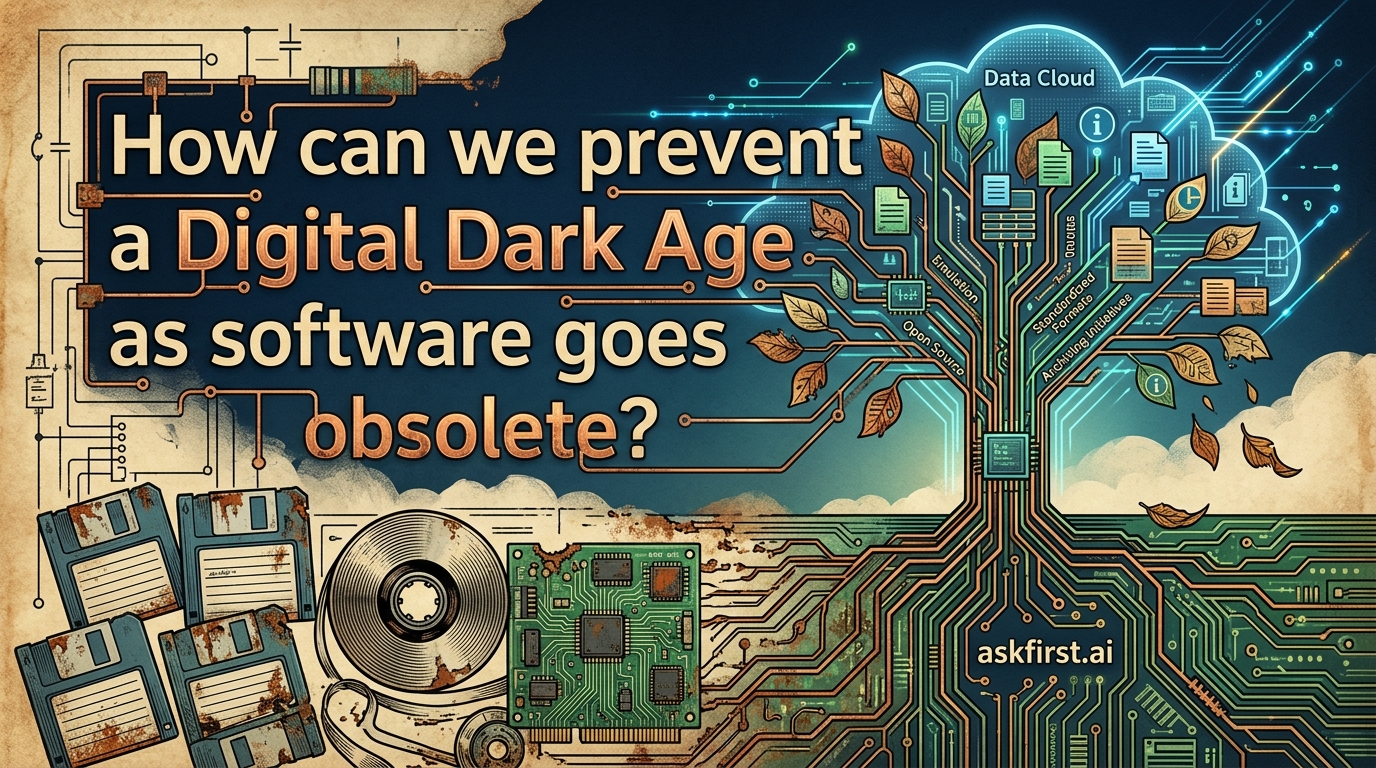
We are currently living through a period of unprecedented data creation, yet we are simultaneously building the most fragile archive in human history. A "Digital Dark Age" refers to a potential future scenario where historians and researchers find themselves unable to access the records of our time because the hardware and software required to read them have become obsolete. Unlike clay tablets or paper, which can be read with the naked eye centuries later, digital information is ephemeral, requiring a complex stack of technology—from power sources to operating systems—to remain intelligible. To prevent this, we must shift our philosophy from passive storage to active preservation.
The Problem of Bit Rot and Format Obsolescence
The primary threats to our digital heritage are bit rot (the degradation of physical storage media) and format obsolescence (the abandonment of the software architectures that interpret data). When a file format is proprietary and the company that created it goes out of business, the data essentially becomes encrypted in a way that no human can decipher.
In his seminal book Digital Preservation (ALA Editions), author Matthew G. Kirschenbaum emphasizes that digital objects are not static; they are processes. To read a file from 1995, you cannot simply "look" at the bits; you must emulate the environment of 1995. This necessity introduces the concept of emulation as preservation. Rather than trying to update every file format to the latest version—which often results in data loss or formatting errors—we should preserve the original software environments via emulators like QEMU or the Emulation as a Service (EaaS) framework. By keeping the "environment" alive, we ensure that the digital artifact remains authentic to its original experience.
Open Standards and Open Source: The First Line of Defense
One of the most effective ways to mitigate the risk of software obsolescence is the adoption of open-source, non-proprietary file formats. If a software suite is closed-source, its functionality is tethered to the longevity of the corporation that owns it. Conversely, open-source formats (such as PDF/A for documents, FLAC for audio, or TIFF for images) have published specifications that allow developers to build modern tools to read that data in perpetuity.
The Library of Congress has long advocated for the use of "Sustainability of Digital Formats" (documented on their official Digital Preservation website). Their guidelines suggest that the more transparent the format, the higher the probability that the data will survive. For example, a plain text file (.txt) is infinitely more portable than a proprietary binary file from a defunct word processor. We must prioritize "interoperability" over "feature richness" when archiving critical cultural and scientific data.
The Strategy of Migration and Normalization
For institutions and individuals alike, normalization is a key strategy. This involves converting incoming data into a standardized, long-term archival format upon receipt. If you are a digital archivist, you do not keep files in their native, volatile formats if those formats are niche. You "normalize" them into formats that are widely supported by the open-source community.
Furthermore, the strategy of periodic migration is essential. This is the practice of moving data from one generation of hardware to the next before the previous generation fails. However, migration carries the risk of "data entropy"—where small errors are introduced during each transfer. To combat this, we utilize checksums (such as MD5 or SHA-256 hashes). By calculating a unique digital fingerprint for a file, we can verify that the data has not been corrupted during the migration process. If the hash changes, we know the file has suffered bit rot.
Decentralization: The IPFS Approach
The centralization of data in "the cloud" creates single points of failure. If a major provider goes bankrupt or decides to delete inactive accounts, petabytes of human history could vanish in an instant. The InterPlanetary File System (IPFS), a project led by Juan Benet, offers a decentralized solution. By using content-addressed storage, IPFS allows files to be distributed across a network of nodes. Instead of asking a server where a file is, you ask the network what the file is. This makes it much harder for information to be deleted or lost due to the collapse of a specific corporate entity.
Conclusion: A Cultural Shift
Preventing a Digital Dark Age is not merely a technical challenge; it is a cultural one. We must stop viewing digital data as a temporary convenience and start treating it with the same reverence we accord to physical manuscripts. This requires:
- Institutional Mandates: Libraries and governments must fund the maintenance of emulators and format-conversion tools.
- Universal Standards: We must resist proprietary software lock-in and prioritize open-source, human-readable formats.
- Redundancy: Following the "LOCKSS" (Lots of Copies Keep Stuff Safe) principle, as pioneered by Stanford University Libraries, is the only way to ensure that even if one server goes down, the data persists elsewhere.
If we do not act to standardize our formats and decentralize our archives, the 21st century may be remembered not as the "Information Age," but as the era where we produced the most information, only to lose the keys to reading it.