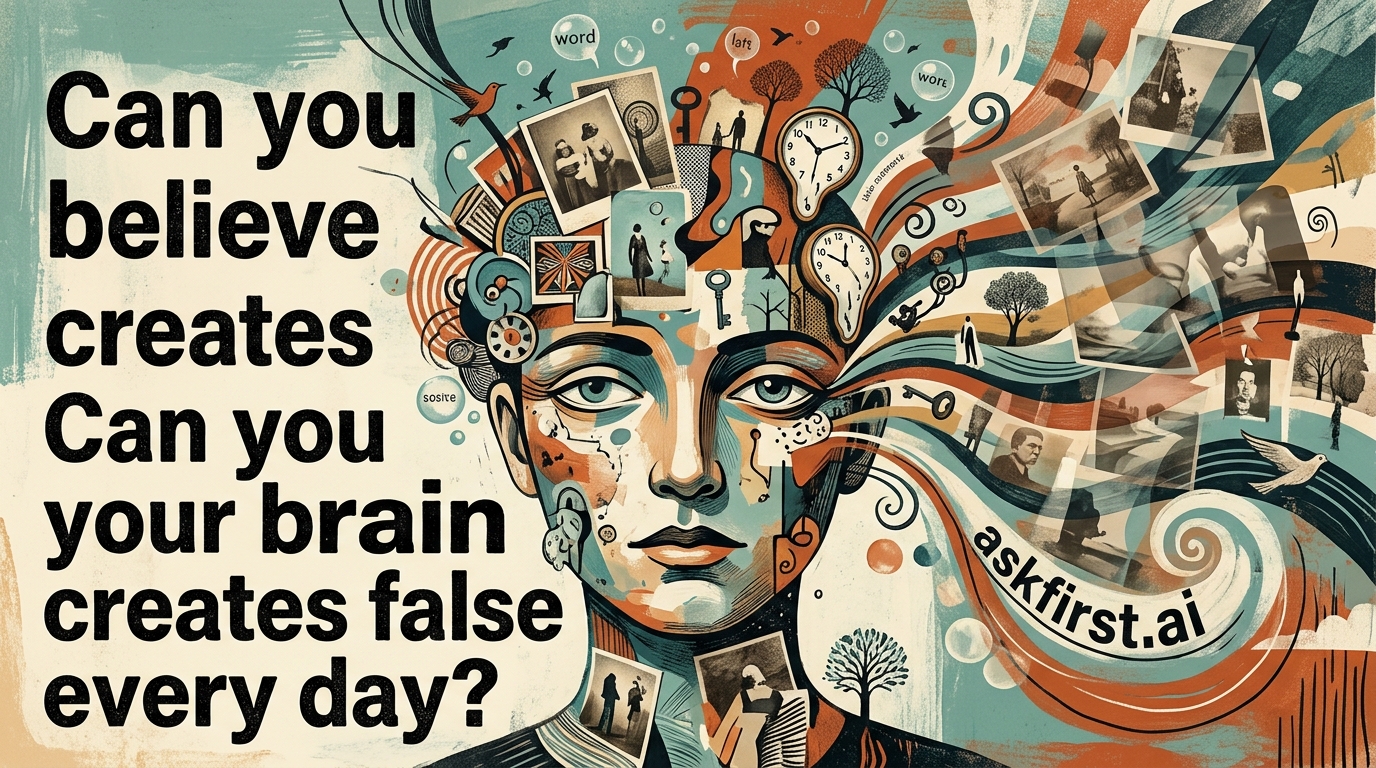
The Architecture of Malleable Memory
Memory is frequently envisioned as a high-fidelity video recording stored in an archival vault, waiting to be retrieved with absolute accuracy. However, cognitive psychology reveals that the brain functions more like a creative reconstruction engine. False memory, or confabulation, is not a glitch in the system; it is an inherent byproduct of how the human mind organizes, preserves, and retrieves information. This phenomenon suggests that human cognition prioritizes narrative coherence and emotional significance over pixel-perfect detail.
The Mechanism of Reconstruction
When a memory is recalled, it is not merely played back; it is reconstructed from fragmented neural pathways. This process involves the hippocampus and the prefrontal cortex working in tandem. During this retrieval, the brain fills in gaps with inferences based on knowledge, social context, and expectations. This is known as the 'constructive memory framework.' If a specific piece of the original experience is missing, the brain seamlessly integrates logical assumptions to complete the story, rendering the memory internally consistent but objectively inaccurate.
Factors Driving False Memories
Multiple variables contribute to the generation of false memories in everyday life:
- Suggestibility: External cues, such as leading questions, can subtly alter how a memory is stored. If an individual is asked about 'the' broken headlight when no headlight was broken, the brain may subconsciously 'install' that detail.
- Misattribution: This occurs when the origin of a memory is confused. An individual might believe an event happened to them personally when they actually witnessed it in a movie, read it in a book, or heard it from a friend.
- The Schema Effect: The brain relies on schemas—mental blueprints of how things usually occur. If one enters a modern office, the brain automatically expects to see computers and chairs. If a chair was absent but expected, the brain might 'remember' seeing one simply because it fits the schema.
- Emotional Congruence: Memories linked to high-arousal emotions are often more vivid, but they are also more susceptible to 'emotional inflation,' where the intensity of the feeling distorts the details of the surrounding environment.
The Misinformation Effect and Elizabeth Loftus
Groundbreaking research by cognitive psychologist Elizabeth Loftus demonstrated the staggering power of the misinformation effect. In famous studies, participants watched films of car accidents and were subsequently asked questions with varying verbs, such as 'smashed' versus 'hit.' Those who heard 'smashed' were significantly more likely to report seeing broken glass that never actually existed. This highlights that the way an experience is phrased can retroactively rewrite the sensory details of a memory, proving that memories are fluid, living structures rather than static entities.
Social Contagion of Memory
False memories often spread through social interaction. This is referred to as the 'social contagion of memory.' When a group recounts a shared experience, individuals often incorporate details mentioned by others into their own recollection. This process creates a collective, yet inaccurate, version of reality that feels deeply personal and authentic. Over time, these adopted details become indistinguishable from one's own sensory input.
Why the Brain Prefers Fiction to Fact
The primary function of the brain is survival, not forensic accuracy. Creating a coherent narrative allows the brain to make predictions about the future. If the brain had to store every raw sensory detail of existence, the cognitive load would be overwhelming. Instead, it extracts the 'gist' or the meaning. By compressing events into simple, understandable stories, the mind functions more efficiently. The inclusion of false details is often a minor cost for the significant benefit of maintaining a continuous sense of identity and logical continuity.
Recognizing the Limits of Self-Trust
Understanding the fallibility of memory is not a reason to despair or distrust the mind, but rather a call to intellectual humility. Recognizing that memory is a constructive process allows for a more flexible perspective on conflicts and disagreements. It acknowledges that two people can experience the exact same event and emerge with entirely different, yet sincere, recollections.
Conclusion
The brain’s ability to generate false memories is a testament to its complexity. By shifting from the paradigm of 'memory as a recording' to 'memory as a reconstruction,' one can better appreciate the fluidity of human experience. This psychological mechanism is proof that the mind is always active, weaving the tapestry of the self through the constant synthesis of past, present, and imagination. Recognizing this allows for deeper empathy and a greater appreciation for the marvel of human perception.