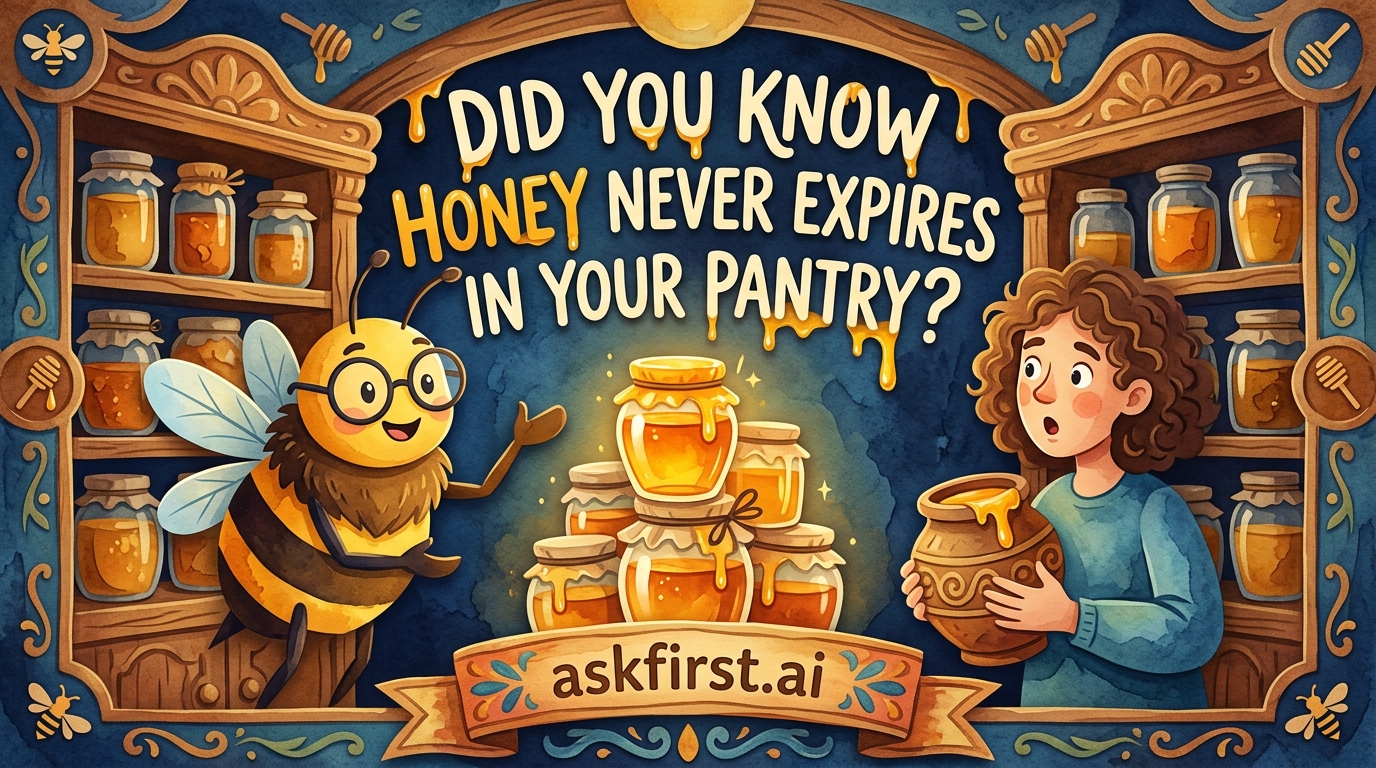
The Eternal Nature of Honey: Nature's Culinary Miracle
Honey stands as one of the most remarkable substances on Earth, occupying a unique position as a food product that is essentially impervious to spoilage. While most pantry staples have expiration dates, raw, high-quality honey possesses a chemical profile that creates a perpetual shelf life. This phenomenon has been famously documented by archaeologists who have discovered pots of honey in ancient Egyptian tombs that remain perfectly preserved and technically edible after thousands of years. This longevity is not mere magic; it is a complex synergy of biology, chemistry, and environmental physics.
The Chemical Architecture of Longevity
To understand why honey does not expire, one must analyze its unique composition. Honey is primarily composed of sugars, specifically glucose and fructose, which are hygroscopic. Hygroscopic substances absorb moisture from the environment. Because honey has an extremely low water content, it essentially dehydrates any bacteria or microorganisms that might land on it. When a microbe attempts to inhabit the honey, the sugar molecules exert osmotic pressure, pulling water out of the bacterial cells, effectively neutralizing them. Without moisture, microbes cannot survive, let alone reproduce, rendering the honey sterile.
Furthermore, the pH of honey typically ranges between 3.2 and 4.5. This level of acidity is sufficiently low to act as an additional barrier against the proliferation of most spoilage-inducing organisms. Beyond the acidity and water content, bees themselves contribute a critical chemical weapon: the enzyme glucose oxidase. When bees deposit nectar, they introduce this enzyme into the mixture. As the honey cures, the enzyme reacts with the glucose to produce hydrogen peroxide. While present in trace amounts, hydrogen peroxide acts as a potent antimicrobial agent, effectively sanitizing the honey against potential invaders.
Myths vs. Reality: Why Honey Sometimes Changes State
Consumers often mistakenly believe that honey has expired when they observe it undergoing physical transformations. The most common of these is crystallization. It is a widespread misconception that crystallized honey is spoiled or "sugared." In reality, crystallization is a natural phase change. Because honey is a supersaturated sugar solution, it is physically unstable. Over time, the glucose molecules naturally drop out of the liquid solution and form solid crystals. This process is accelerated by cooler temperatures.
- How to restore it: To return crystallized honey to a smooth, liquid state, one simply needs to place the jar in a warm water bath. Heating the honey gently—never in a microwave, which can destroy the delicate enzymes—will dissolve the glucose crystals, restoring the texture without compromising the quality.
The Importance of Proper Storage
While honey is technically eternal, it remains vulnerable to environmental contamination if not stored correctly. The primary threat to honey is not bacteria, but humidity. Because honey is hygroscopic, leaving a jar open in a humid kitchen will cause the honey to absorb moisture from the air. If the water content rises above 18-20%, the environment may become hospitable to yeast, which can lead to fermentation. To ensure longevity:
- Keep it sealed: Always store honey in an airtight container to prevent moisture absorption.
- Avoid cross-contamination: Use clean, dry utensils when scooping honey to prevent the introduction of bread crumbs or other organic materials that could provide a base for bacterial growth.
- Mind the temperature: Store at room temperature away from direct sunlight. Excessive heat can degrade the complex flavor profiles and enzymes, though it will not make the honey unsafe to consume.
Scientific Implications for Food Preservation
The study of honey’s preservation properties has inspired significant interest in food science. Researchers have explored the use of natural antimicrobial properties found in honey to develop safer, more sustainable food packaging and preservation methods. By mimicking the osmotic and enzymatic defenses found in honey, scientists hope to reduce reliance on synthetic preservatives in modern food supply chains. The endurance of honey serves as a masterclass in natural defensive systems, reminding us that nature often provides the most effective solutions to biological challenges.
In conclusion, honey is a testament to the efficiency of evolution. By combining high osmotic pressure, acidity, and enzymatic activity, honey creates an inhospitable environment for anything that would cause decay. Whether you bought a jar yesterday or find one tucked away in a cupboard years from now, you can feel confident that the contents are as safe and nutritious as the day they were harvested, provided they remained protected from the elements.