The Architecture of Defense: Understanding the Human Immune System
The human immune system is arguably the most sophisticated biological defense network in the known universe. It is not a single organ, but rather a sprawling, decentralized collection of cells, tissues, and proteins that work in seamless harmony to protect the body against "non-self" invaders—pathogens such as bacteria, viruses, parasites, and fungi. Without this intricate surveillance system, the human body would succumb to the microbial environment within hours. To understand how we survive, one must view the immune system as a tiered, multi-layered military operation, categorized into two primary branches: the Innate Immune System and the Adaptive Immune System.
The First Line of Defense: The Innate Immune System
The innate immune system is our evolutionary heritage; it is the rapid-response team that is present from birth. It is non-specific, meaning it does not distinguish between different types of pathogens, but it acts with blistering speed to contain threats.
- Physical and Chemical Barriers: Before a pathogen even enters the bloodstream, it must bypass the body’s external fortifications. The skin acts as a waterproof, physical wall. Mucous membranes in the respiratory and digestive tracts trap invaders, while stomach acid acts as a chemical sterilizer.
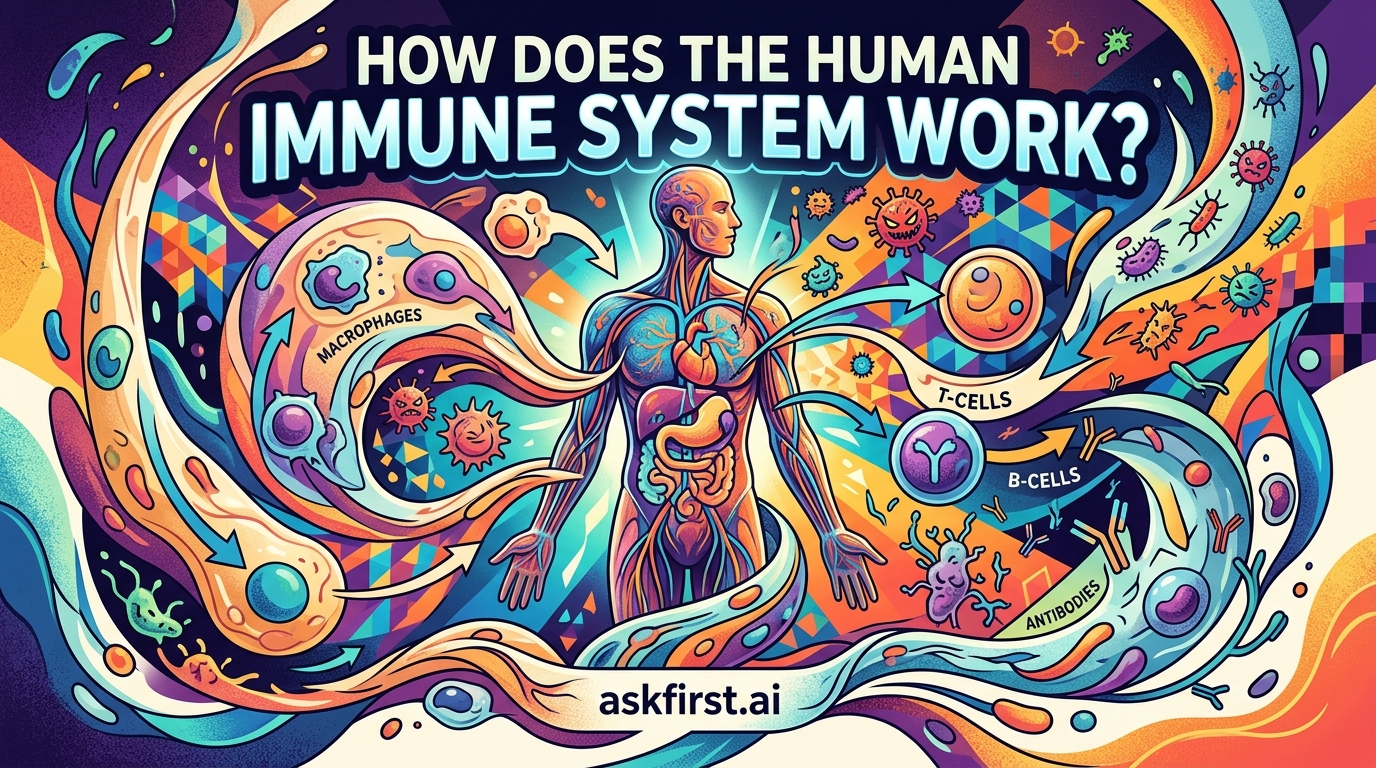
- The Inflammatory Response: When a pathogen breaches these barriers—perhaps through a cut—the innate system triggers inflammation. Mast cells release histamine, causing local blood vessels to dilate and become "leaky." This allows white blood cells, such as neutrophils and macrophages, to exit the bloodstream and rush to the site of infection.
- Phagocytosis: Macrophages are the "big eaters" of the immune system. They engulf pathogens and break them down using digestive enzymes. As described in Janeway’s Immunobiology (Murphy & Weaver), these cells also release cytokines, which are signaling proteins that act as a "call to arms," recruiting more cells to the battle.
The Specialized Force: The Adaptive Immune System
While the innate system is fast, the adaptive immune system is precise. It takes longer to activate—often days—but it provides long-term protection by "remembering" its enemies. This system relies on two primary types of lymphocytes: B-cells and T-cells.
- B-Cells and Humoral Immunity: B-cells are the body’s weapon factories. When a B-cell encounters an antigen (a unique molecular "ID" on a pathogen), it matures into a plasma cell. These plasma cells churn out millions of antibodies—Y-shaped proteins that are custom-designed to latch onto specific pathogens. Once an antibody binds to a virus, for instance, it neutralizes it, preventing it from entering healthy cells and marking it for destruction by other immune cells.
- T-Cells and Cell-Mediated Immunity: T-cells are the special forces. Helper T-cells act as the commanders, orchestrating the entire response by releasing chemical messengers that boost the activity of B-cells and macrophages. Cytotoxic T-cells (killer T-cells) perform the surgical strike: they identify cells that have already been hijacked by a virus and induce them to undergo apoptosis, or programmed cell death, effectively cutting off the virus’s supply chain.
Immunological Memory: The Key to Vaccination
One of the most remarkable features of the adaptive immune system is its ability to develop "memory." After an initial encounter with a pathogen, some B and T cells transform into Memory Cells. These cells remain in the body for years, sometimes decades.
If the same pathogen attempts to invade a second time, these memory cells recognize it instantly and launch a response so rapid and overwhelming that the pathogen is eradicated before the individual even experiences symptoms. This biological mechanism is the foundational principle behind vaccination. As outlined by Dr. Anthony Fauci in various clinical reviews, vaccines introduce a harmless or weakened version of a pathogen to the body, training the immune system to build its "memory library" without the risk of suffering the actual disease.
The Delicate Balance: Autoimmunity and Regulation
The immune system is a double-edged sword. If it is too weak, the body is vulnerable to infection; if it is too aggressive, it can turn against the body's own healthy tissues. This phenomenon is known as autoimmunity. Conditions like Type 1 Diabetes, Rheumatoid Arthritis, and Lupus occur when the immune system loses its ability to distinguish "self" from "non-self."
To prevent this, the body employs a sophisticated regulatory system. Regulatory T-cells (Tregs) act as the "brakes" of the immune system. They suppress the activity of other immune cells once a threat has been neutralized, ensuring that the inflammatory response doesn't cause excessive collateral damage to the host.
Conclusion
The human immune system is a masterclass in biological engineering. From the immediate, broad-spectrum response of the innate system to the highly specific, memory-driven strategies of the adaptive system, our bodies maintain a precarious but effective balance. Understanding these processes—as detailed in foundational texts like The Immune System by Peter Parham—reveals that our health is not a static state, but a dynamic, ongoing war that our bodies are constantly winning. By maintaining a healthy lifestyle, including proper nutrition and sleep, we support these microscopic guardians, ensuring they remain vigilant against the infinite variety of threats in our environment.