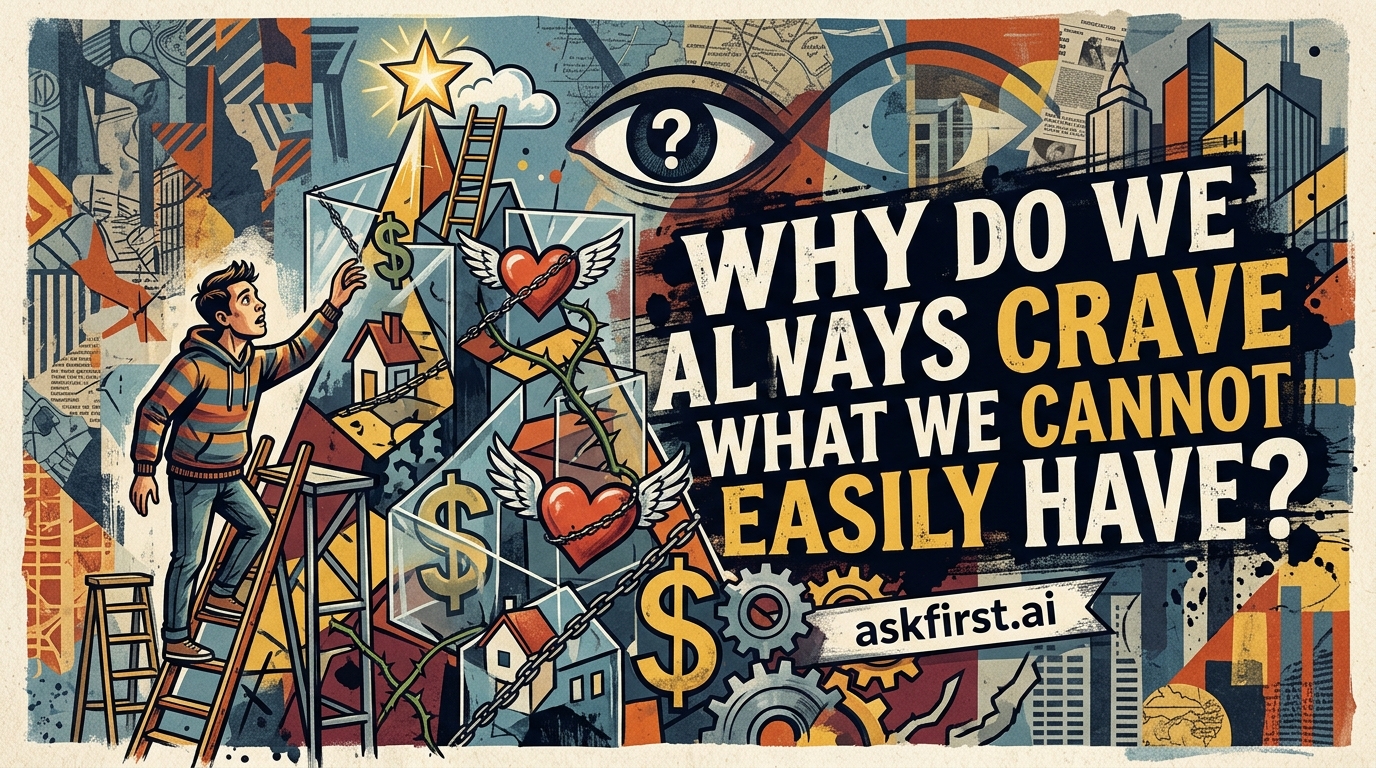
The Psychology of Scarcity and Desire
The human experience is perpetually colored by the phenomenon of desiring that which remains just out of reach. This inclination, often termed the 'scarcity principle,' is a fundamental pillar of behavioral psychology and evolutionary biology. It suggests that individuals assign higher value to items, experiences, or even potential romantic partners simply because they are perceived as limited, rare, or difficult to obtain. This mechanism is not a flaw in human logic; rather, it is an evolutionary adaptation designed to prioritize resources that were historically crucial for survival.
The Evolutionary Roots of Wanting
From an evolutionary standpoint, resources such as food, safety, and mating opportunities were rarely abundant in the ancestral environment. When an object or opportunity presented itself, the brain developed a 'scarcity heuristic' to evaluate its worth. If something was difficult to acquire, the brain interpreted this as a sign of high utility and necessity. In modern life, while the survival imperative has shifted, the underlying neural architecture remains. We are hardwired to feel an increased sense of urgency regarding things that are restricted, as our brains interpret limitations as a signal of high quality or prestige.
Psychological Mechanisms at Play
The Reactance Theory: Formulated by psychologist Jack Brehm, reactance suggests that whenever individuals feel their freedom of choice is being threatened or limited, they experience a motivational state of 'psychological reactance.' This causes people to desire the forbidden item even more strongly. The prohibition itself becomes a stimulus that triggers an intense pursuit of the item simply to re-establish a sense of agency and autonomy.
The Endowment Effect and Loss Aversion: Once a person perceives that something might be unobtainable, the human tendency for loss aversion takes over. We weigh the potential loss of an opportunity much more heavily than the potential gain of something readily available. The thought of 'not having' something triggers a deeper emotional response than the satisfaction of 'having' what is easily accessible.
The Dopamine Loop: The anticipation of obtaining something rare releases significant amounts of dopamine in the brain's reward centers. It is often the pursuit itself, rather than the acquisition, that provides the greatest neurological thrill. When something is easy to get, the dopamine spike is muted because the brain recognizes there is no 'hunt' required.
The Impact of Social Proof and Status
In contemporary society, scarcity is frequently conflated with status. Luxury marketing strategies rely heavily on this principle. By limiting the production of a vehicle, a watch, or a designer handbag, brands artificially inflate the perceived value of the product. The logic is simple: if everyone could have it, it would not signify high social standing. Consequently, the desire to possess what others cannot is a pursuit of social hierarchy and belonging. We crave the unreachable because, in our minds, it acts as a gatekeeper to a higher social echelon.
Strategies for Managing Unattainable Desires
Understanding these mechanisms can empower individuals to regain control over their focus and happiness. Here are effective strategies to navigate the cycle of longing:
- Practicing Mindfulness: By recognizing when a desire is triggered by scarcity rather than genuine need, one can pause and evaluate the actual value of the object. Ask: 'Would I still want this if it were available to everyone?'
- Reframing Abundance: Shift focus toward the 'abundance of the present.' Cultivating gratitude for what is readily available helps diminish the power of the scarcity bias.
- Goal Re-alignment: Distinguish between challenging goals (which provide growth) and unattainable fantasies (which provide only frustration). Investing energy in things that are difficult but possible leads to deep personal fulfillment, whereas chasing the impossible leads to a cycle of burnout.
Conclusion
Ultimately, the yearning for the unreachable is a testament to the complexity of the human spirit. While this instinct served our ancestors well in a world of limited resources, in our modern world of convenience, it can lead to unnecessary discontent. By mastering the ability to distinguish between high-value effort and the psychological trap of scarcity, we can transition from being reactive pursuers of 'missing' items to intentional architects of our own satisfaction. Recognizing that our brain often mistakes scarcity for value is the first step toward living a life defined by presence rather than longing.