The Psychology of Parasocial Relationships
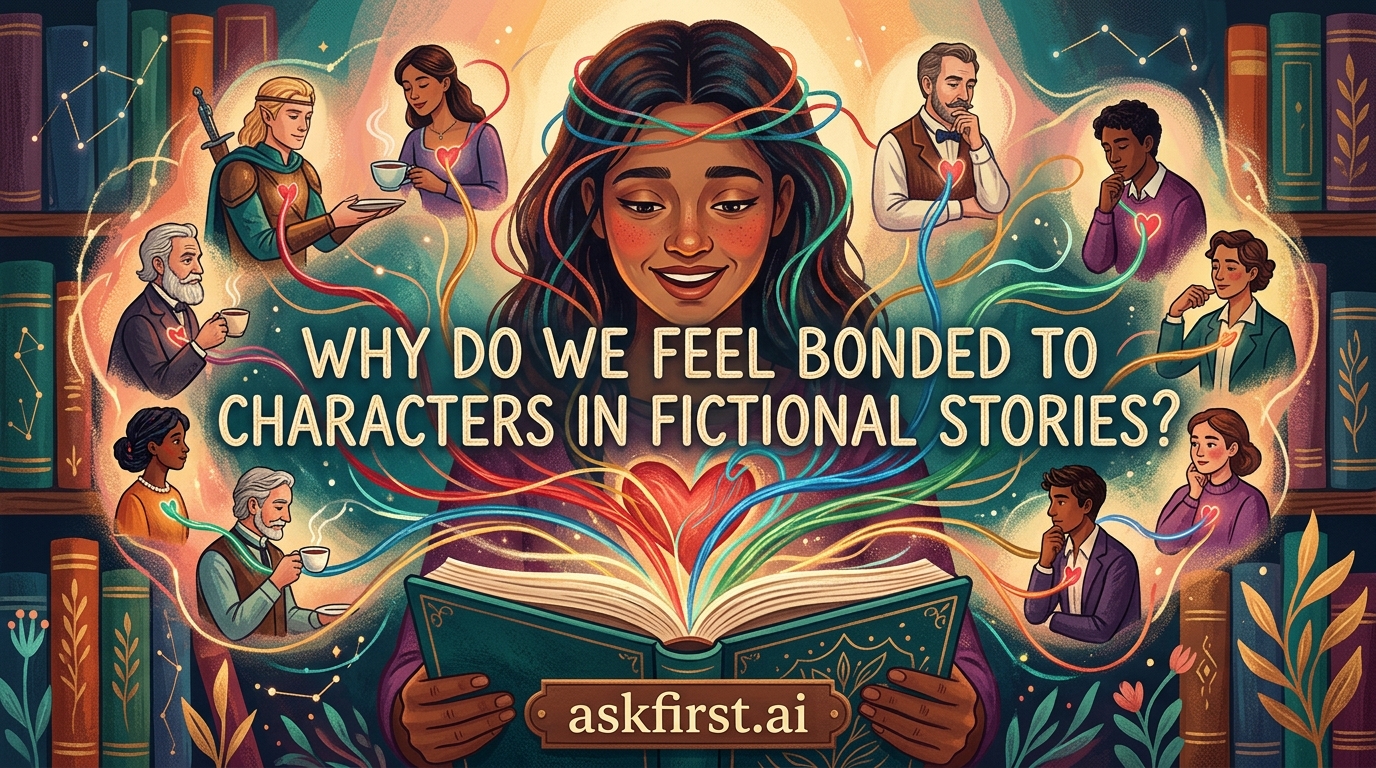
The phenomenon of feeling deep emotional connections to fictional characters is rooted in a psychological concept known as a parasocial relationship. Despite the realization that these figures exist only within the confines of a book, a movie screen, or a video game, the human brain often struggles to distinguish between the emotional processing of real-world interactions and narrative experiences. When an individual consumes a story, the brain activates the same neural networks utilized during actual social cognition.
The Mirror Neuron System
A critical factor in this bonding process is the Mirror Neuron System (MNS). When observing a character navigate a situation, the brain simulates the experience of that character internally. If a protagonist suffers a heartbreak or achieves a monumental triumph, the brain mirrors that activity as if the viewer or reader were living through it. This "neural coupling" creates a sense of shared lived experience, fostering an authentic empathy that persists long after the narrative concludes. This explains why audiences feel a genuine sense of loss or grief when a beloved character is written out of a story.
The Evolution of Social Simulation
From an evolutionary perspective, storytelling serves as a social flight simulator. For early humans, narratives provided a safe environment to "practice" social dynamics, identify complex emotional cues, and understand moral outcomes without the risk associated with real-world failure. By bonding with characters, humans were essentially honing their interpersonal intelligence. This biological legacy remains embedded in modern psychology, driving the persistent urge to invest time and emotional labor into fictional personas.
Mechanisms of Attachment
Research indicates that several mechanisms deepen these attachments:
- Relatability through Flaws: Characters that possess human limitations and failures mirror the reader's own experiences. This alignment creates a psychological sense of kinship.
- Consistent Presence: Much like real-world friendships, characters that reappear in serialized formats—such as long-running book series or television shows—benefit from the "mere exposure effect." The more time spent with a character, the more the brain builds a sense of intimacy and trust.
- The Empowerment Projection: Humans often form bonds with characters who possess traits they admire or wish to embody. By identifying with these figures, the audience experiences a vicarious boost in self-concept.
The Role of Transportation
Psychologists refer to the phenomenon of becoming fully immersed in a story as narrative transportation. When a reader is transported, they lose track of their actual surroundings and become cognitively and emotionally entangled with the plot. Studies have shown that during these moments, the reader's belief system can be subtly altered to mirror that of the characters. This suggests that the emotional bonding is not merely an external observation but a form of psychological internalizing. The character becomes part of the individual’s internal social network.
The Boundary Between Fiction and Reality
The ability to form these bonds is not indicative of a lack of judgment or delusion, but rather a testament to the sophistication of the human empathy engine. Humans are fundamentally social animals, hardwired to seek connection, understand motives, and evaluate emotional landscapes. Fiction provides an infinite supply of these social data points. Because the human brain evolved in smaller groups where every social interaction mattered, the instinctive impulse to forge bonds is a default setting that narrative creators exploit with masterful precision.
Conclusion
Ultimately, the bond with a fictional character is a testament to the power of the human imagination. We are not just "watching" a story; we are engaging in a complex neurological dance that validates our own emotions, tests our moral foundations, and expands our capacity for empathy. As long as humans have the capacity to conceive of lives beyond their own, the deep, transformative power of storytelling will continue to serve as a bridge between the solitary mind and the collective human experience. These relationships are, in their own unique way, entirely real.