The Mozart Effect: Myth or Biological Reality?
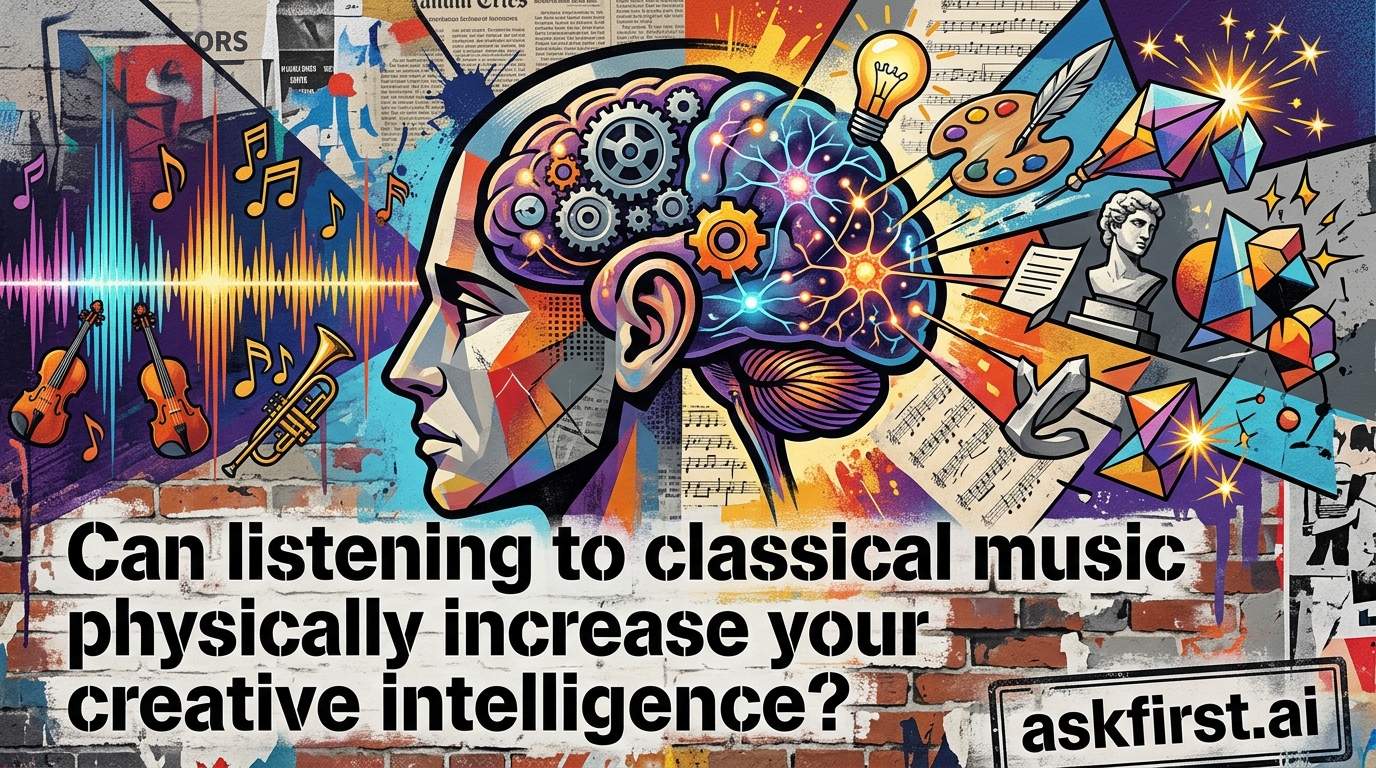
For decades, the concept of the 'Mozart Effect' has permeated popular culture, suggesting that merely listening to the complex compositions of Wolfgang Amadeus Mozart could physically rewire the human brain to boost IQ and foster heightened creativity. While the idea that passive listening can instantaneously elevate cognitive capacity is largely considered a scientific oversimplification, the relationship between auditory stimulation, neuroplasticity, and divergent thinking is profound, complex, and empirically grounded.
The Neurobiology of Auditory Stimulation
Music is one of the few stimuli that engages nearly every region of the brain simultaneously. When an individual listens to complex classical structures—characterized by intricate polyphony, evolving dynamics, and mathematical precision—the brain undergoes a series of measurable activations. Specifically, the auditory cortex, the hippocampus, and the prefrontal cortex—the seat of executive function and creative problem-solving—are consistently engaged.
Recent neuroimaging research suggests that while listening to music does not 'create' new gray matter instantly, it facilitates synaptic connectivity. By stimulating the brain's reward circuits and modulating dopamine release, complex musical compositions can reduce cortisol levels. Lowered stress hormones create an optimal physiological state for 'flow,' a psychological condition where the brain is most receptive to divergent thinking and creative ideation.
Creative Intelligence vs. Passive Listening
Creative intelligence is not a singular metric but a combination of cognitive flexibility, originality, and the ability to synthesize disparate ideas. When discussing whether music 'increases' this, it is essential to distinguish between passive consumption and active engagement.
- The Dopamine-Creativity Link: High levels of dopamine, often triggered by aesthetically pleasing music, are associated with improved cognitive flexibility.
- Brainwave Synchronization: Rhythmic auditory patterns can influence neural oscillations. Research into Theta and Alpha brainwave states indicates that these specific frequencies are often present during moments of 'Aha!' insight.
- Atmospheric Modulation: Ambient classical music often functions as a 'cognitive scaffolding.' By providing a predictable yet complex auditory environment, the brain is freed from the distraction of irregular, sudden noises, allowing for deeper focused work—a prerequisite for creative breakthrough.
Beyond the Myth: Long-Term Cognitive Benefits
If the goal is the permanent enhancement of creative intelligence, evidence shifts from passive listening to active musical training. Longitudinal studies conducted at institutions like Stanford University have demonstrated that individuals who play an instrument show structural differences in the corpus callosum—the bridge between the left and right hemispheres. This structural enhancement allows for faster and more efficient inter-hemispheric communication, a hallmark of highly creative individuals who must synthesize analytical data with imaginative concepts.
Practical Applications for Creative Optimization
To leverage the power of music for your own creative intelligence, consider these science-backed strategies:
- Select for Complexity: Opt for Baroque-era compositions (Bach, Vivaldi) which rely on consistent, mathematical patterns that keep the brain in an optimal state for focus without being overly distracting.
- The Goldilocks Zone of Volume: Ensure music is at a moderate volume. Extremely loud or extremely quiet environments can disrupt the brain’s ability to allocate resources to creative processing.
- Active Engagement: Use music as a 'cued habit.' If you listen to a specific playlist only during creative brainstorming sessions, you create a conditioned response where the brain quickly enters a 'creative mode' upon hearing the first few notes.
- Balance with Silence: The brain requires periods of silence to consolidate creative ideas. Constant auditory stimulation can lead to mental fatigue, effectively stifling the very creativity you seek to boost.
Conclusion: The Catalyst, Not the Engine
Classical music does not magically bestow intelligence, nor does it physically restructure the brain solely through passive enjoyment. However, it functions as a potent environmental catalyst. By regulating mood, decreasing stress, and providing an auditory framework that fosters focus and neural synchronization, classical music creates the optimal landscape in which creative intelligence can flourish. It does not replace the work; it facilitates the conditions under which that work becomes significantly more effective. Ultimately, the integration of music into one's cognitive routine is a tool for self-optimization—a way to steer the biological engine toward higher states of imaginative output.