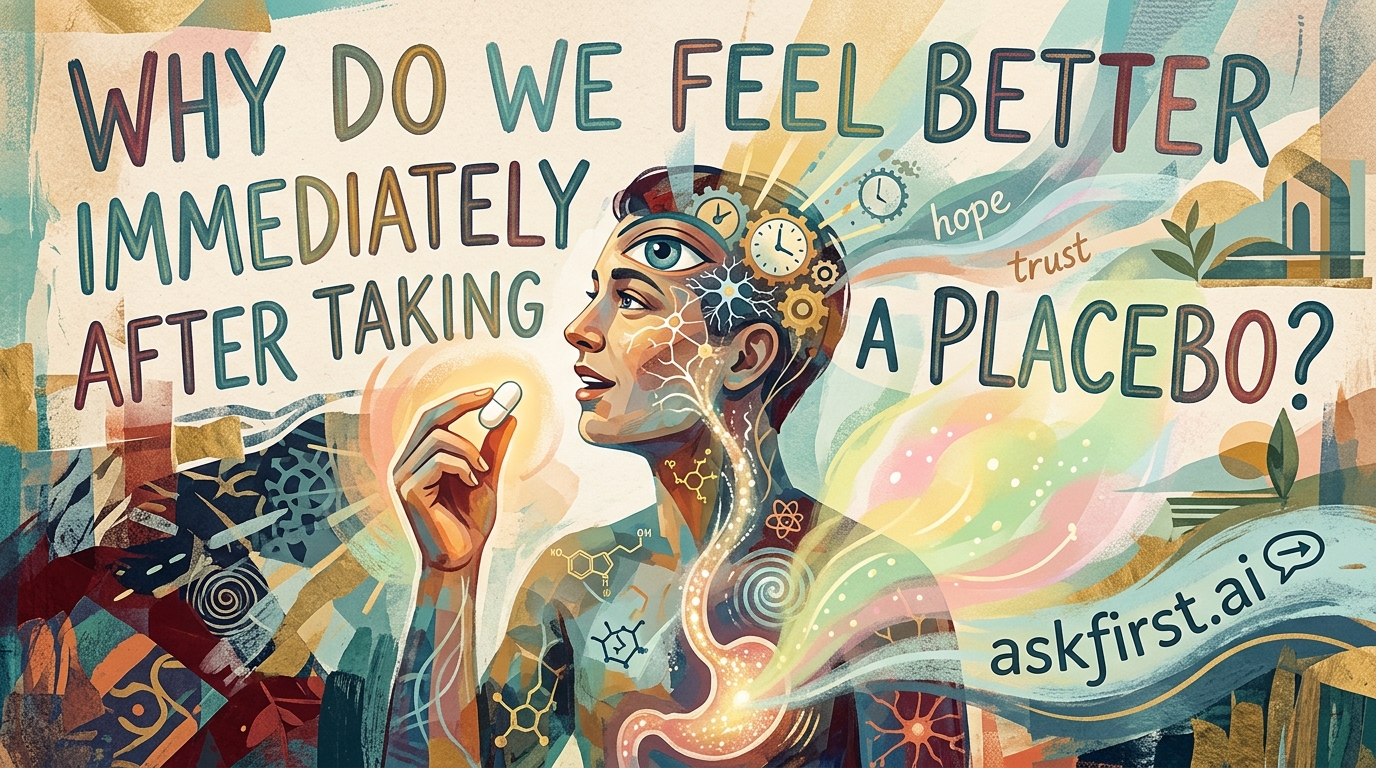
The placebo effect stands as one of the most intriguing phenomena in the landscape of human physiology and psychology. It describes a situation where an individual experiences a perceived or actual improvement in their condition despite receiving a treatment that has no therapeutic effect, such as a sugar pill or saline injection. The immediacy of this response is rooted in complex neural mechanisms, anticipation, and the brain's unique ability to modulate physical sensations.
The Neurobiology of Expectation
At the core of the placebo response is the power of the human brain to predict reality. When a patient expects relief, the brain initiates a cascade of neurochemical reactions. Scientific studies utilizing functional magnetic resonance imaging (fMRI) have shown that the act of expecting a pill to work activates the prefrontal cortex, which in turn influences the limbic system—the area responsible for emotional and physical regulation. This activation triggers the release of endogenous opioids and dopamine. These are the body's natural painkillers and reward chemicals, which can effectively dampen pain signals or induce a sense of well-being before the 'medicine' has even been absorbed by the digestive system.
Classical Conditioning: The Power of Ritual
Much of the placebo effect is a classic example of Pavlovian conditioning. Throughout our lives, we are conditioned to associate clinical settings, the sight of a pill, the smell of antiseptic, and the presence of a doctor with the process of getting better. When an individual takes a placebo, they are essentially engaging in a learned ritual. This ritual triggers a subconscious response where the body anticipates healing, causing the nervous system to shift from a state of sympathetic arousal (stress) to parasympathetic dominance (rest and repair). The mere ritual of 'doing something' for one's health can lower heart rates and reduce anxiety levels almost instantaneously.
The Role of Dopamine and Reward
The brain’s reward circuitry plays a significant role, particularly in conditions involving motor function or pain. Research has demonstrated that in patients with Parkinson's disease, the anticipation of medication can lead to a measurable release of dopamine in the striatum. This indicates that the placebo effect is not merely 'all in the head' or a psychological trick; it is a physiological alteration of brain chemistry that can have tangible physical outcomes. By focusing on the expected positive outcome, the brain shifts its neurochemical profile, effectively priming the body to feel better.
Contextual and Social Influence
The clinical environment adds a layer of authority that bolsters the effect. Studies have consistently shown that the effectiveness of a placebo depends heavily on the demeanor of the healthcare provider. A doctor who displays confidence, empathy, and clarity is far more likely to elicit a stronger placebo response than one who appears indifferent. This 'provider-patient alliance' reinforces the patient’s belief in the treatment. This is known as the 'social placebo' effect, where the presence of a supportive figure reduces the patient's cortisol levels, thereby reducing overall perceived physical stress and discomfort.
Why It Is Not Just 'Imagination'
Critics often dismiss the placebo effect as a mere psychological placebo, but scientific literature proves otherwise. While it does not 'cure' the underlying cause of a disease—such as curing a bacterial infection—it manages symptoms with high efficacy. It can significantly impact subjective metrics like pain intensity, fatigue, sleep quality, and gastrointestinal distress. It is essential to understand that the placebo effect represents the brain's internal pharmacy being activated by thoughts, beliefs, and contextual cues. It is a testament to the fact that the mind and body are inextricably linked, forming a feedback loop where the brain constantly modulates physical reality based on the information it receives from the environment.
Future Implications
Understanding why we feel better after taking a placebo is not just about understanding illusions; it is about harnessing the body's internal potential for healing. Researchers are currently investigating how to utilize 'open-label' placebos—where patients are told they are taking a placebo but still experience benefits—to improve treatment outcomes. This suggests that the mere acknowledgment of the mind-body connection can be a powerful therapeutic tool in itself. By recognizing these innate capabilities, medicine is moving toward a more holistic approach that values patient expectations and the clinical environment as core components of the healing journey. In conclusion, the placebo effect is a fascinating demonstration of how anticipation, conditioning, and neurological reward systems coalesce to influence the human experience of health and well-being.