The Anatomy of Auditory Self-Perception
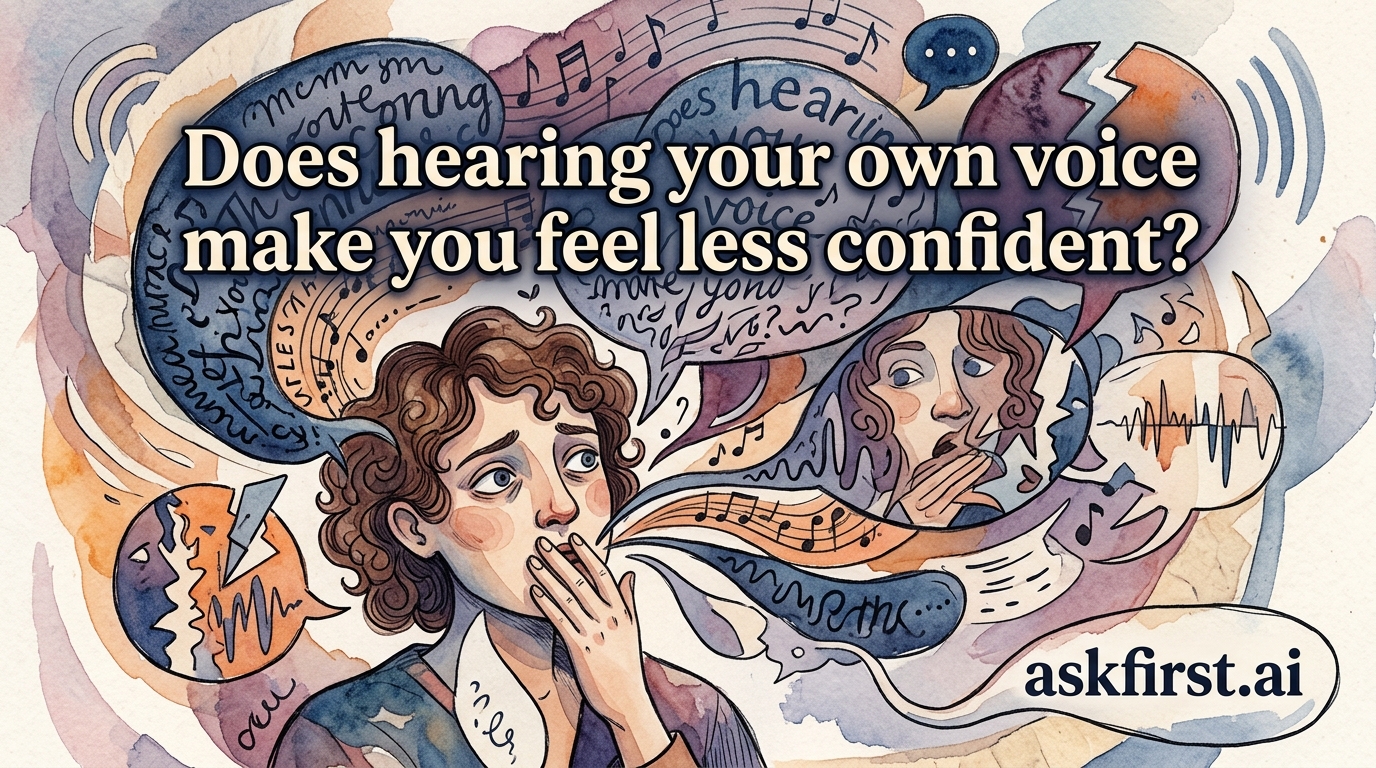
The phenomenon of experiencing discomfort, hesitation, or a sudden lack of confidence when hearing a recorded playback of one's own voice is a near-universal human experience. This reaction, often described as a 'cringe' response, is not merely a sign of vanity or self-doubt; rather, it is a complex intersection of physics, neuroscience, and cognitive psychology. To understand why this happens, one must first look at the biological mechanisms of human hearing. When a person speaks, they perceive their voice through two primary channels: air conduction and bone conduction. Air conduction refers to the sound waves traveling through the environment and entering the ear canal, hitting the eardrum just as the voices of others do. However, bone conduction is the secret differentiator. When vocal cords vibrate, those vibrations resonate through the skeletal structure of the skull, directly stimulating the inner ear or cochlea. This internal path accentuates lower-frequency vibrations, resulting in a deeper, more resonant, and subjectively 'richer' tone than what is actually produced for the outside world to hear.
The Mismatch Effect
When a recording is played back, the bone conduction component—that internal richness—is completely removed. The listener hears only the air-conducted version of their voice, which typically sounds higher-pitched, thinner, and less authoritative. This creates a significant 'expectation mismatch' between the internal identity of the voice and the external reality captured by audio equipment. The brain, which has spent a lifetime building a specific model of how the person 'should' sound, experiences a sensory prediction error. This disconnect can trigger feelings of vulnerability or even mild social anxiety, as the voice serves as a primary vehicle for self-expression and identity. This is not necessarily a loss of confidence, but rather a sudden encounter with an unfamiliar reality that challenges one's self-image.
Psychological and Evolutionary Perspectives
From a psychological standpoint, the aversion to recorded audio is closely linked to self-evaluation. Humans are social creatures who rely heavily on social feedback to calibrate behavior. Because a voice is a deeply personal expression of self, hearing it played back forces the listener into the role of a third-party observer. This 'objective' perspective allows for intense self-scrutiny. If the listener holds high standards for their persona, the 'thinner' recorded voice can feel inadequate. Furthermore, research into the 'Self-Reference Effect' suggests that information processed in relation to the self is encoded more deeply in memory. Therefore, when an individual critiques their own voice, they do so with a level of hyper-awareness that is not applied to the voices of acquaintances or strangers.
Strategies for Building Auditory Confidence
Rather than viewing this aversion as a fixed flaw, it can be reframed as an opportunity for development. Many professionals who speak for a living—such as radio hosts, actors, and public speakers—report that the initial discomfort fades over time through a process called 'desensitization.' By regularly recording one's own voice and reviewing it without judgment, the brain updates its model of what the speaker sounds like, eventually accepting the recording as an authentic representation of the self.
- Active Listening: Practice listening to recordings while focusing on clarity and message delivery rather than tonal qualities. This shifts the focus from vanity to communication utility.
- Objective Calibration: Use tools that visualize audio, such as spectrum analyzers. Seeing that the pitch and volume are within normal, professional ranges can provide rational reassurance to counter emotional discomfort.
- Contextual Exposure: Listen to snippets of recorded speech in low-stakes environments, such as during practice or informal notes. This lowers the psychological barrier to accepting the recording.
The Power of Acceptance
The most important realization is that others do not experience the same dissonance. To the audience, the voice that the speaker hears on a recording is precisely what they hear every day in conversation. The 'stranger' in the recording is, in fact, the only voice the world truly knows. By understanding that the 'thinness' is merely an artifact of missing bone-conducted resonance, the speaker can learn to disregard the perceived lack of quality. Confidence is an internal state that can be cultivated by aligning one’s self-perception with objective reality. When the brain accepts that the recorded voice is not 'wrong' but simply 'different' from the internal experience, the feelings of diminished confidence evaporate, replaced by a grounded, authentic understanding of how one presents themselves to the world. Ultimately, mastering the comfort of one's own voice is a powerful step toward authentic self-assurance and effective communication, proving that the 'voice' is simply a tool to be wielded with grace once the initial psychological mystery is demystified.