The Endowment Effect: Unlocking the Psychology of Ownership
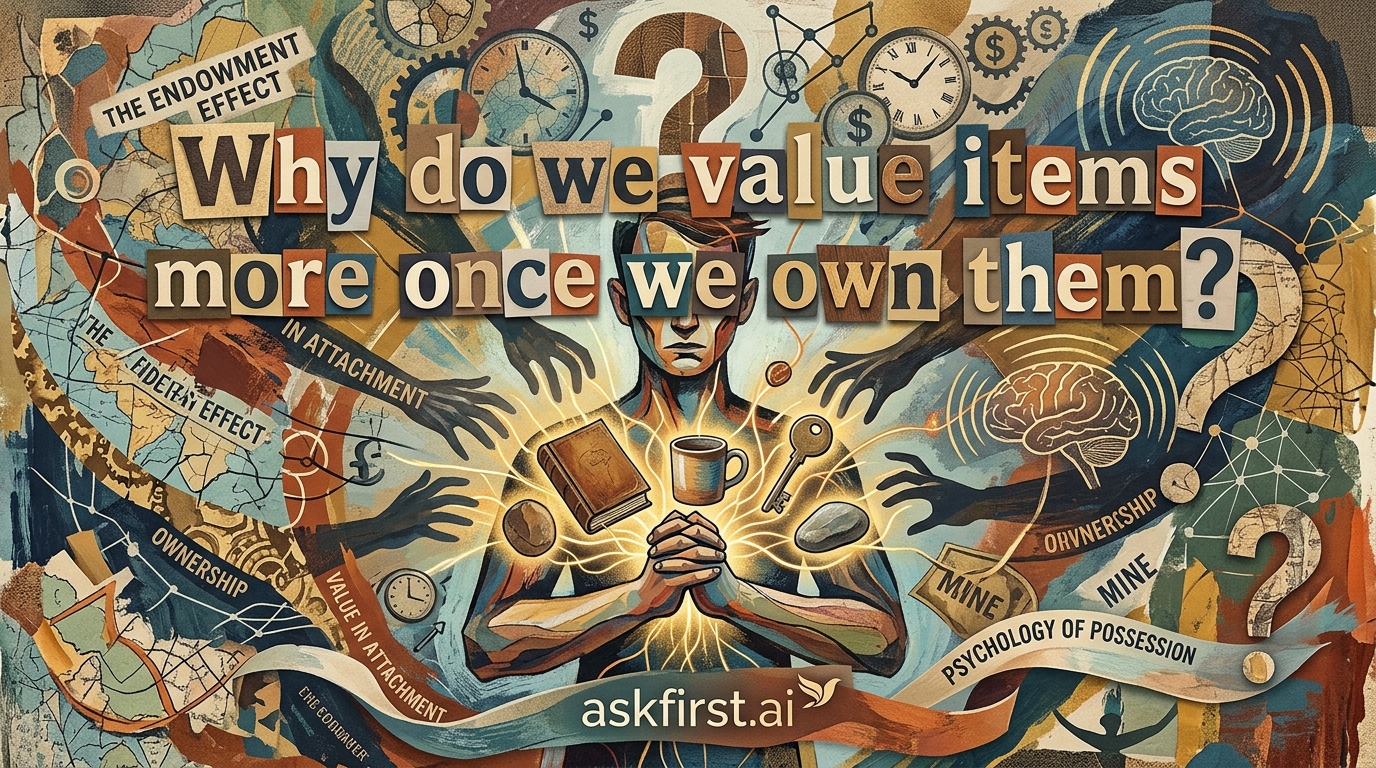
At the heart of human decision-making lies a fascinating psychological quirk known as the Endowment Effect. This phenomenon describes the tendency of individuals to ascribe more value to an object simply because they own it. When someone possesses an item, they often demand a higher price to relinquish it than they would have been willing to pay to acquire it in the first place. This cognitive bias contradicts standard economic theory, which suggests that the value of an item should remain objective regardless of ownership status.
The Core Mechanism: Loss Aversion
The driving force behind the endowment effect is loss aversion, a core principle of Prospect Theory developed by Nobel laureate Daniel Kahneman and Amos Tversky. According to this theory, the psychological pain of losing something is roughly twice as potent as the joy of gaining something of equal value. When an individual considers selling an object, they view the transaction through the lens of a potential loss. This perceived 'sacrifice' triggers a protective instinct, causing the owner to inflate the item’s value to compensate for the emotional cost of parting with it.
The Role of Emotional Attachment and Identity
Beyond mere loss aversion, emotional attachment plays a significant role in inflating value. Humans often treat their possessions as extensions of their identity. Research indicates that when people are asked to handle or display an object, the 'mere ownership' effect intensifies. Once an item is linked to the self-concept, parting with it feels like a loss of personal history or status. This is why personal mementos are often held at a valuation far beyond their market price; they are vessels for memories, not just physical goods.
Evolutionary Perspectives
Some evolutionary psychologists argue that this bias served a survival function for ancestors. In resource-scarce environments, holding onto tools, shelter, or food items was essential for survival. Developing a strong psychological 'bond' to existing resources helped minimize the risk of abandoning essential assets in favor of uncertain new ones. While modern society does not face the same immediate risks, these ancient neural pathways remain deeply ingrained in the human brain.
Real-World Applications and Strategy
Understanding the endowment effect allows businesses and individuals to navigate the marketplace more effectively. Here are key ways this phenomenon manifests:
- The 'Trial' Period: Retailers offer money-back guarantees or free trials because they know that once a consumer has an item in their home, the endowment effect takes hold. The act of bringing the product into one’s daily life creates an initial sense of ownership, making it harder to return.
- Digital Goods and Customization: Many tech companies allow users to customize their avatars or digital profiles. By investing time and effort into creating something unique, the user develops a sense of 'psychological ownership' before they have even purchased a premium feature.
- Negotiation Tactics: Recognizing that a seller likely overvalues their own assets helps buyers approach negotiations with a more objective perspective, preventing them from overpaying for items influenced by the owner's subjective attachment.
How to Mitigate the Bias
While the endowment effect is a natural part of human cognition, one can take steps to make more rational decisions. To counteract this bias, professionals suggest the following techniques:
- The 'Reverse Perspective' Test: Ask, 'If I did not own this item, how much would I be willing to pay for it?' This forces the brain to separate the utility of the object from the feeling of possession.
- Focus on Opportunity Cost: Shift the focus from the item being lost to what could be gained with the money received from a potential sale. By visualizing the alternative use of funds, the pain of losing the object is balanced against the joy of a new gain.
- Depersonalization: View assets through a purely functional lens. By documenting the exact market value of an item based on similar, objective sales data, one can decouple the emotional premium from the actual financial reality.
Conclusion
The endowment effect reminds us that human beings are not always 'rational actors' in the classical economic sense. We are creatures of emotion, memory, and profound attachment. By acknowledging that ownership alters our perception of value, we gain the ability to make more informed choices, whether we are selling a house, deciding which items to keep during a decluttering session, or navigating the complexities of modern consumerism. Recognizing these internal mental traps is the first step toward reclaiming objective judgment in an ownership-obsessed world.