The Psychology of Cinematic Post-View Depression
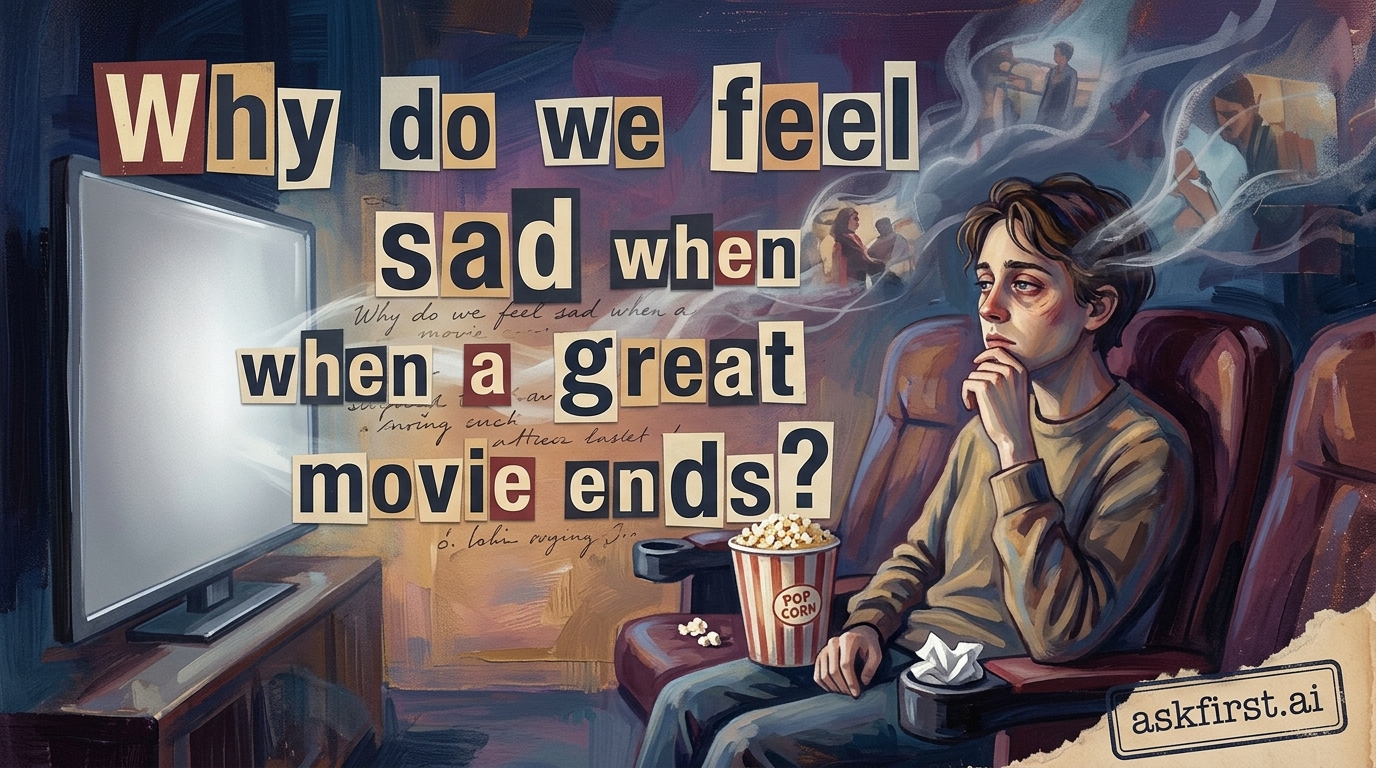
When the final credits roll on a truly magnificent film, many viewers experience a poignant, lingering sensation of melancholy. This phenomenon, often colloquially referred to as 'post-movie blues,' is far more than mere sentimentality. It is a complex psychological response rooted in neuroscience, social connection, and the structure of human cognitive engagement.
The Mechanics of Parasocial Relationships
At the core of this sadness is the concept of parasocial interaction. Humans are hardwired for social connection. When we watch a film, we are not passive observers; our brains treat the characters as temporary companions. We invest emotional labor into their journeys, empathize with their struggles, and mirror their joy through mirror neurons. When a movie concludes, that simulated social contract is abruptly terminated. The brain perceives this as a genuine loss of a friend, triggering a mild form of separation anxiety. We are mourning the loss of the simulated social environment that the film successfully provided for two hours.
Cognitive Immersion and Narrative Transport
Psychologists define 'narrative transport' as the state of being completely absorbed in a story. When a viewer enters this state, their awareness of the physical world diminishes. The brain prioritizes the internal logic of the narrative over the external stimuli of the living room or theater. Transitioning back to 'reality' is a jarring cognitive task. The world outside often feels mundane and gray compared to the heightened emotional clarity of a masterpiece. This contrast creates a temporary sense of disillusionment, as the brain struggles to recalibrate its expectations for dopamine and engagement from the mundane reality of daily life.
The Role of Dopamine and Emotional Regulation
Great movies operate on a sophisticated reward cycle. They introduce tension, build anticipation, and offer resolution. This process spikes dopamine levels. As the movie ends, the source of that narrative dopamine vanishes, leaving a slight 'crash.' Think of this as an emotional withdrawal. The brain has been stimulated by high-stakes drama or profound intellectual stimulation, and the sudden cessation of that stimulus feels like a void that needs to be filled. The feeling of sadness is, in part, the brain attempting to process the sudden scarcity of the emotional enrichment it was just experiencing.
Exploring the 'Loss of Potential' Concept
Beyond just social loss, there is the loss of potentiality. A great movie exists in a state of 'what could be.' While watching, the audience is actively speculating on outcomes and imagining the future of the characters. When the movie ends, all those possibilities are locked into one definitive conclusion. There is no more room for the imagination to run wild because the story has been finalized. This phenomenon is similar to the 'completion effect' in goal-oriented psychology; once a goal is reached, the drive that sustained the activity evaporates, often leaving a feeling of purposelessness.
How to Mitigate the Post-Movie Blues
While this sadness can feel heavy, it is actually a testament to the power of human storytelling. To manage the transition, consider the following strategies:
- Reflection and Analysis: Engage in analytical writing or discussion. Articulating why a film was great shifts the brain from an emotional state to a cognitive, analytical one.
- The 'Palate Cleanser' Approach: Transition to a different activity that stimulates a different part of the brain, such as physical exercise or listening to complex music, to disrupt the narrative lingering.
- Appreciation of Artistry: Remind yourself that the feeling exists because the creative team succeeded in their mission to evoke humanity. This frames the sadness as an appreciation for high-quality craftsmanship.
Conclusion: The Value of Emotional Resonance
Ultimately, the sadness we feel at the end of a great movie is a byproduct of our capacity for profound empathy. It is the price we pay for the privilege of experiencing multiple lives and worlds within the confines of our own minds. Instead of avoiding the melancholy, embrace it. It is evidence that the story achieved its goal: to move, change, and stay with us long after the screen goes dark. As long as we remain curious, stories will continue to provide us with these essential emotional voyages, reminding us of the vastness of the human experience.