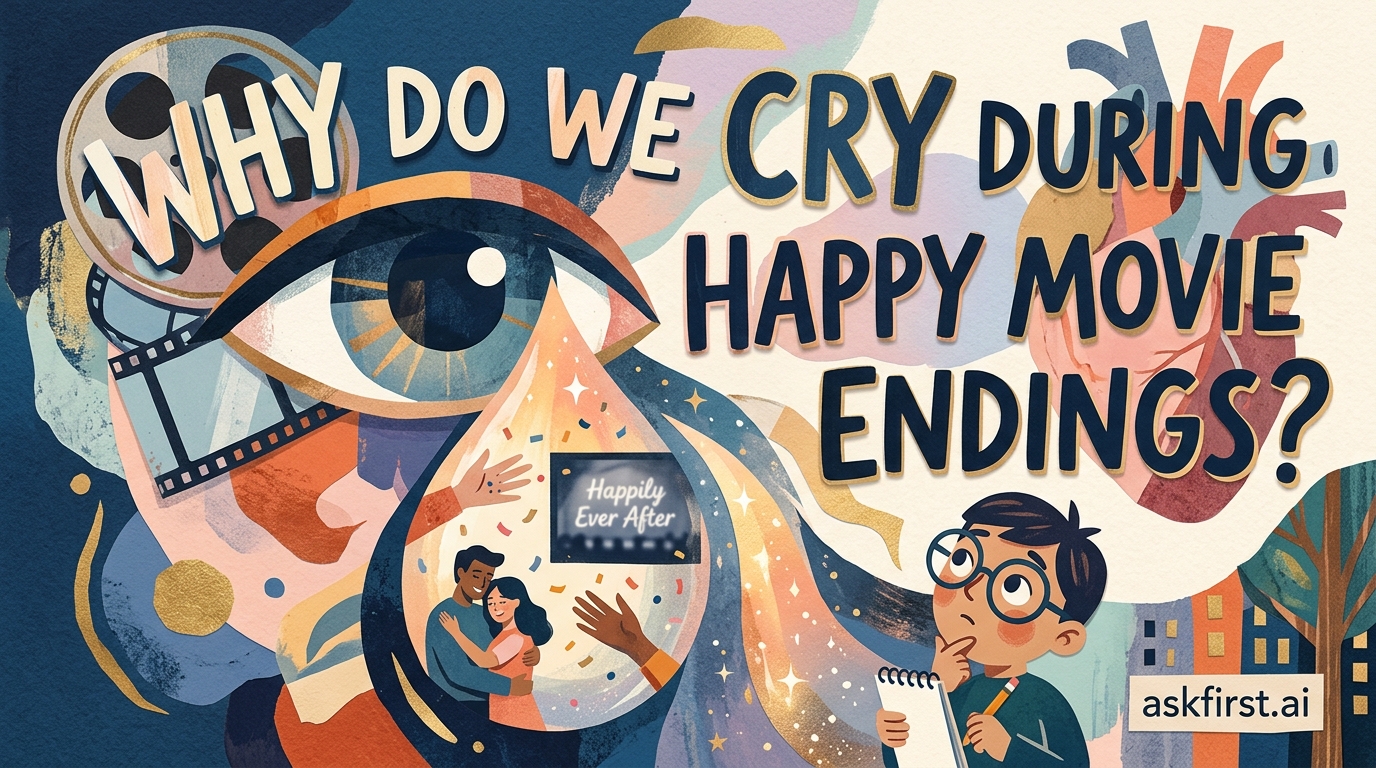
The Paradox of Joyful Tears
It is a phenomenon that has puzzled observers for generations: the sight of tears streaming down a face during a moment of profound triumph or heartwarming resolution in a film. While conventional wisdom suggests that tears are exclusively reserved for grief or physical pain, the biological and psychological reality is significantly more complex. Crying during a happy movie ending is a form of 'dimorphous expression'—a display that involves the outward manifestation of one emotion to regulate the intensity of another. When the brain encounters an overwhelmingly positive stimulus, such as a character finally achieving their dreams or a long-lost family reuniting, the limbic system undergoes a state of high arousal. To prevent the nervous system from becoming overstimulated, the body triggers the lacrimal glands to produce tears, effectively acting as a physiological 'reset button' to return the emotional state to a baseline of equilibrium.
The Neurobiology of Emotional Regulation
At the core of this experience lies the interplay between the amygdala and the autonomic nervous system. When watching a cinematic masterpiece, the viewer often experiences 'empathetic resonance,' where mirror neurons allow the individual to experience the character's success as if it were their own. As the scene reaches its emotional climax, the sympathetic nervous system triggers a surge of hormones, including oxytocin and dopamine. However, if this surge becomes too intense, the parasympathetic nervous system engages to dampen the arousal. Researchers, such as Oriana Aragon at Yale University, have theorized that these tears function as a sophisticated mechanism for homeostasis. By producing tears, the brain forces the body to release pent-up energy, allowing the viewer to process and eventually process the profound beauty of the moment without collapsing under the weight of the intense positive affect.
Psychological Functions of Happy Tears
Beyond mere homeostasis, crying during happy endings serves several vital social and psychological purposes:
- Social Signaling: Humans are deeply social animals. Crying acts as a powerful non-verbal signal of vulnerability and sincerity. By showing tears, an individual communicates to those around them that they possess a high capacity for empathy and emotional depth.
- Stress Reduction: The tears produced during emotional distress or joy are compositionally different from reflex tears, which are triggered by irritants like onions or dust. Emotional tears contain higher levels of protein-based hormones and endorphins, which possess natural pain-relieving properties. This is why many people feel a sense of 'cleansing' or relief after a good cry.
- Catharsis: The Aristotelian concept of catharsis suggests that the viewing of drama allows for a controlled release of inhibited emotions. A happy movie ending provides a safe container to purge emotions that may have been stored up during the stresses of daily life, facilitating a psychological renewal.
Cultural and Evolutionary Perspectives
From an evolutionary standpoint, the ability to express complex emotions through tears likely evolved to strengthen social bonds. In the ancestral environment, a group member who demonstrated strong empathy for the success or well-being of another was more likely to be trusted and supported. Today, this manifests as our shared cinema experiences. When a theater full of people cries at a happy ending, it creates an 'inter-subjective' space where the group feels a sense of collective belonging. The tears are a sign of shared humanity, acknowledging the fragility and the ultimate beauty of the human journey. It is a testament to the power of narrative to bridge the gap between individual experiences, reminding us that success, love, and growth are values worth celebrating with our entire being.
Why the Happy Ending Triggers It
One might wonder why a comedy doesn't always trigger this reaction, while a poignant drama does. The answer lies in the 'relief effect.' When a character faces significant adversity throughout a story, the viewer invests a substantial amount of emotional capital into the outcome. The happy ending is not just a moment of joy; it is the resolution of tension. The transition from high-stakes uncertainty to a place of safety and accomplishment releases a tidal wave of relief. This sudden shift from a state of worry to a state of peace is the perfect catalyst for emotional tears. Essentially, the tears are the brain's way of saying, 'The tension has been released, and we are finally safe to let go.'
In summary, the act of weeping at a happy movie ending is not a sign of emotional instability or weakness. On the contrary, it is a healthy, scientifically sound mechanism of the brain that enables individuals to navigate the peaks of human emotion. By understanding this process, we can appreciate film as not just entertainment, but as a sophisticated tool for emotional maintenance and social bonding.