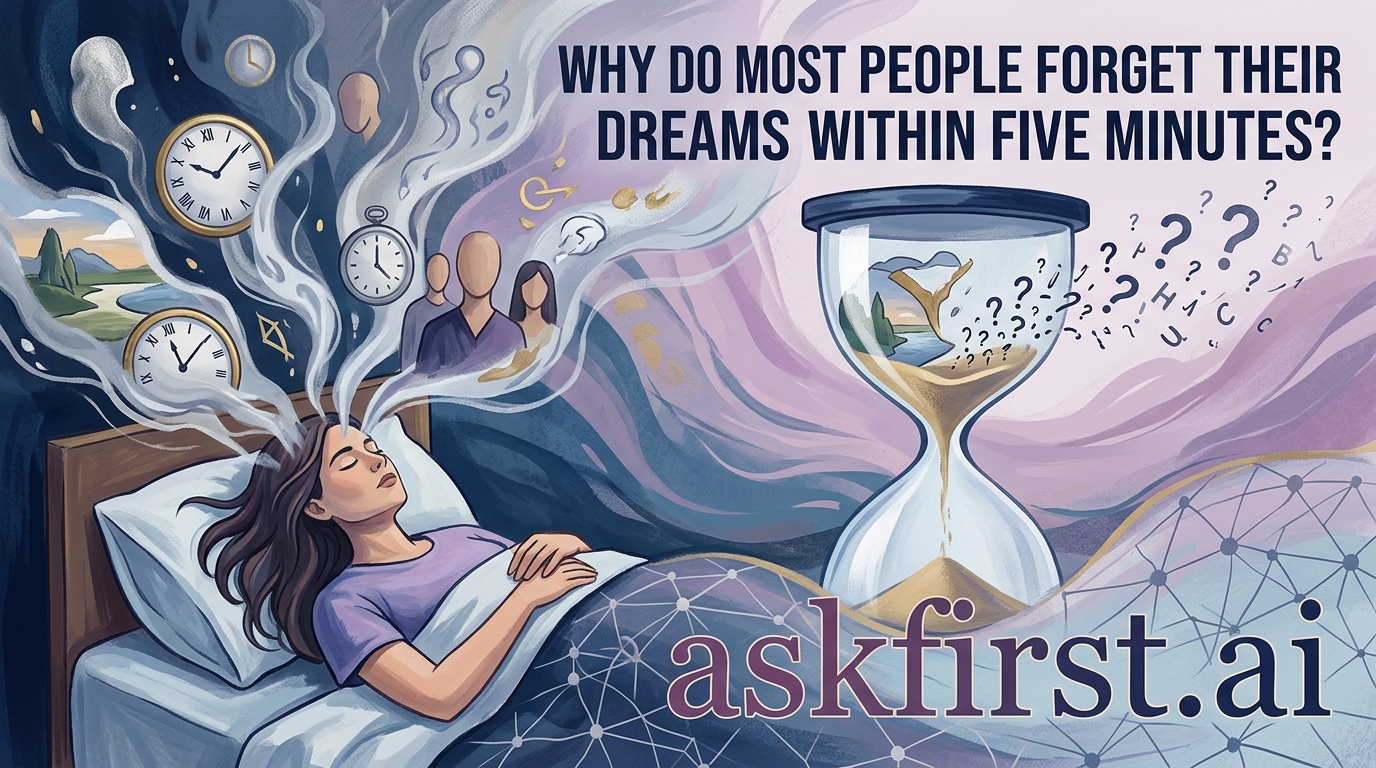
The Science of Vanishing Dreams: Why Your Mind Clears the Slate
It is a universal human experience: you wake up from a vivid, intense, or even bizarre dream, feeling its emotional weight lingering in your chest. Yet, within mere minutes, as you reach for your phone or pour a cup of coffee, the intricate details dissolve like mist under the morning sun. Why does the human brain, which is otherwise capable of storing decades of complex memories, treat our nightly adventures as disposable data? To understand this, one must look at the intersection of neuroscience, memory consolidation, and the architectural limitations of the waking brain.
The Neurobiology of Memory Consolidation
Memory is not a single file stored in one location; it is a complex process involving encoding, consolidation, and retrieval. During the Rapid Eye Movement (REM) sleep stage, the brain is hyper-active, often showing electrical patterns similar to those of a waking individual. However, neurochemistry plays a decisive role in why these dreams are forgotten. Research suggests that during REM sleep, the brain experiences a significant drop in levels of norepinephrine, a neurotransmitter essential for focus and memory formation. Without a stable level of norepinephrine, the brain struggles to 'cement' new memories into the hippocampus, the command center for short-term and long-term memory storage.
Furthermore, the prefrontal cortex, the area of the brain responsible for logical processing and memory storage, is largely deactivated during REM sleep. Because this region acts as the 'librarian' of the brain, its lack of engagement means that dream experiences are rarely tagged or organized for long-term retrieval.
The Interference Hypothesis
Another compelling explanation involves the massive influx of sensory data upon waking. The moment you open your eyes, your brain is immediately flooded with high-priority sensory input—the light in the room, the sound of an alarm, or the feeling of the bedsheets. This influx of 'new' data triggers the brain to prioritize immediate survival and environmental orientation over the ephemeral traces of the internal dream world. Essentially, the neural networks dedicated to recording the immediate waking world 'override' the fragile, poorly encoded dream sequences, essentially deleting them to prevent sensory overload.
Why Do We Sometimes Remember?
If the brain is designed to forget, why do some dreams stick? Research indicates that memory retrieval is contingent upon the level of awakening. If an individual wakes up directly from a REM cycle, they are significantly more likely to recall their dreams because the neural paths involved in the dream have not yet been overwritten by waking activities. People who wake up multiple times throughout the night often report higher dream recall, simply because their brain has more 'checkpoints' to capture these fleeting narratives before the day begins.
Strategies for Enhancing Dream Recall
For those who wish to bridge the gap between the unconscious and the conscious mind, psychologists and neuroscientists suggest several evidence-based techniques:
- The Immediate Log: Keep a physical notebook and pen on your nightstand. As soon as you wake, write down the very first feeling or image that comes to mind before your brain has time to reset.
- The Intentional Wake-Up: Cultivate the habit of lying still for a few moments before moving your body. Physical movement stimulates the muscles and triggers an immediate shift in focus, which rapidly clears the dream state.
- Reality Checks: By periodically questioning your reality during the day, you prime your brain to remain more 'lucid' and aware, which can lead to more intentional memory encoding during the dream state.
The Evolutionary Perspective
Finally, one must consider if forgetting is actually an adaptive feature. Dreams are often chaotic, emotional, and illogical amalgamations of our daily anxieties, memories, and symbolic projections. If the brain were to store every single dream with the same permanence as a real-life experience, the human psyche might struggle to distinguish between historical fact and internal fantasy. By purging these nightly experiences, the brain acts as an efficient system, clearing the mental workspace each morning to ensure we start our day with a clean slate, fully equipped to focus on the reality of the present moment.
Ultimately, the transience of dreams serves as a testament to the complex, self-regulating nature of our minds. We are designed to live in the light of day, and the fading of our dreams is merely the brain’s way of ensuring that we remain anchored in the world that demands our attention.