The Anatomy of Auditory Dissonance
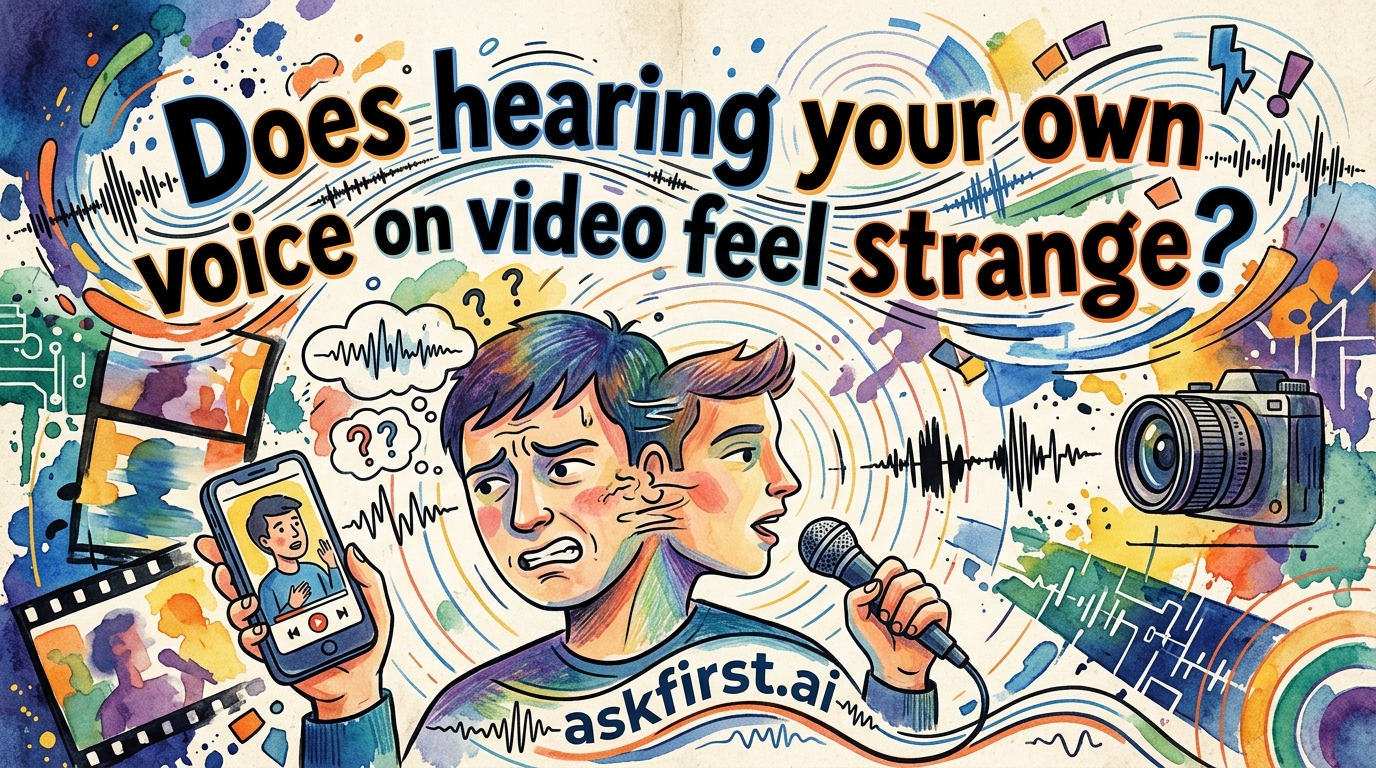
It is a nearly universal experience: the moment a recording of one's own voice begins to play, a sudden, jarring sensation of discomfort sets in. This phenomenon is scientifically recognized as voice confrontation. It is the audible equivalent of seeing a photograph where an individual perceives themselves as looking 'off,' yet it is arguably more intense because the voice is a fundamental component of the self-concept. The feeling is not mere vanity; it is rooted in complex neurological and physiological processes that define how humans perceive sound.
The Physiological Duality: Bone vs. Air
The primary reason for this visceral reaction is that the brain is essentially listening to two different versions of a person's voice simultaneously during speech. When an individual speaks, sound waves travel through the air to the ears, just like any other external sound. This is the air-conducted sound. However, there is a second path: bone-conducted sound. Vibrations from the vocal cords travel through the skull and tissues of the head directly to the inner ear, or cochlea. This bone conduction boosts the lower-frequency components of the voice, providing a richer, deeper, and more resonant tone than the sound that is ultimately captured by a microphone.
- The Air-Conducted Signal: This is what microphones record. It is thinner, sharper, and lacks the low-end amplification provided by the body.
- The Bone-Conducted Signal: This is the version one is 'accustomed' to hearing their entire life. It is naturally filtered, warmer, and inherently part of the internal physiological feedback loop.
When a recording is played back, the brain is deprived of that internal bone-conducted resonance. The listener hears only the air-conducted signal, which the brain immediately identifies as 'incorrect' or 'foreign' because it does not align with the internal model of self-identity. This creates a cognitive dissonance that the listener often interprets as 'strange' or 'unpleasant.'
The Psychological Component: Identity and Expectations
The brain does not merely process sound; it interprets sound within the context of the identity of the speaker. Humans develop a static, idealized internal image of their own voice. This image is not based on how the voice actually sounds to others, but on how it sounds within the context of the speaker's skull. Because individuals interact with this internal version 100% of the time, it becomes the definitive truth. Any deviation from this subjective truth is viewed by the ego as a flaw or a character error.
Research indicates that this reaction can trigger a mild form of stress response. The brain recognizes the auditory input as 'self' but also registers it as 'alien' because of the frequency discrepancy. This leads to a quick defensive reaction—discomfort, self-consciousness, or a desire to stop the recording. This is a clear indicator of how deeply our self-perception is anchored to physiological feedback.
Can Perception Be Changed?
While the reaction is physiological, it can be mitigated through the process of desensitization. Professional broadcasters, public speakers, and actors often report that they no longer find the experience jarring. This is not because their voices have changed, but because their brains have updated their 'internal model' of how their voice sounds in the air. By repeatedly listening to their own recordings, they shift their perception from the bone-conducted version to the objective, air-conducted reality.
Practical Tips to Embrace Your Authentic Sound:
- Consistent Exposure: Practice reading aloud and recording yourself for brief intervals daily. Familiarity eventually breeds indifference to the 'strangeness.'
- Focus on Content Over Tone: Train the brain to analyze the message and the clarity of speech rather than focusing on the timbre or resonance of the sound.
- Technical Adjustment: Use a high-quality microphone. Cheap, low-fidelity recording hardware often creates artificial metallic echoes or compression artifacts that make any voice—not just one's own—sound unnatural.
Conclusion
Understanding why your voice sounds strange is a fascinating journey into the architecture of the human brain. It serves as a reminder that the human sensory experience is an active reconstruction of reality, not a passive recording. You are not hearing a 'bad' voice; you are simply hearing the difference between the resonance of your physical being and the objective acoustic signal of the world around you. Embracing this difference is not just about overcoming a minor irritation; it is about acknowledging the difference between how we see ourselves and how the world encounters us.