The Perceptual Paradox of Aging
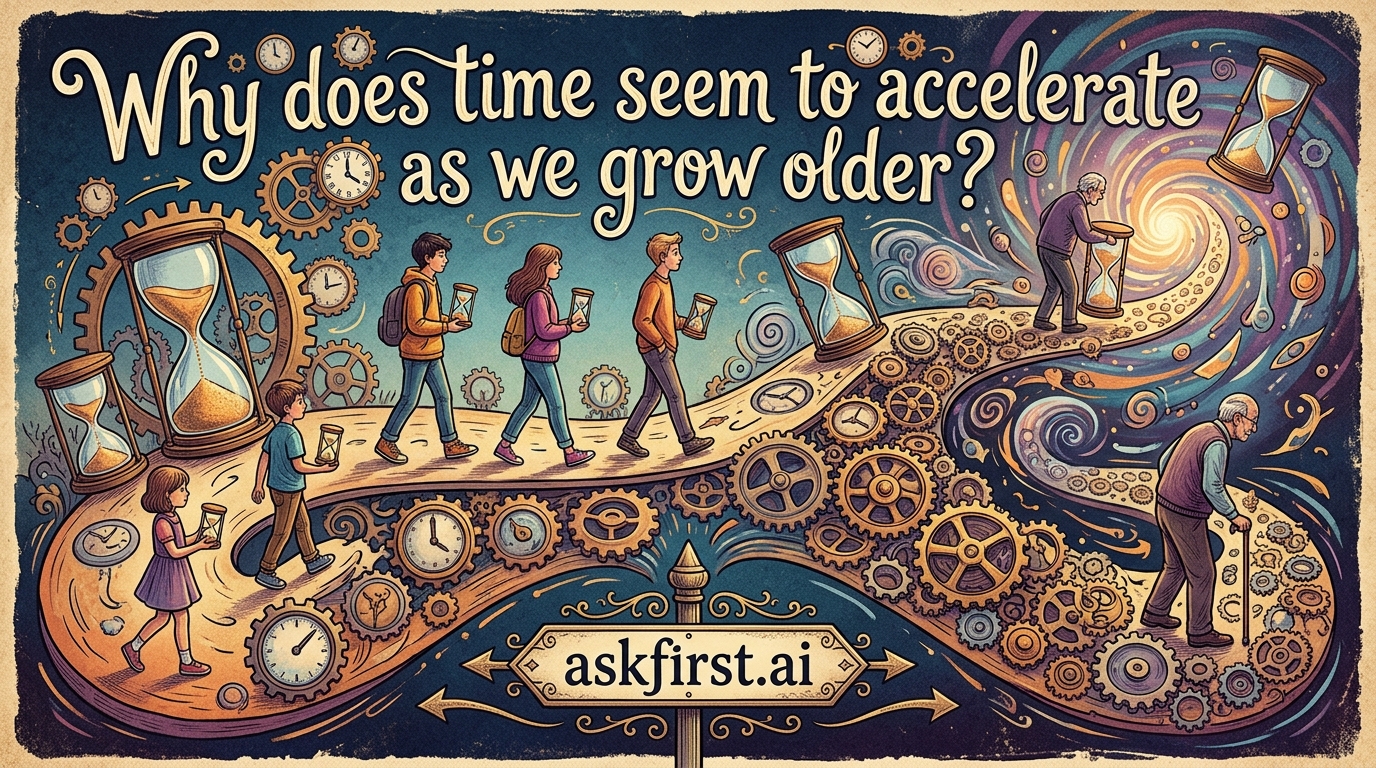
The phenomenon where time appears to compress as humans age is one of the most intriguing aspects of cognitive psychology. While clocks tick at a constant rate, the human brain’s internal perception of duration is highly elastic. This divergence creates the common sensation that childhood summers lasted years, while adulthood years seem to vanish in mere moments. Scientific investigation into this matter reveals that time perception is not a singular biological process but a complex integration of memory formation, neurological processing speed, and the novelty of sensory input.
The Proportional Theory
One of the most frequently cited explanations for the acceleration of time is the Proportional Theory. Proposed by philosopher Paul Janet in the late 19th century, this model suggests that our perception of time is relative to the total length of the life we have already lived. For a five-year-old, one year represents twenty percent of their entire existence. The magnitude of this experience is massive, leaving a profound, lasting impression on the developing psyche. In contrast, for a fifty-year-old, a single year constitutes only two percent of their life. Because each unit of time constitutes a smaller fraction of one's total experience, the duration feels significantly shorter relative to the past.
Novelty and Neurological Encoding
The most robust scientific explanation involves Neurological Encoding. The brain acts as a record-keeper of unique events. During childhood, nearly everything encountered is a novel experience: the first day of school, the first bicycle ride, the first time visiting a new location. When the brain processes new information, it devotes significant resources to encoding these memories in high detail. This richness of information makes the memory expansive upon retrieval, creating the illusion that the time associated with those memories was much longer.
As we enter adulthood, we transition into routines. Daily commutes, office work, and repetitive household tasks do not require the same depth of neurological processing. Because the brain essentially 'autocompletes' these familiar experiences, it records less distinct data. When looking back on these periods, the lack of novelty leads to a mental 'cramming' of time, resulting in the perception that the year went by in a flash.
Cognitive Processing Speed
Another significant contributor is the rate at which the brain processes visual information. Research suggests that as humans age, the neural pathways involved in visual processing undergo slight degradation or slowing. Younger individuals process more visual 'frames' per second. If we consider this akin to a high-speed camera recording at 120 frames per second versus a standard camera at 30, the faster recording allows for a more detailed analysis of the scene. Over a single real-time second, the brain processing at a higher speed gathers more data, essentially elongating the perception of that second. As processing speed decreases with age, the brain gathers fewer frames of reference, causing time to feel like it is moving faster.
Practical Strategies to Expand Time
Understanding the mechanics of time perception allows individuals to actively modify their sense of time. To combat the feeling of accelerated aging, experts suggest the following:
- Cultivate Novelty: Consciously introduce new habits, hobbies, or travel destinations. By stepping outside of the routine, the brain is forced to process new stimuli, which effectively 'stretches' the perception of time.
- Mindfulness and Presence: The practice of meditation and heightened awareness prevents the brain from entering the 'autopilot' mode that contributes to the compression of memory.
- Deeper Engagement: Engaging in challenging tasks requires deep focus, which is the antithesis of the autopilot state. Learning a new language or a complex skill forces the brain to dedicate significant neural bandwidth, slowing down the perceived pace of development.
- Documenting Experiences: Keeping a detailed journal or record of daily life serves as a tool to review events, which can reinforce the memory of these periods and mitigate the feeling that time has slipped away.
Conclusion
The perception of time is a subjective construction rather than a physical reality. By moving away from routine and fostering a life of curiosity and intentionality, humans can essentially recalibrate their neurological clock. Recognizing that the acceleration of time is a byproduct of familiarity rather than an inevitable biological prison allows for a more enriched, conscious, and seemingly extended experience of life.