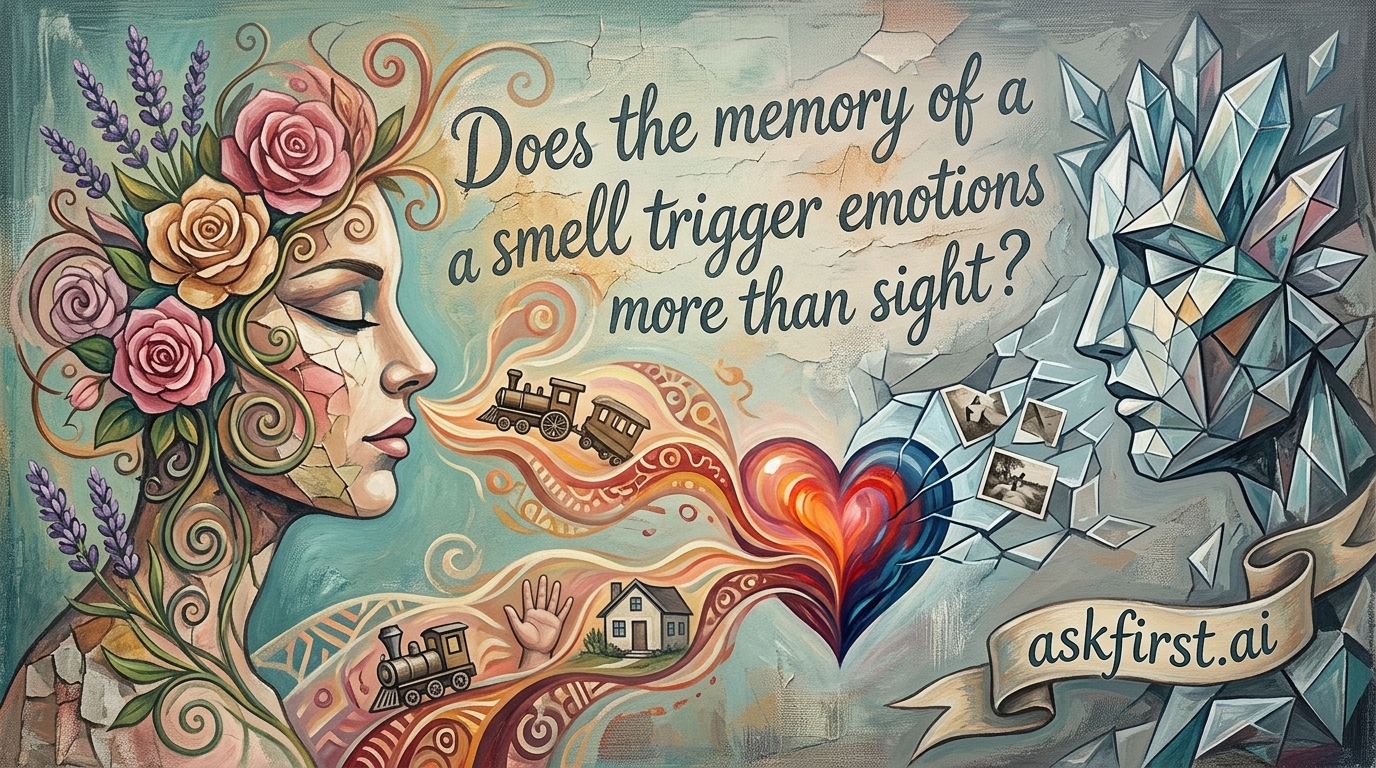
The Proustian Phenomenon: Why Scent Dominates Emotional Memory
The human experience is perpetually colored by the senses, but not all sensory inputs are processed equally within the brain. While vision provides the most detailed data about the external world, the olfactory system holds a unique, almost mystical power over our emotional landscapes. The phenomenon known as the 'Proustian Memory'—named after Marcel Proust, who famously described how the scent of a madeleine cake dipped in tea triggered a sudden rush of childhood nostalgia—is backed by fascinating neurobiology.
The Direct Highway to the Emotional Brain
To understand why smell is the most potent emotional trigger, one must examine the neural anatomy. When light hits the retina, visual signals are routed through the thalamus—the brain's 'switchboard'—which then distributes information to various processing centers. However, olfaction operates on a different, more primitive, and direct highway.
- The Olfactory Bulb: When aromatic molecules bind to receptors in the nose, signals travel directly to the olfactory bulb.
- The Limbic bypass: This system is physically hardwired to the limbic system, which contains the amygdala and the hippocampus.
- Emotional and Memory Processing: The amygdala is the hub for emotion, and the hippocampus is the center for associative memory. Because smell bypasses the thalamus, it arrives at these emotional processing centers faster and with less cognitive filtering than any other sense.
Why Sight Lacks the Same Emotional 'Kick'
Vision is primarily an analytical sense. It is designed to identify objects, judge distance, and categorize the environment. While a photograph can remind a person of a past event, the visual image is often filtered through the prefrontal cortex—the logical, analytical part of the brain. When a person looks at a picture of a childhood home, the brain first processes the structure, the lighting, and the composition. It is an intellectual recognition. In contrast, when one encounters a specific scent associated with that home—like the smell of a specific laundry detergent or a certain wood polish—the brain does not wait for a logical analysis. The emotional reaction is instantaneous, often preceding the conscious recognition of what the smell even is.
The Evolutionary Advantage
Evolutionary biology offers a clear explanation for this discrepancy. Early humans relied heavily on scent to survive. Identifying safe food, detecting predators, or recognizing compatible mates required rapid, life-or-death reactions. A visual cue of a predator might be processed, but the scent of a predator triggers an immediate, visceral fight-or-flight response. This deep-seated evolutionary history ensures that olfactory input remains closely tethered to our survival instincts and the memories required to keep us safe. Consequently, smells serve as potent markers of experience, allowing the brain to quickly recall past scenarios that were either beneficial or threatening.
The Permanence of Olfactory Memory
While visual memories fade and become distorted over time, olfactory memories remain remarkably stable. A study conducted in clinical psychology suggests that individuals can often identify scents correctly even after decades of not encountering them, and the emotional intensity associated with these smells remains surprisingly high. This is because the olfactory system is intrinsically linked to the amygdala, which strengthens the synaptic connections associated with intense emotional events.
Practical Implications and Future Applications
This knowledge is not merely theoretical; it is actively shaping industries.
- Aromatherapy and Wellness: The use of specific essential oils to manage stress or improve focus is founded on the ability of scents to immediately modulate emotional states via the limbic system.
- Retail Branding: 'Scent marketing' has become a massive field. Hotels, retailers, and car manufacturers use signature scents to foster feelings of comfort, trust, or excitement. By associating a specific, pleasant scent with a brand, businesses bypass the consumer's logical defenses to build an emotional connection.
- Therapeutic Use: In memory care, therapists are experimenting with the use of 'scent triggers' to help patients with dementia reconnect with lost autobiographical memories. When music and images fail to stir recognition, the specific scent of a familiar childhood home can sometimes unlock clear, emotional memories.
Conclusion
While sight serves as the primary tool for navigating the physical world, smell acts as the primary tool for navigating the internal world of memory and emotion. The direct neural connection between the nose and the limbic system ensures that olfactory experiences are etched more deeply into the brain's emotional architecture than visual ones. By understanding this, one gains a profound appreciation for the invisible threads of scent that connect us to our past, providing a richness of experience that visual input alone simply cannot match. Whether it is the smell of rain on hot asphalt or a specific floral perfume, these aromatic markers serve as the most reliable bridge to the emotional core of the human identity.