The Anatomy of Internal Speech: Decoding the Mental Voice
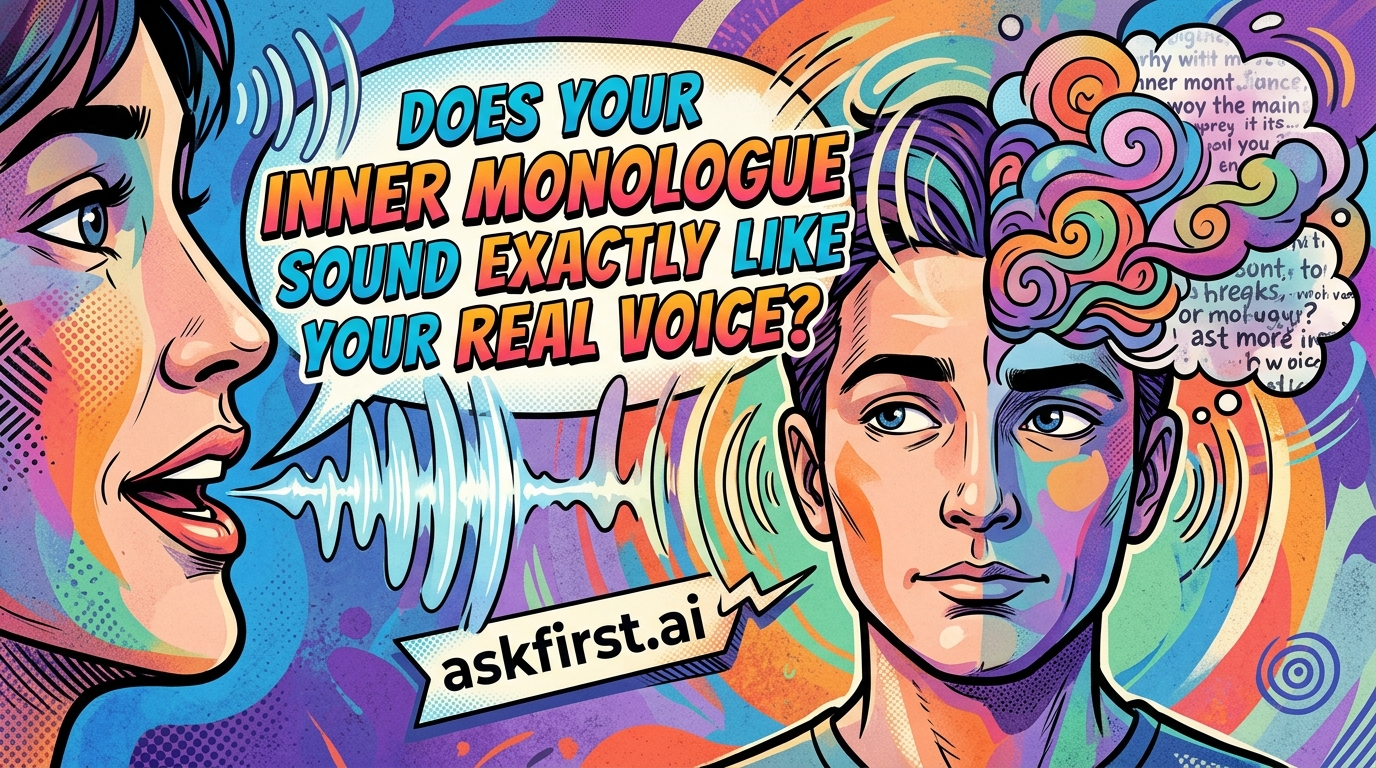
The phenomenon of inner monologue serves as one of the most intriguing aspects of human consciousness. Many individuals assume that the 'voice' heard inside their head is an exact acoustic replica of their own speaking voice, but cognitive science suggests a much more nuanced reality. Research into subvocalization and the neurobiology of thought indicates that the internal voice is not a literal auditory recording, but rather a complex simulation constructed by the brain.
The Simulation Hypothesis
Unlike an audio file, which captures external vibrations, the inner voice is primarily a product of the motor cortex. When humans think in words, the brain often engages the same neural pathways used for actual speech, even if no sound is produced. This process is known as subvocalization. Because it relies on motor planning rather than vocal cord vibration, the brain often strips away the physical characteristics of one's actual voice—such as tone, pitch, and timbre—and replaces them with an idealized version of the self.
- Conceptual Representation: The inner voice acts as a conceptual mirror, focusing on the meaning of words rather than the acoustic quality.
- Motor Command Simulations: Since the brain prepares to speak during silent thought, it prioritizes the execution of language rather than the acoustic output.
Why the Discrepancy Exists
There is a fundamental difference between hearing one's voice through external air conduction versus internal bone conduction. When an individual speaks aloud, they hear the sound vibrating through their skull, which results in a deeper, richer resonance. In contrast, inner speech lacks this physical feedback entirely. Therefore, the brain does not have a reference point to make the inner voice sound 'real.' Instead, it constructs a voice that feels familiar, yet strangely abstract. This explains why hearing one's recorded voice often causes a sense of cognitive dissonance—it sounds different from both the internal simulation and the self-perceived external voice.
Variations in Mental Experience
It is essential to recognize that not every human experiences an inner monologue, a condition referred to in psychological circles as anuralia. For individuals with this condition, thought processes occur in abstract concepts, images, or raw feelings rather than linguistic structures. This diversity suggests that an inner voice is not a prerequisite for intelligence, but rather one of several strategies the brain utilizes to organize and process information.
- Linguistic Thinkers: These individuals experience a constant, running commentary often mirroring their personal voice in terms of pace and cadence.
- Visual Thinkers: Thoughts manifest as high-definition imagery or cinematic sequences, rendering a vocal monologue unnecessary.
- Hybrid Thinkers: A mix of verbal and non-verbal processes, where the 'voice' might only appear during difficult problem-solving or complex reasoning tasks.
The Impact of Internal Representation
The qualities of one's inner voice are often heavily influenced by social and linguistic environments. Developmentally, children often learn to internalize their caregivers' voices before fully developing their own internal 'speaker.' Over time, this shifts into a personalized version of the self. Studies on 'inner speech' suggest that the tone of this voice can influence emotional regulation. A harsh or demanding internal tone can increase cortisol levels, whereas a supportive, constructive tone—modeled after encouraging mentors or positive experiences—can enhance focus and resilience.
Neuroscientific Foundations
The Broca’s Area and Wernicke’s Area, which are primary centers for speech production and language comprehension respectively, work in tandem during silent reflection. When the brain engages in internal dialogue, these areas synchronize to simulate communication without the peripheral activation of vocal muscles. This explains why intense silent thinking can sometimes cause physical fatigue in the jaw or tongue; the brain is firing the motor commands even if the muscle activation is heavily inhibited.
Conclusion: The Illusion of the Inner Self
Ultimately, the inner monologue is a reconstructive process, not a playback device. It is a dynamic, evolving simulation that serves the function of self-regulation and cognitive planning. While it feels like one's own voice, it is actually a simplified, utilitarian construct optimized for efficiency and introspection. Understanding that this voice is a simulation—rather than an immutable fact of nature—allows individuals to cultivate a more intentional and kinder internal dialogue, proving that while we may not control the nature of the voice, we have immense power over the content of the words being spoken within.