The Neurobiology of Olfactory Memory
The phenomenon of scent-triggered memory, often termed the Proustian effect, remains one of the most fascinating aspects of human cognition. While visual memories are processed through the thalamus—a primary relay station for sensory input—smell bypasses this station entirely. This structural difference in the brain is the fundamental reason why olfactory sensations possess an unmatched potency in triggering deep, emotional recall.
The Direct Neural Pathway
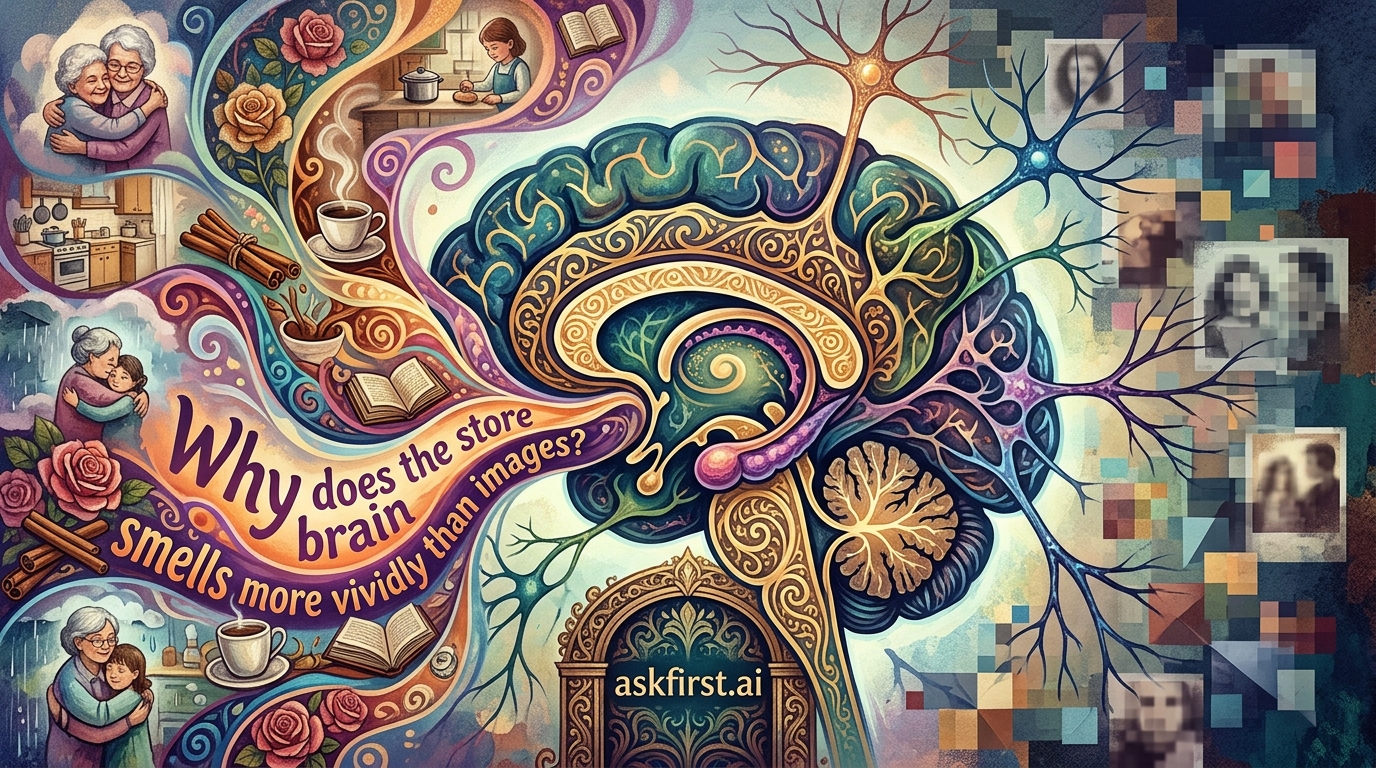
When light strikes the retina, visual information is routed through the thalamus, which serves as a gateway that filters and organizes sensory data before it reaches the cerebral cortex. Conversely, odor molecules interact with olfactory receptors in the nasal cavity, and the resulting signals travel directly to the olfactory bulb. This structure is located right next to the amygdala and the hippocampus.
- The Amygdala: The center of emotional processing.
- The Hippocampus: The center of associative learning and memory formation.
Because smell signals arrive at these memory centers with minimal processing, they create a 'shortcut' that binds a scent to an emotional state or a specific environment instantly. Images, in contrast, require higher-level cognitive decoding, which can dilute the emotional intensity of the memory over time.
The Evolutionary Advantage of Smell
From an evolutionary perspective, the ability to store smells vividly was a matter of survival. Early human ancestors relied heavily on their sense of smell to identify food sources, detect predators, and recognize safe versus dangerous environments. A memory of a toxic plant or a dangerous animal was far more useful if it were tied to a visceral, immediate recall rather than a complex logical process. By linking scent to the limbic system, the brain ensures that the memory is prioritized and easily retrieved in high-stakes situations.
Why Images Fade While Scents Endure
Visual memories are subject to constant interference. Because we are visual creatures, the brain is bombarded with millions of images every hour. Consequently, the brain employs an active 'pruning' process, discarding unnecessary visual details to maintain cognitive efficiency. Old images often suffer from 'semantic drift,' where the original context of the memory becomes blurred or updated by subsequent experiences.
Scents are different because they are rarely context-dependent in the same way. A specific odor molecule acts as a biochemical 'key' that can unlock a specific neurochemical state. When that scent is re-encountered, the brain does not just 'remember' the memory; it reconstructs the neurological state of the initial experience. This is why a simple whiff of a perfume can transport an individual back to a childhood kitchen or a long-lost summer day with startling, sensory-rich accuracy.
Practical Applications and Future Implications
Understanding the superior retention of scent has massive implications for learning, therapy, and technology:
- Memory Enhancement: Researchers are exploring how ambient scents during study sessions can improve information retention during examinations. By pairing specific, unique aromas with complex topics, students can create 'olfactory anchors' that facilitate easier recall.
- Therapeutic Interventions: In the context of cognitive decline, aromatherapy is being studied as a tool to stimulate neural pathways that remain dormant. The direct connection between the olfactory bulb and the hippocampus suggests that scent-based therapies might slow the rate of cognitive decay in certain conditions.
- The Future of Virtual Reality: Current VR technology is almost exclusively audiovisual. Integrating haptic and olfactory feedback systems could revolutionize the medium, creating truly 'immersive' environments that trigger genuine emotional reactions that images alone could never evoke.
Conclusion
The brain treats smell not merely as a sensory input, but as an emotional archive. By bypassing the logical filters of the thalamus and tapping directly into the limbic system, scent allows us to touch the past in a way that sight and sound cannot. While we might struggle to describe a face from ten years ago, a single scent from that period can return us to the exact moment, complete with the original emotions, making smell the most powerful guardian of our personal history.