The Chronos Paradox: How Pleasure Warps Subjective Time
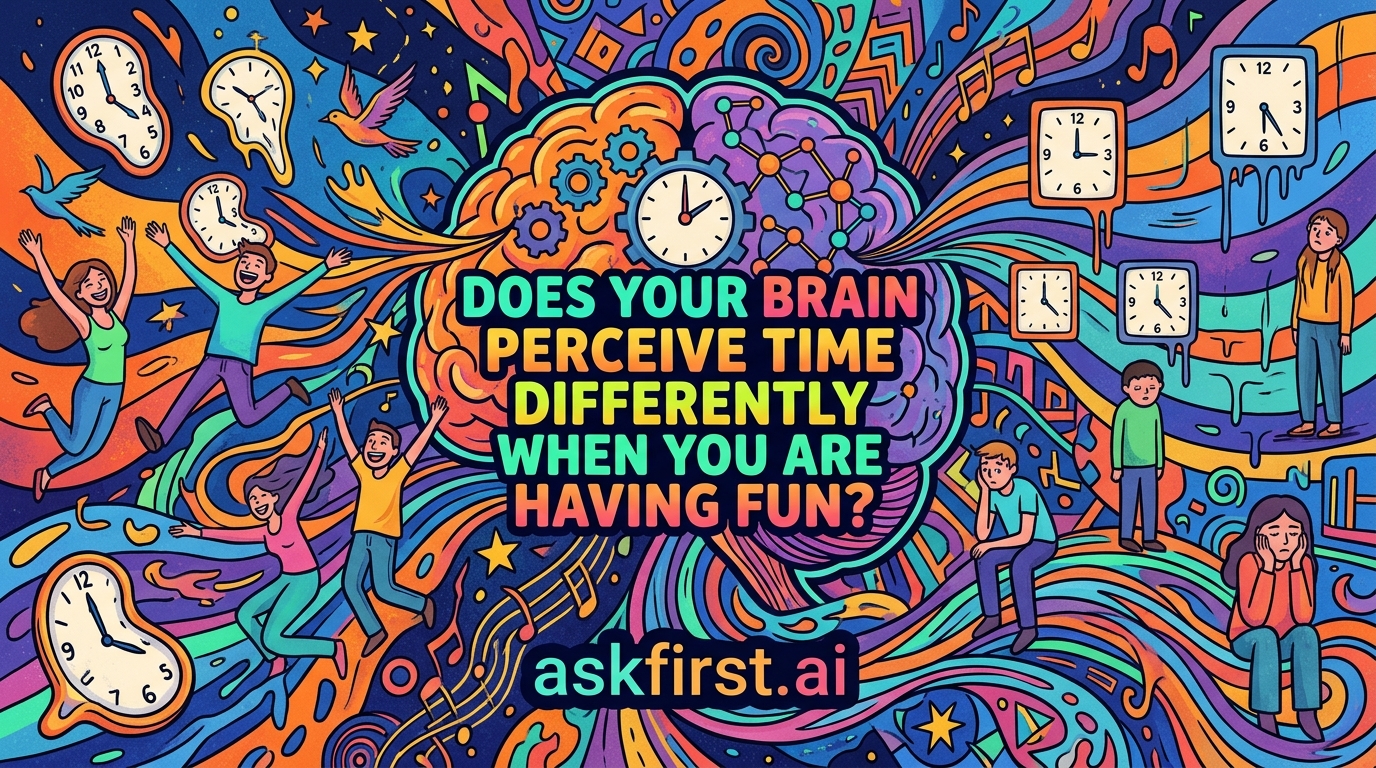
Human consciousness does not experience time like a mechanical clock. Instead, the perception of time is a fluid, subjective construction built by the brain's internal architecture. One of the most fascinating phenomena in cognitive science is the "time flies when you are having fun" effect. This is not merely a metaphor; it is a measurable psychological state where the passage of time is perceived to accelerate significantly during moments of intense engagement, novelty, and enjoyment.
The Mechanisms of Neural Encoding
To understand why time seems to speed up, one must examine how the brain records memory. According to the Retrospective Timing Model, our sense of time is inextricably linked to the formation of memories. When a person is bored, the brain has little to encode, leading to an over-analysis of the current moment. This heightened awareness of the passing seconds causes the subjective perception of time to drag. Conversely, when engaged in a stimulating activity—a state psychologists often call "flow"—the brain prioritizes processing the activity itself rather than monitoring the ticking clock.
The Role of Dopamine and Neural Salience
Recent neurological studies suggest that the neurotransmitter dopamine plays a pivotal role in internal timing. When individuals experience pleasure, dopamine levels surge, which can modulate the speed of internal neural oscillators. These oscillators act as the brain's internal pacemaker. When this pace increases, the brain effectively experiences more "ticks" per external second, causing the world to appear as if it is moving faster relative to the subject's internal clock.
Key Factors Influencing Temporal Distortion
Several distinct factors dictate how this time-warping occurs during moments of fun:
- Cognitive Load: When an activity is highly absorbing, the brain lacks the spare cognitive capacity to "check" the clock, resulting in a sudden realization that hours have passed in what felt like minutes.
- Novelty and Complexity: The brain records novel experiences more intensely. Paradoxically, while a fun, new experience feels fast while happening, it is often remembered as being "longer" in hindsight because there is more rich data stored for that specific period.
- The Flow State: Coined by psychologist Mihaly Csikszentmihalyi, "flow" represents a state of optimal experience where the ego vanishes and time loses its traditional meaning. In this state, the brain is perfectly synchronized with the demands of the task, rendering time perception secondary.
Retrospective vs. Prospective Timing
It is vital to distinguish between two modes of time perception:
- Prospective Timing (During the Event): When actively paying attention to the passage of time, the brain utilizes working memory. If you are having fun, you are typically not focusing on the clock; therefore, the brain ignores time, making it feel shorter.
- Retrospective Timing (Looking Back): When remembering an event, the brain evaluates how many distinct memories were created during that window. If a fun experience was packed with unique, intense events, it may seem to last a long time in retrospect, even if it felt short while happening.
Why Time Perception Matters for Well-being
Understanding that time is a subjective construct can empower individuals to design better lives. If time feels like it is passing too quickly as we age, it is often because we fall into rigid routines. Because the brain stops encoding familiar, routine activities, these chunks of life disappear from our temporal awareness, creating the feeling that years are vanishing in a blink. To slow down the perceived passage of time, one must seek novelty. By introducing new challenges, traveling to unfamiliar places, or learning complex skills, we force the brain to pay closer attention to its environment, effectively expanding our subjective experience of reality.
Evolutionary Perspectives on Temporal Processing
From an evolutionary standpoint, the ability to warp time perception is likely an adaptive feature. When an organism is focused on a task for survival—such as hunting or social bonding—the ability to enter a state of high-focus where the external environment (and the passing of time) recedes allows for superior performance. The brain optimizes for accuracy of action over accuracy of temporal reporting. This prioritizes survival and task mastery over the mundane ticking of minutes, cementing the link between engagement and speed of perception.
Conclusion: Mastering Your Internal Clock
Ultimately, the brain's perception of time is not a limitation but a testament to its flexibility. While "fun" triggers an acceleration of the internal clock, this is simply a byproduct of total immersion. By embracing novelty and cultivating environments that promote flow, we do not just change how fast time passes; we enrich the quality of the life we experience. Whether time flies or drags, it is the subjective value we assign to those moments that truly defines the texture of human existence.